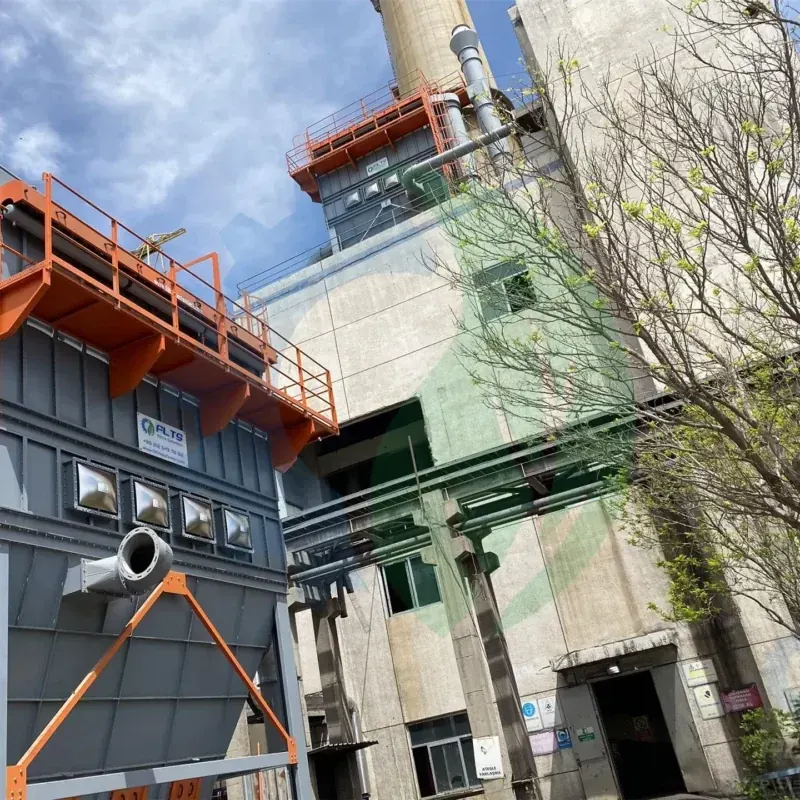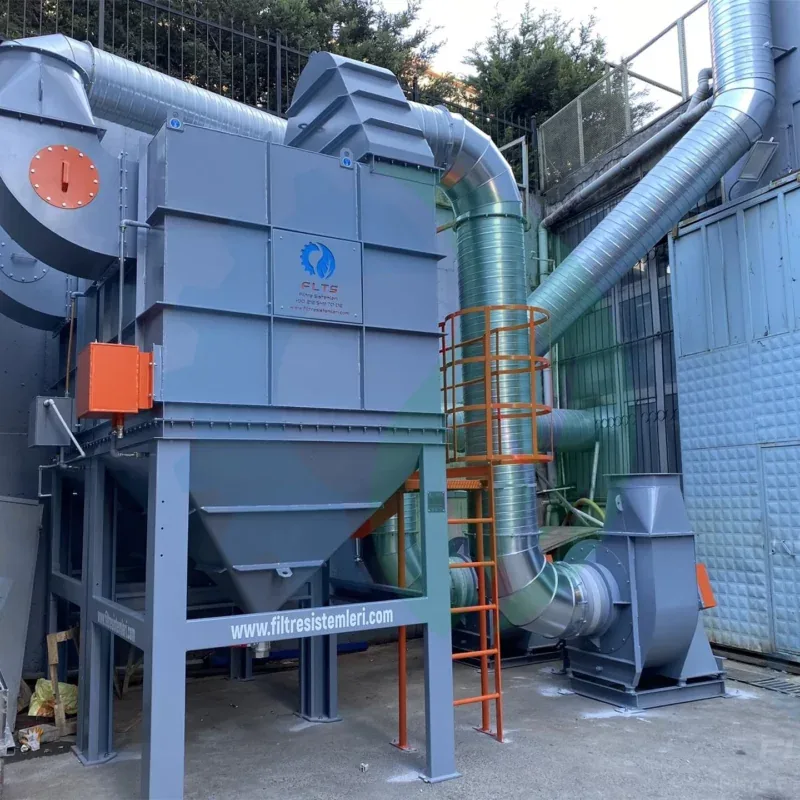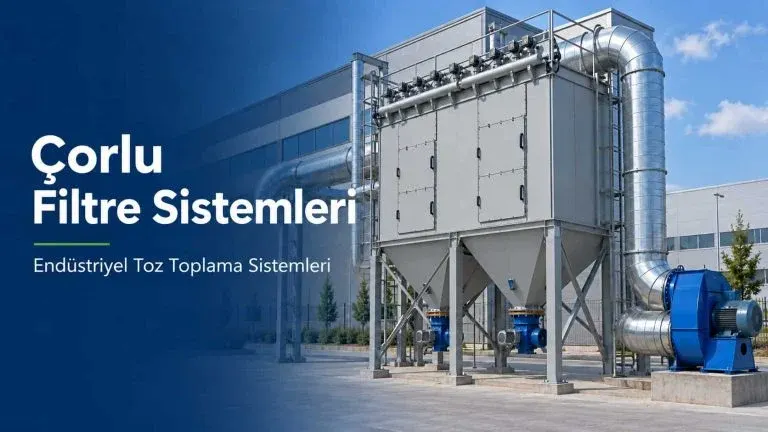





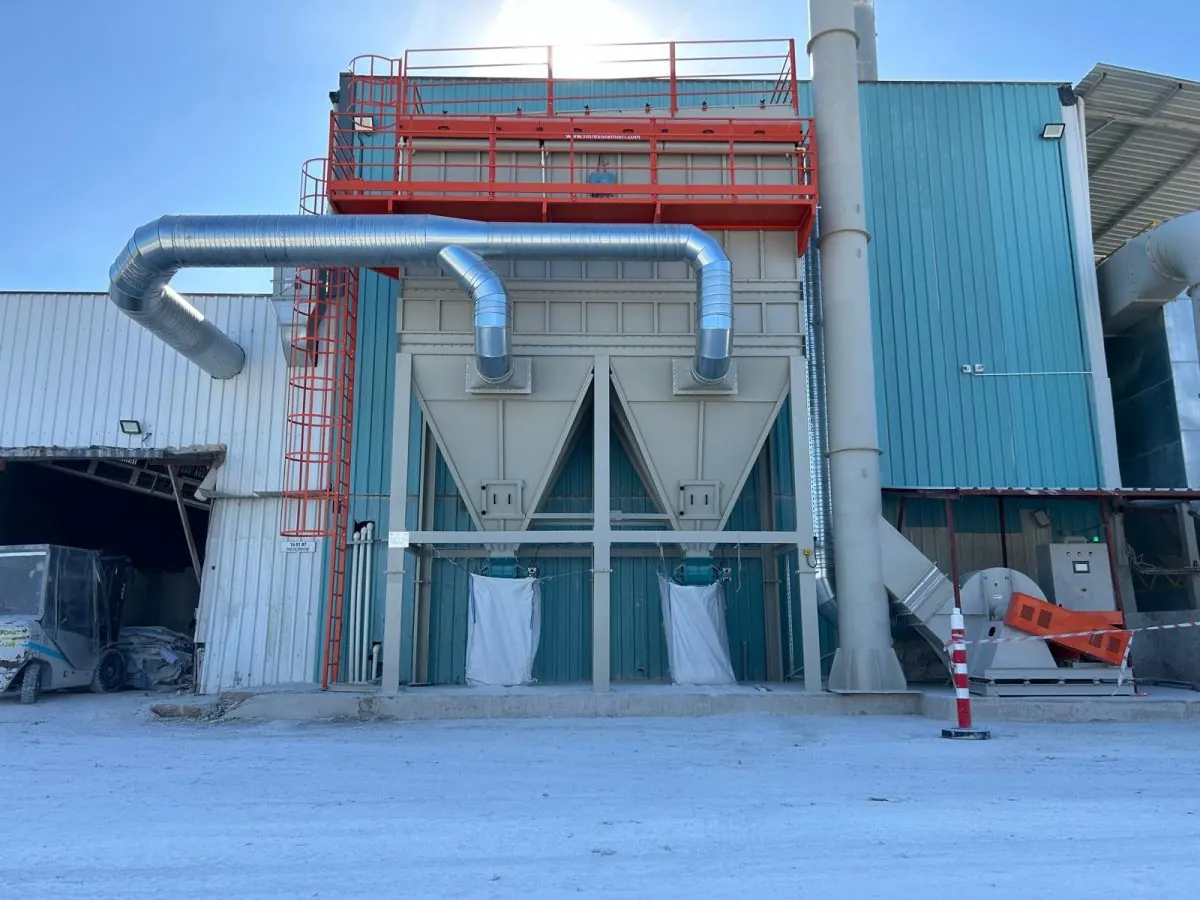

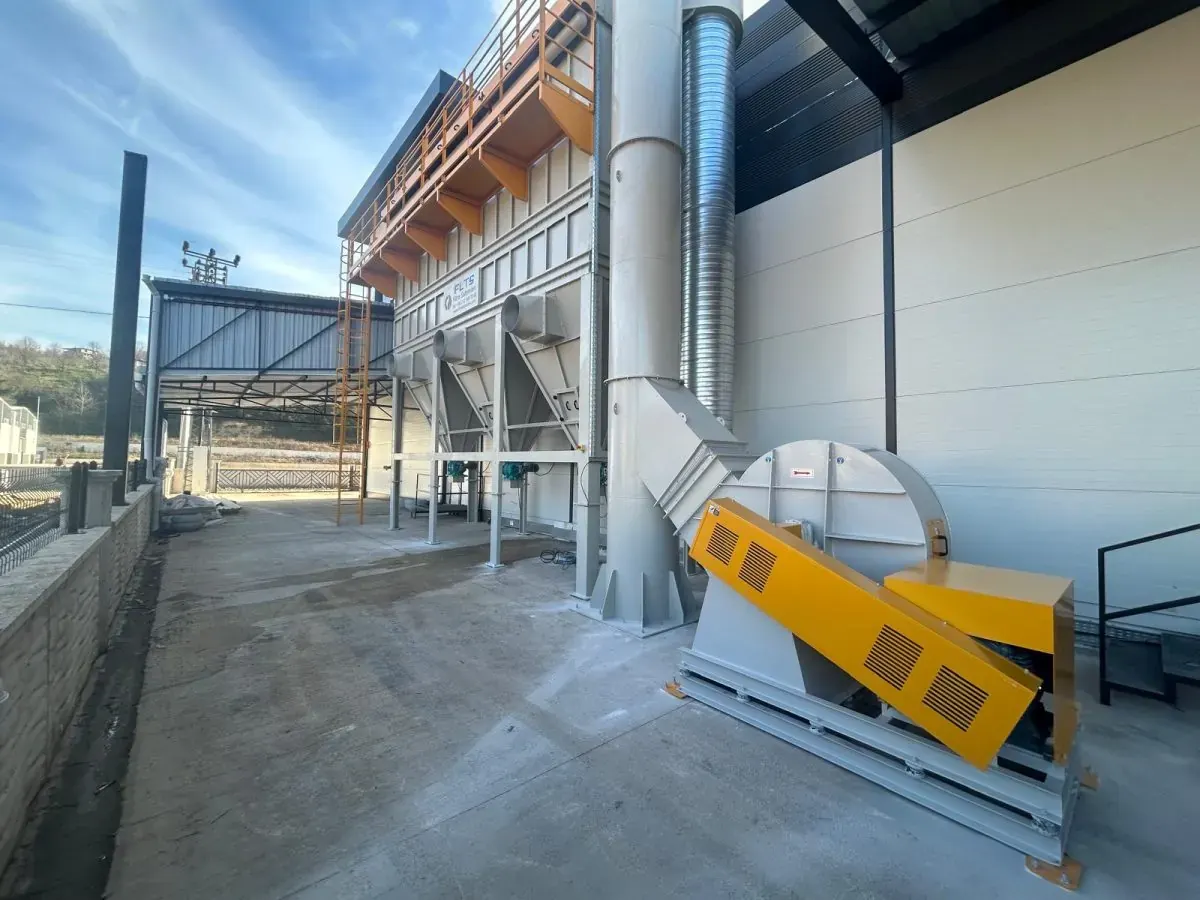
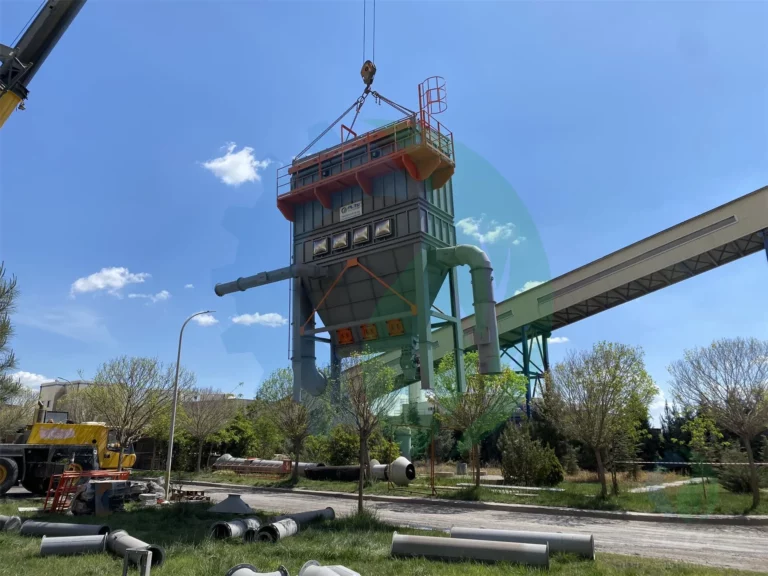
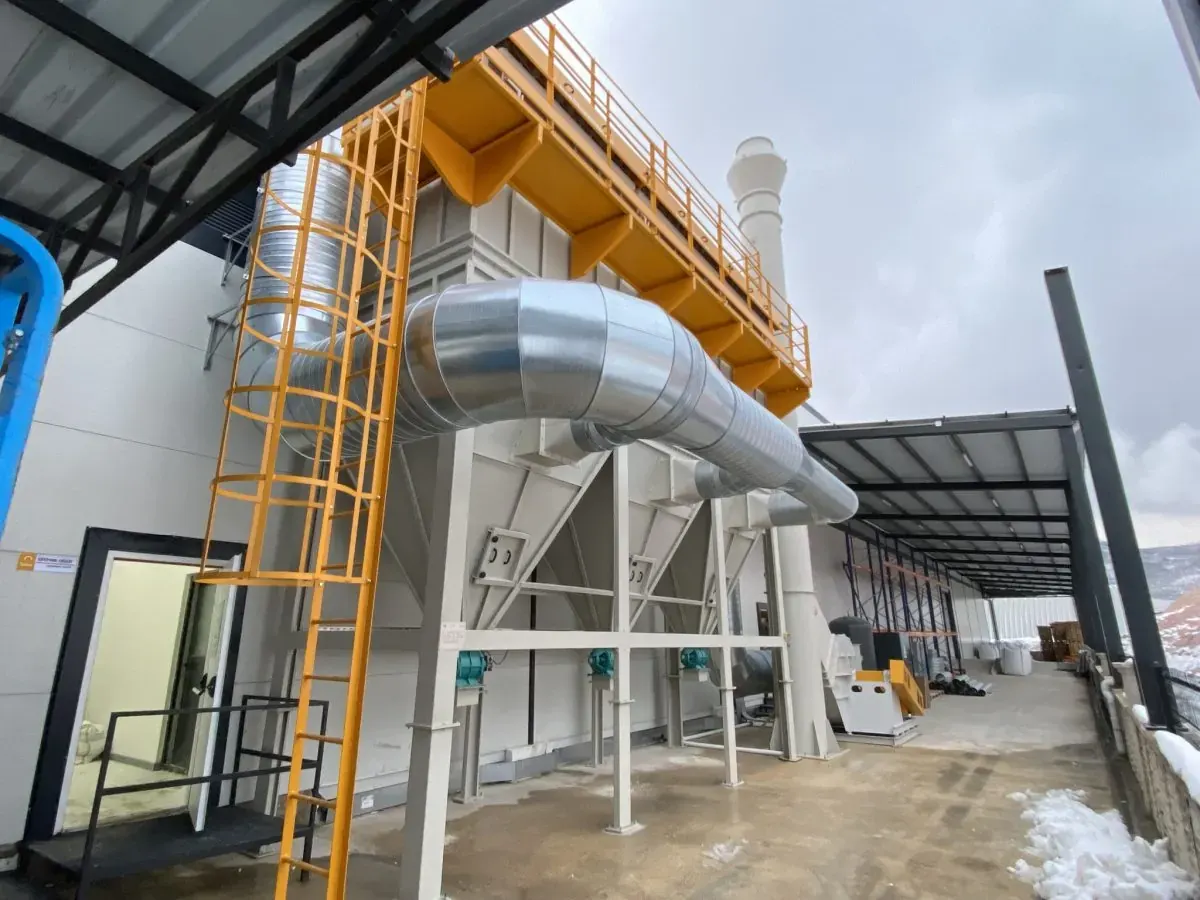
Dust collection systems in Tekirdağ are systems that extract the dust and fumes generated in factories at their source, pass them through a filter and release the cleaned air through the stack. They consist of extraction hoods, ducts, a filter unit, a fan and a stack. At FLTS, we design, manufacture and install these systems for plants across Tekirdağ.
With its proximity to Istanbul and its organized industrial zones, Tekirdağ is one of the leading industrial provinces in Thrace. Textile, metal, plastics, chemical and food lines each produce a different type of dust. That is why, instead of offering a ready-made catalog product, we size every system based on a site survey and airflow measurement carried out at the plant.
Filter Systems and Dust Collection Manufacturing in Tekirdağ
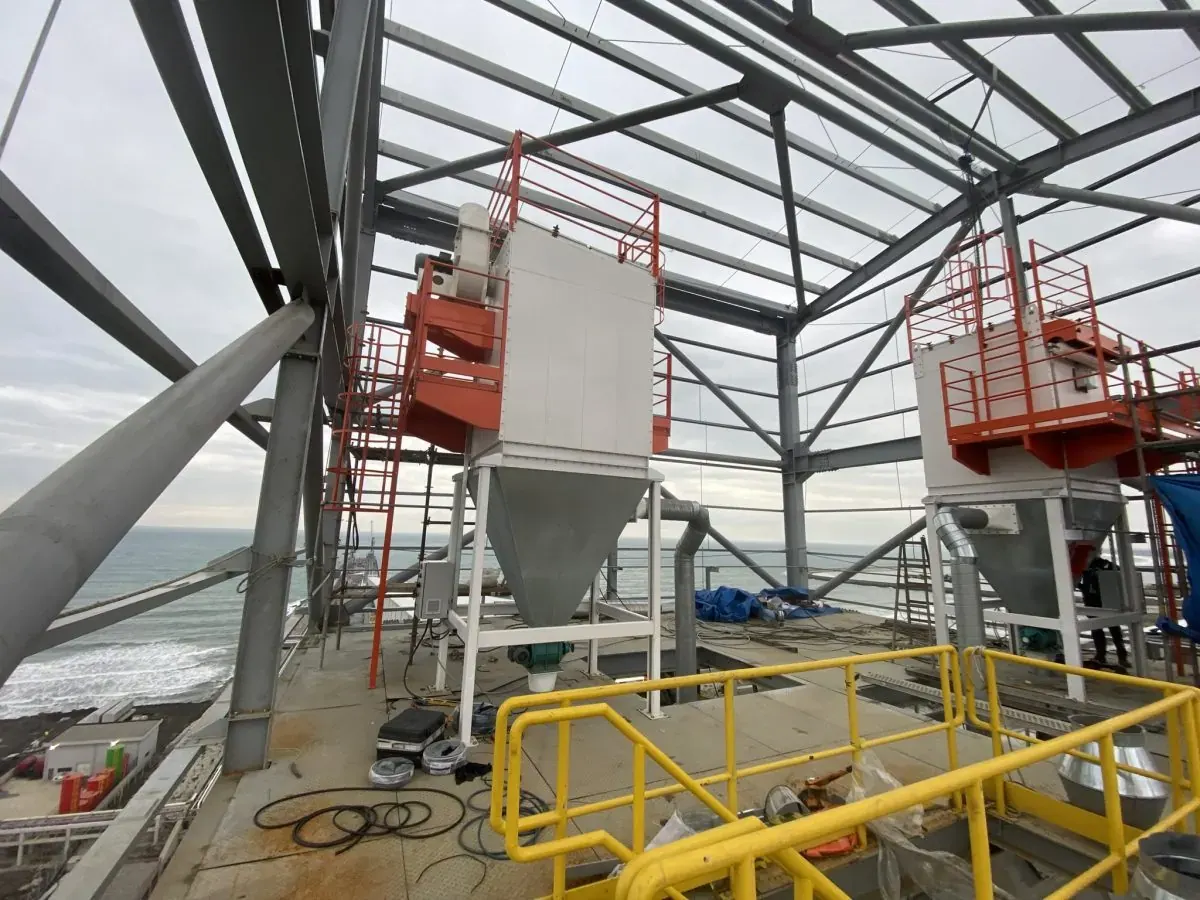
In a dust collection project, we carry out every step, from engineering, equipment supply, manufacturing and installation to commissioning and supervision, with our own team. System automation is also included in this scope. Because design and installation are the responsibility of the same team, parts manufactured from measurements taken at the plant fit on site without problems.
Filter housings, filter cages, ducts and fans are manufactured in our workshop in İkitelli OSB. Auxiliary equipment such as the pulse valve control panel, air lock and screw conveyor is also supplied within the same project. After commissioning, you can also obtain spare parts such as filter bags, cartridges and pulse valve diaphragms from us.
A dust collection system is not installed only to clean the working environment. Dust emitted from the stack is assessed under the Regulation on the Control of Industrial Air Pollution, while the dust inhaled by workers is assessed under the Dust Control Regulation. A properly sized system safeguards the plant in emission measurements and occupational health inspections. Since the collected dust can be recovered as raw material in some processes, the system can also deliver a direct cost advantage.
Our Service Points in Tekirdağ’s Industrial Zones
Industry in Tekirdağ is spread across several districts and organized industrial zones. Because the dominant sectors differ from zone to zone, the dust type, temperature and explosion risk also vary by area. Knowing the plant’s location and sector before the site survey speeds up the preliminary work.
Çerkezköy and Veliköy
Textile, chemical, metal and plastics plants operate side by side in Çerkezköy OSB and Veliköy OSB. Cartridge filters are used for welding fumes and grinding dust, and bag filters for fiber and granule dust. In chemical plants, the combustibility of the dust is evaluated separately.
Kapaklı
Kapaklı is an industrial area intertwined with Çerkezköy OSB, and metal and plastics plants are found here as well. Cartridge filters are preferred for metal dust, and bag filters with a cyclone pre-separator for coarse, dense dust. On cutting and grinding lines, a spark arrestor is placed upstream of the filter.
Ergene 1 and Ergene 2 OSB
Textile and dyeing-finishing plants dominate Ergene 1 and Ergene 2 OSB. While bag filters are sufficient for fiber dust, the hot, oily air from stenter and drying lines requires pre-cooling and heat-resistant bags.
Süleymanpaşa, Malkara, Hayrabolu and Other Districts
These districts are also home to flour, feed and food plants. Because flour, feed and grain dust can create an explosive atmosphere at certain concentrations, ATEX-compliant fans, explosion vents and antistatic filters are used.
We have described the work we do for plants in Çorlu separately on our Çorlu filter systems page.
Industrial Filter and Dust Collection Solutions by Sector
Even two systems with the same airflow require different filters and equipment when the dust type changes. The particle size of the dust determines the filter media, its temperature determines the bag fabric, and its combustibility determines the safety equipment. The general matching for the main sectors in Tekirdağ is as follows.
| Sector | Dust type | Recommended system |
|---|---|---|
| Textiles, spinning, weaving | Fiber and lint dust | Jet Pulse Bag Filter |
| Dyeing, finishing, stenter | Hot and oily air | Pre-cooling and a Nomex or PTFE filter bag |
| Metal, welding, grinding | Welding fumes and metal dust | Jet Pulse Cartridge Filter |
| Laser and plasma cutting | Very fine metal dust | Cartridge filter and spark arrestor |
| Wood and furniture | Wood chips and sanding dust | Cyclone, bag filter and explosion vent |
| Plastics and chemicals | Granules and powdered chemicals | Bag filter and antistatic filter bag |
| Food, flour, feed | Potentially explosive organic dust | ATEX-compliant bag filter and rotary valve |
| Paint booth | Sticky paint particles | Water Filter |
Filter Bag Selection by Temperature
A filter bag should be made of a fabric that can withstand the continuous temperature of the gas. When the temperature limit is exceeded, the bag quickly hardens and develops holes, and emissions increase. The continuous operating temperatures of the bags we manufacture are shown in the table below.
| Bag type | Continuous operating temperature | Where it stands out |
|---|---|---|
| Polyester felt | Up to 150 °C | General use, cost-effective |
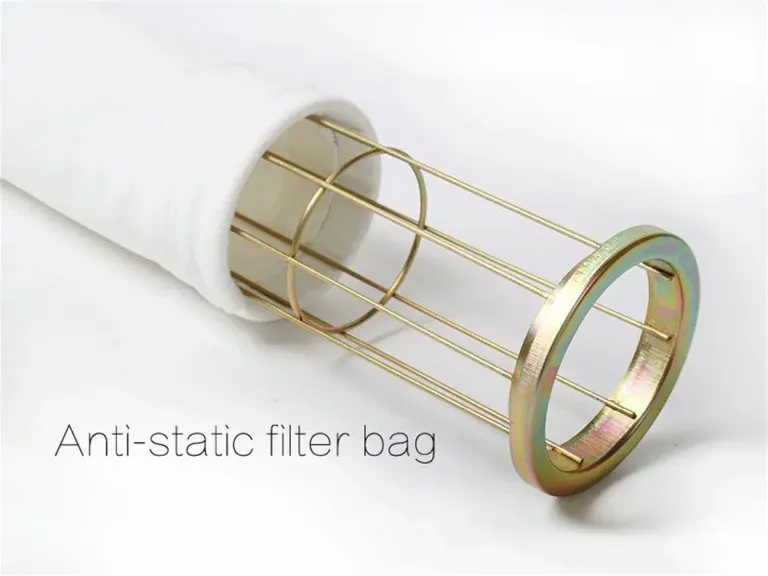
| Antistatic felt | Up to 150 °C | Dissipating static charge with combustible dusts |
| Nomex (meta aramid) | Up to 200 °C | Stenter, drying and hot process gas |
| PTFE | Up to 260 °C | High temperature and chemical resistance |
The tables are a starting point. The final selection is made after the particle size, moisture, temperature and explosion class of the dust have been determined at the plant.
Which Filter Unit Suits Which Job?
Below you can find what each of our main units is used for. You can go from the cards to the technical details of the products.
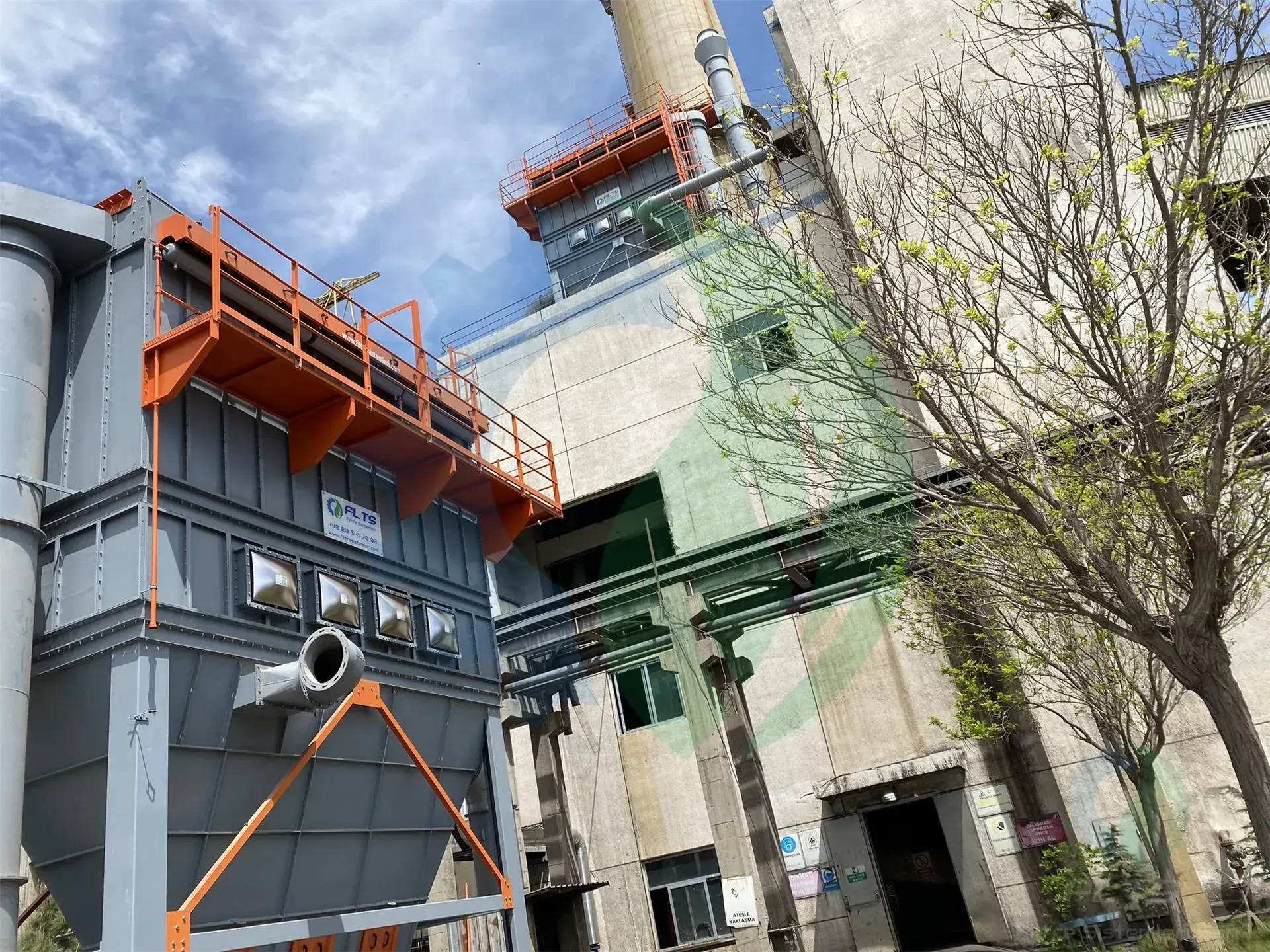
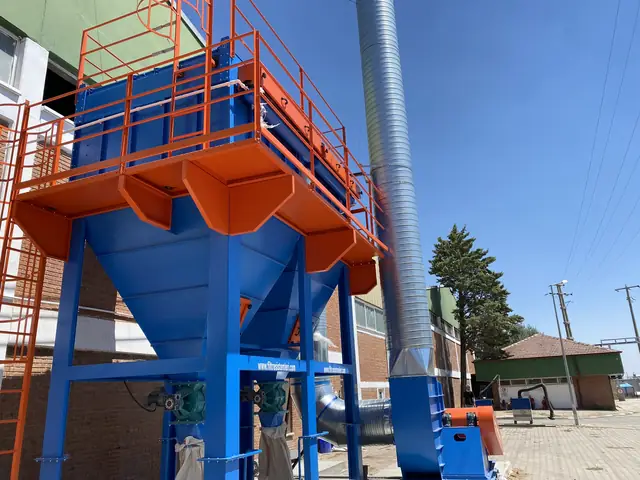
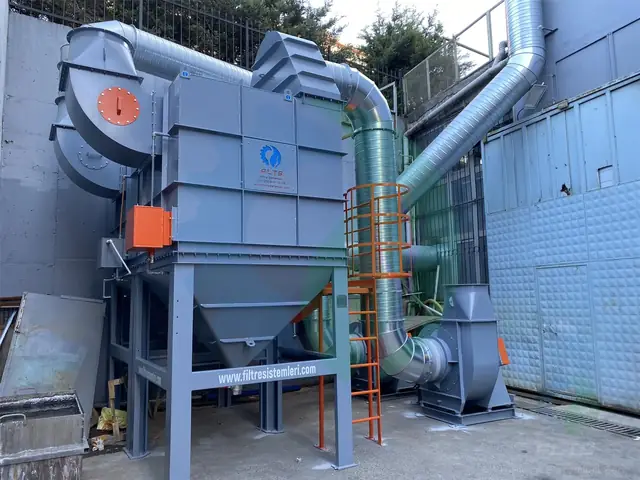
- For heavy, continuous dust loads, a jet pulse bag filter is used. Compressed air is sent into the bag through a venturi as a short pulse, and the bags are cleaned without stopping production. Cleaning is carried out automatically by differential pressure control.
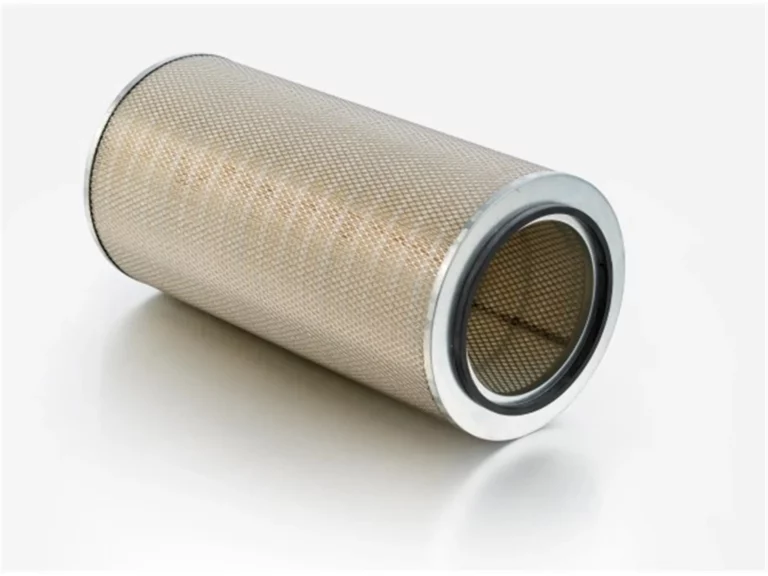
- For fine, dry dust, especially where space is limited, a jet pulse cartridge filter is suitable. Its pleated structure provides a large filter surface in a small housing. It is frequently used for welding fumes and laser and plasma cutting dust. Size and material options are on our Cartridge Filter page.
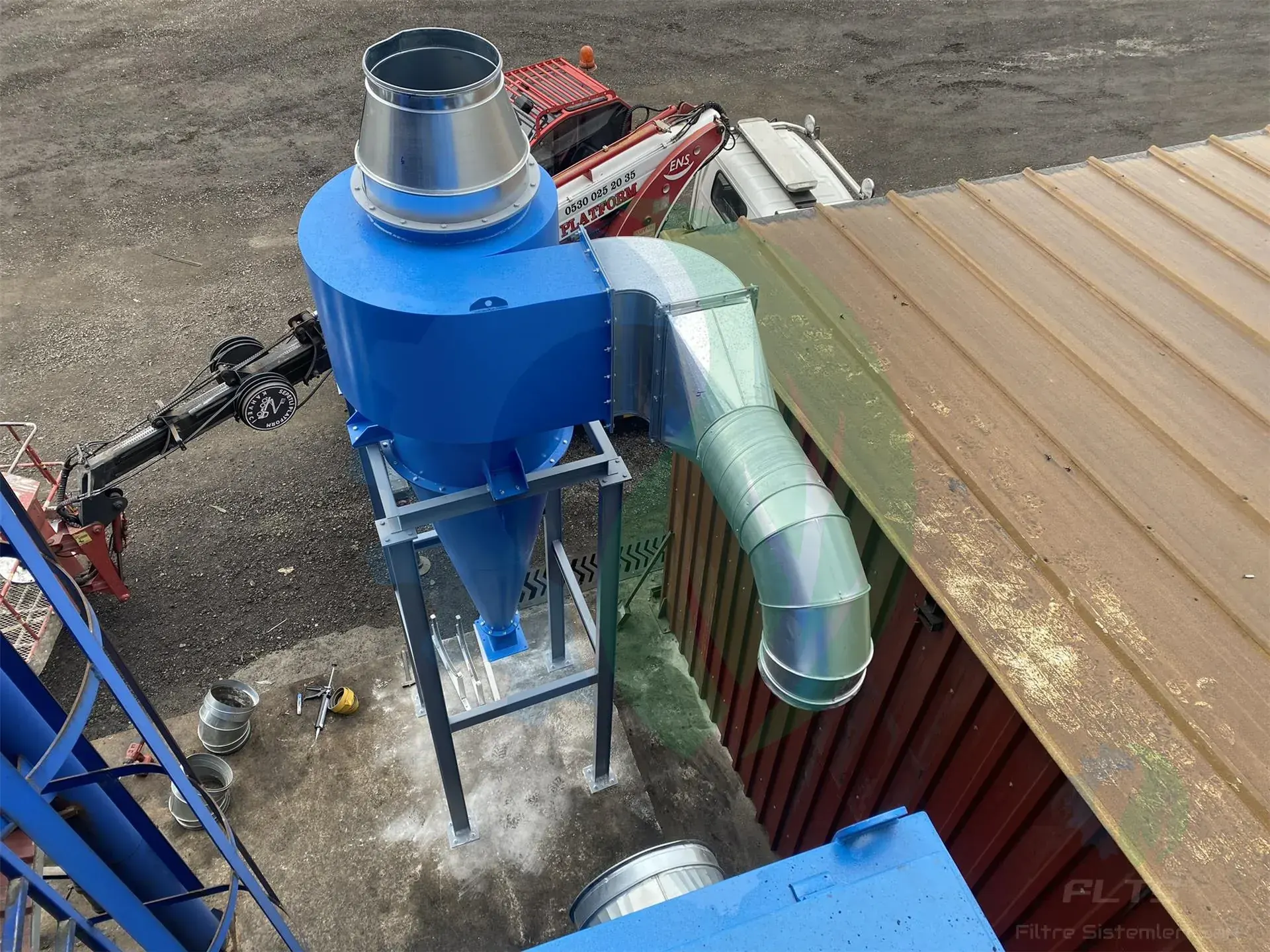
- Where there are coarse particles and sparks, a cyclone is placed upstream of the main filter. The cyclone separates most of the dust by centrifugal force, reducing the load reaching the filter and extending bag life.
- For sticky, damp or combustible dust, a water filter is used. Because the dust is captured in a water curtain, clogging does not occur and the risk of sparks is greatly reduced.
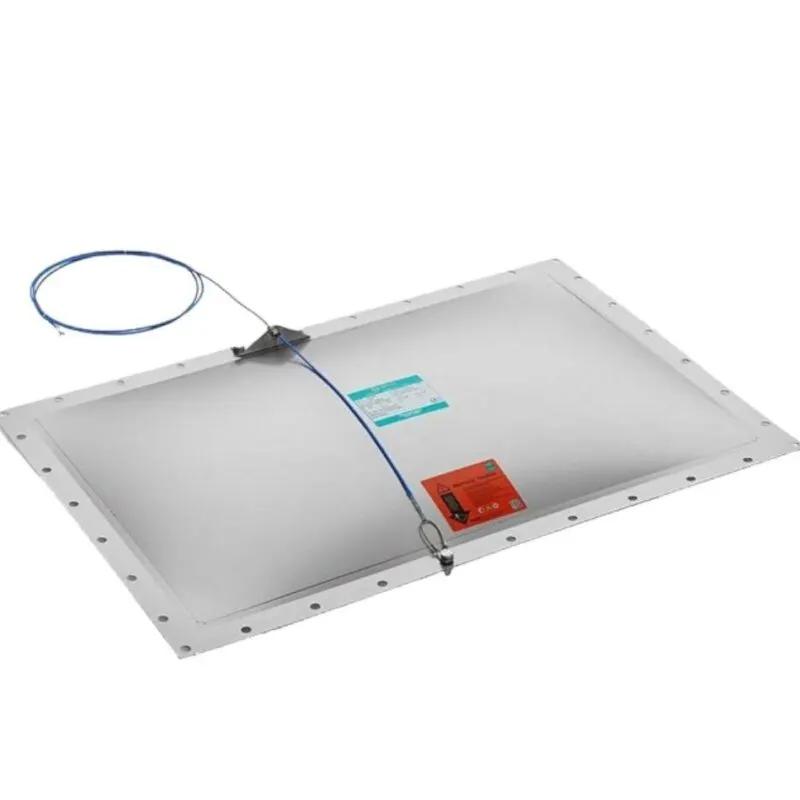
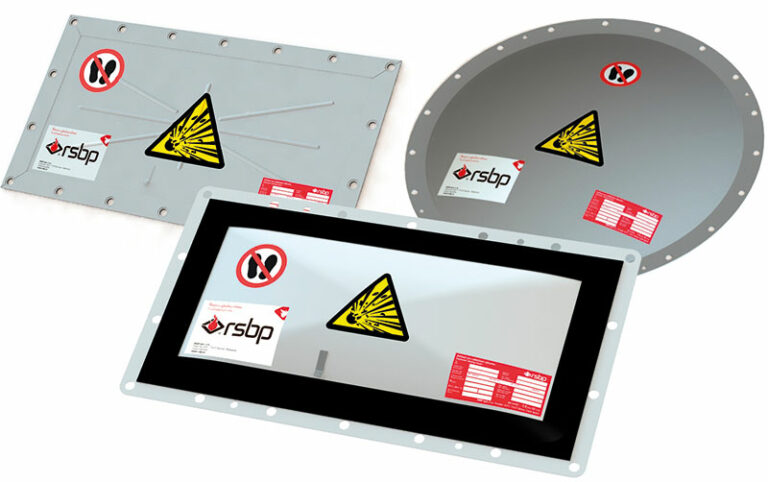
- In environments with an explosion risk, an ATEX explosion-proof fan, explosion vents and antistatic filter elements are used together.
You can see how a jet pulse bag filter works in the video below.
You can browse the entire product range in our dust collection systems category.
Factory Extraction and Ventilation Systems
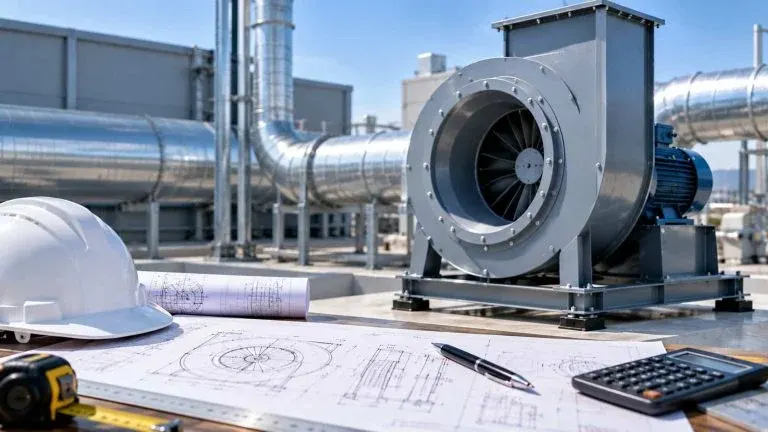
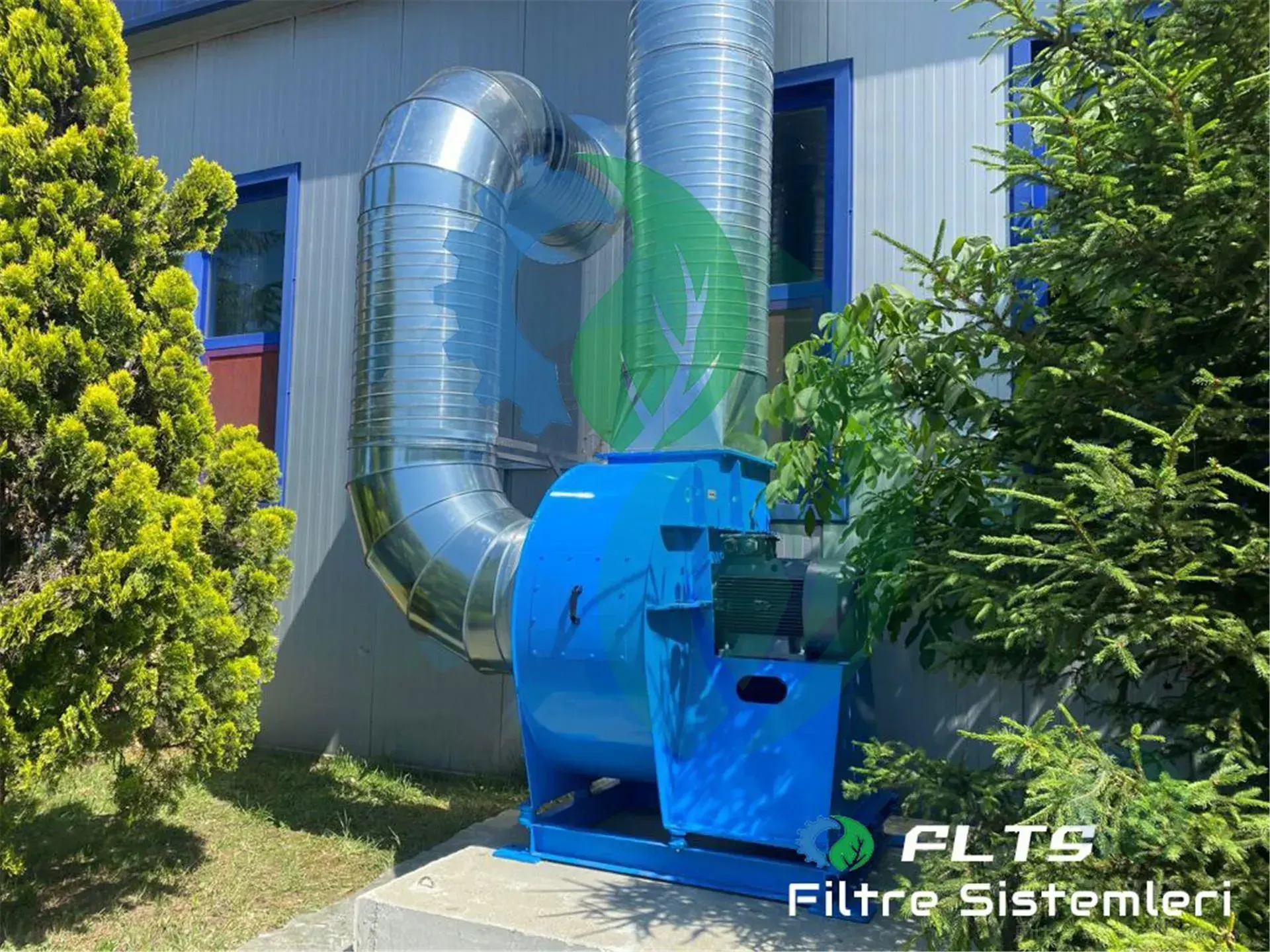
A dust collection system captures dust at its source. General ventilation, on the other hand, removes heat, humidity and residual contamination from the production area. In many plants, the two are planned together. For general ventilation, you can explore our factory ventilation systems, and for extraction our radial fan and centrifugal scroll fan solutions.
Project Process from Site Survey to Commissioning
The efficiency of a dust collection system is largely determined at the site survey and calculation stage. If one of the extraction points is underestimated, dust spreads into the production area; if the fan is oversized, energy is wasted. In every project, we follow the steps below in order.
- The number of machines, extraction points, dust type and duct route are examined on site at the plant.
- The amount of air required by each extraction point is calculated, and duct diameters and fan power are determined according to this airflow.
- The filter surface, filter media and cleaning system are selected according to the total airflow and the properties of the dust.
- The filter housing, cages, ducts and fan are manufactured in our workshop.
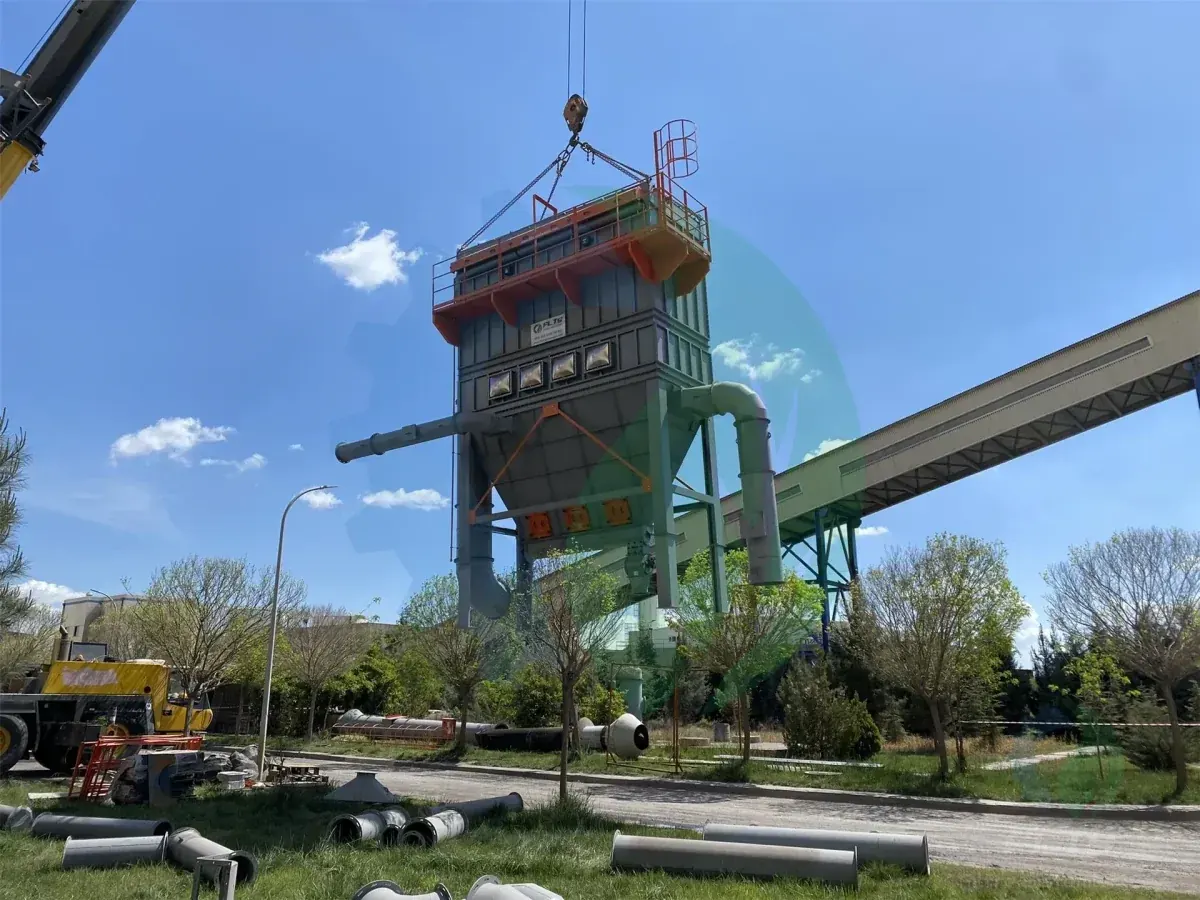
- The system is installed on site and commissioned by measuring the extraction values and the filter differential pressure.
How Is Airflow Calculated in a Dust Collection System?
Airflow is found by multiplying the duct cross-sectional area by the air velocity. For an hourly value, the result is multiplied by 3,600. For example, if the air velocity in a duct with a cross-section of 0.4 m² is 15 m/s, the airflow is 0.4 × 15 × 3,600 = 21,600 m³/h.
The total airflow is found by adding up the airflow of each extraction point. If there are machines that do not run at the same time, the simultaneity ratio is taken into account. The air velocity in the duct is also adjusted according to the type of dust. If the velocity is too low, dust settles in the duct; if it is too high, energy consumption and wear increase. We explain the details of the calculation in our fan airflow calculation article.
Maintenance After Commissioning
After the system is commissioned, the filter differential pressure should be monitored regularly. A rise in differential pressure indicates that the bags are clogging or that the cleaning system is inadequate. Pulse valve diaphragms, the compressed air line and dust discharge equipment should be checked periodically. You can find the maintenance steps in our dust collection system maintenance article.
Retrofitting and Capacity Increase of Existing Systems
Many plants in Tekirdağ already have a dust collection system installed. When the production line grows or new machines are added, the existing system may become insufficient. In that case, the existing extraction points and differential pressure values are measured first. If necessary, the filter surface is enlarged, the fan is replaced or the bag type is updated to suit the process. In this way, capacity can be increased without building the system from scratch.
What Determines Dust Collection System Prices in Tekirdağ?
Because a dust collection system is custom-built for each plant, there is no fixed price list. The main items that determine the quote are listed below.
- Total airflow, i.e. the size of the filter housing and fan
- Filter surface and the filter fabric used
- Number of extraction points and duct length
- Need for ATEX-compliant equipment
- Dust discharge equipment such as a rotary valve, screw conveyor or silo
- Installation conditions such as roof, platform or outdoor yard
Operating costs are as important as installation costs. In jet pulse systems, compressed air consumption and the bag replacement interval make up most of the annual cost. When the right filter surface is selected, the bags are cleaned less often, compressed air consumption drops and bag life is extended. That is why, when comparing quotes, you should look not only at the installation price but also at the filter surface and bag quality.
For a preliminary quote, a list of the machines to be extracted, the dust type, daily operating hours and a layout plan, if available, are sufficient. After the site survey, we also state the manufacturing and installation time along with the quote. You can fill in the quote form for your plant or contact us.
Emissions, ATEX and Occupational Safety Requirements
When installing a dust collection system, environmental and occupational health regulations should be addressed together. Plants in organized industrial zones are inspected for both emissions and occupational health. Designing the system around these requirements from the start prevents costly modifications later.
- The amount of dust at the filter outlet must meet the limit values in the Regulation on the Control of Industrial Air Pollution. The filter fabric and filter surface are selected to achieve this target.
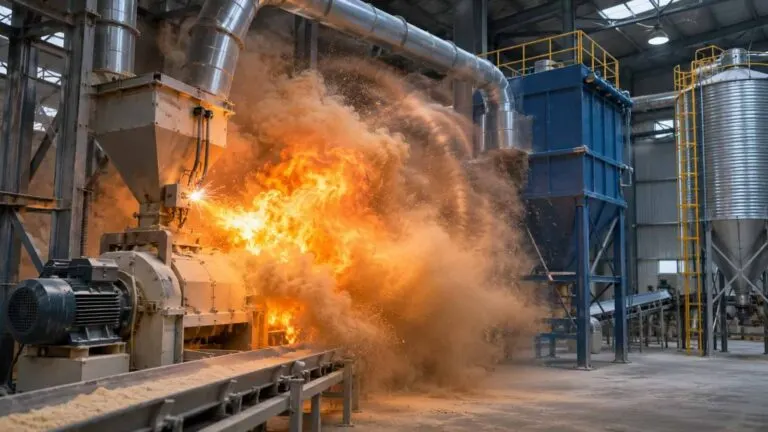
- Flour, sugar, wood, plastics and some metal dusts can create an explosive atmosphere. In these plants, ATEX-compliant fans, explosion vents and grounding are used within the scope of the Regulation on the Protection of Workers from the Hazards of Explosive Atmospheres.
- The Dust Control Regulation requires dust to be controlled at its source. For this reason, extraction is carried out from the point closest to the machine.
Why Choose FLTS as Your Filter Manufacturer in Tekirdağ?
FLTS Filtre Sistemleri is a manufacturer specializing in the design, production and implementation of dust collection systems. Our projects are implemented both in Türkiye and abroad.

FLTS Filtre Sistemleri
Design, manufacturing and installation of dust collection systems