




Industrial Fans
30 May 2024
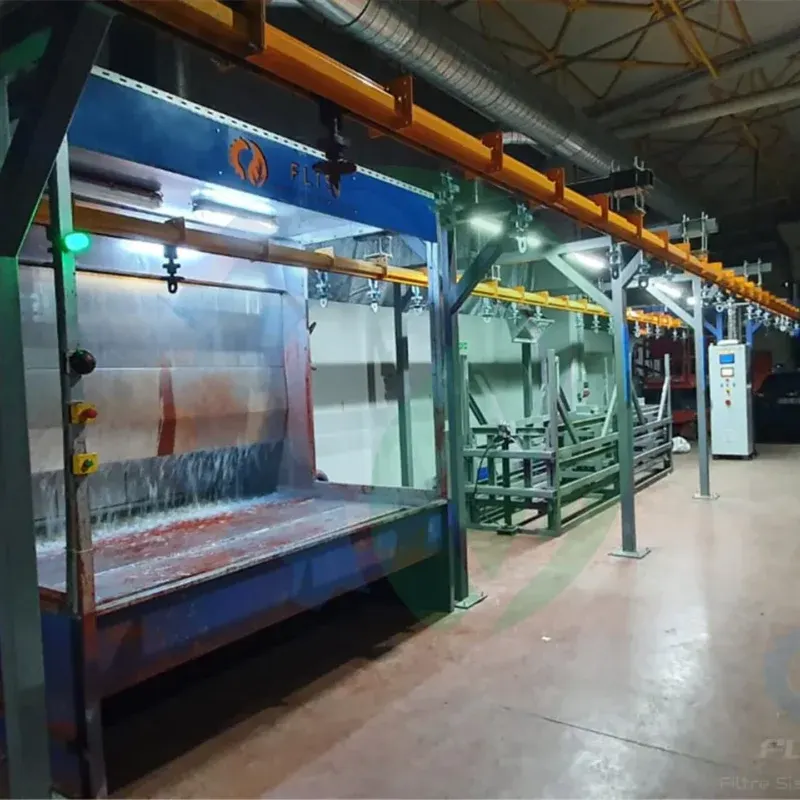
Wet Paint Booths with Water Curtain
30 May 2024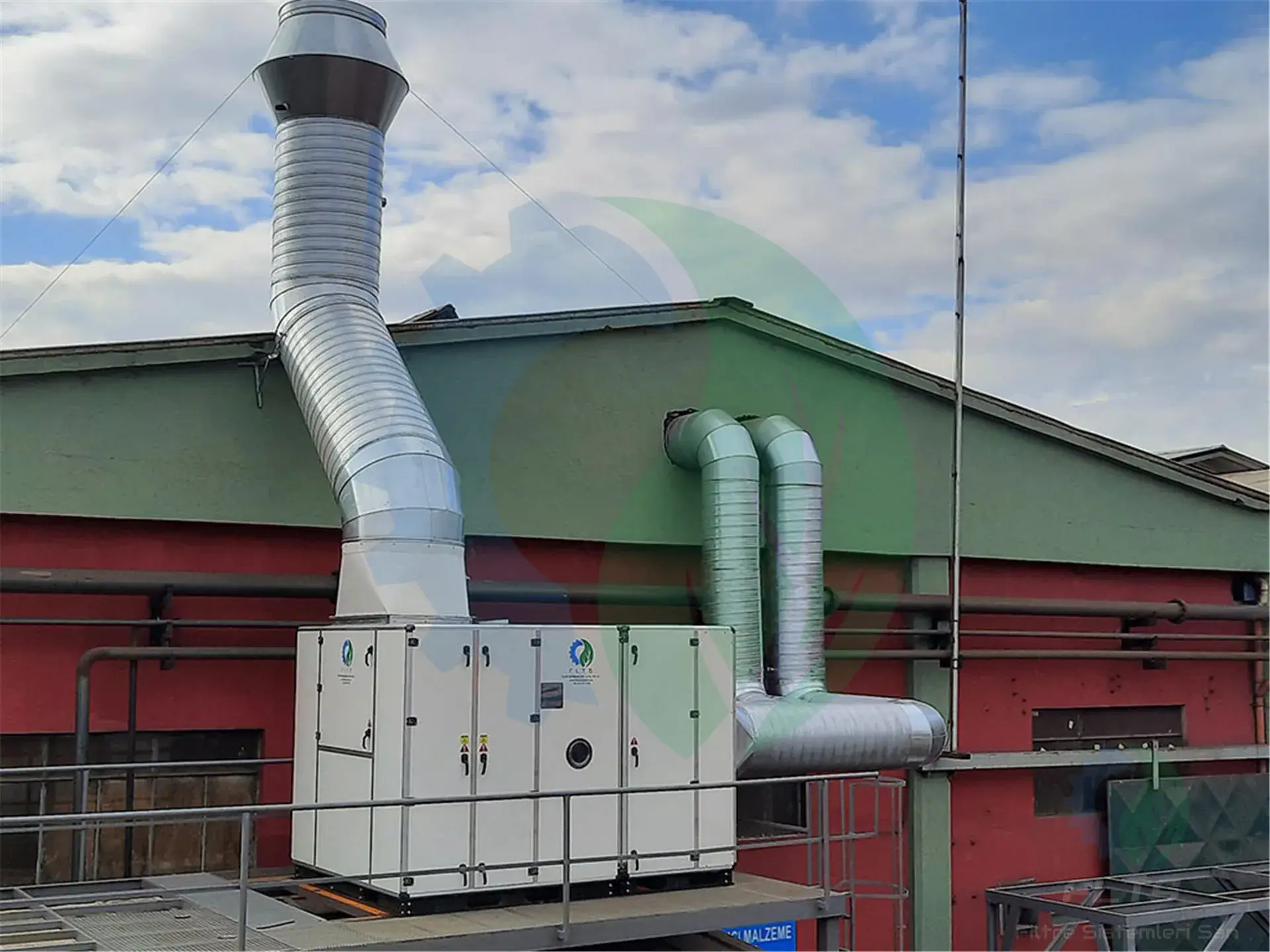
Factory Ventilation Systems
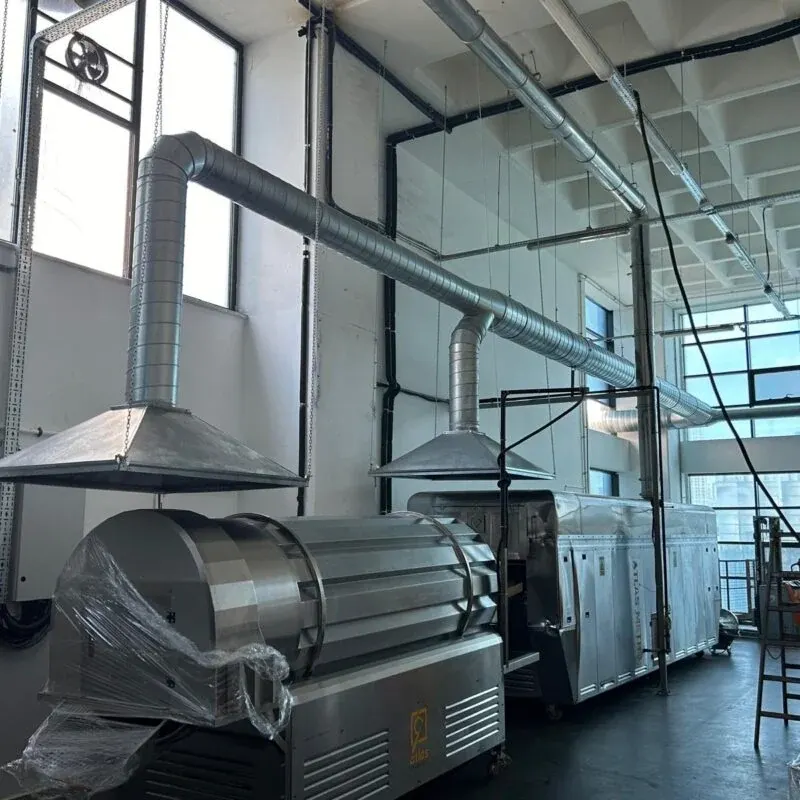
Factory ventilation systems are installations that exhaust contaminated air from the production area and replace it with clean air. Dust, welding fumes, solvent vapors and excess heat are removed from the workspace in this way. The system consists of fans, ducts, filters and automation, and is calculated separately for each plant. Volume, heat load and pollutant type differ in every factory.
In foundries, welding shops, paint shops, and wood and food plants, inadequate ventilation leads to hot and dusty working conditions, condensation on machinery and emission problems. An incorrectly calculated system, in turn, both wastes energy and fails to deliver the expected air quality. FLTS engineers and manufactures factory ventilation systems specifically for each plant based on an on-site survey and airflow calculation.
- Airflow calculation based on the number of air changes
- General ventilation and local exhaust combined
- Bag or cartridge filter depending on dust load
- Inverter-driven fans and scenario-based automation
What Is a Factory Ventilation System?
A factory ventilation system is a mechanical arrangement that replaces the air in an enclosed production area at a specified flow rate. It is also called an industrial ventilation system and is installed with different components depending on the type of production. The contaminated air drawn from the environment is passed through a filter unit, cleaned and discharged outside. At the same time, fresh air taken from outside is distributed to the production area.
The size of the system is determined by the air change rate. This value shows how many times the air in the plant volume is renewed in one hour. In industrial ventilation projects, the flow rate is calculated from this number, and the fan capacity is selected accordingly.
Importance of Factory Ventilation
The first reason is worker health. Dust, welding fumes and solvent vapor released in production enter the body through breathing and can cause permanent illness in the long term. Gases such as carbon monoxide that accumulate in an enclosed space create danger in a short time. Occupational health legislation also makes it mandatory to provide sufficient fresh air in enclosed workplaces.
The second reason is production itself. When ventilation is insufficient, high temperature and humidity reduce worker performance. Condensation forms on machine surfaces and the life of electronic equipment shortens. Product quality is also affected in a dusty environment. A correctly installed system solves these problems at the source.
How Does a Factory Ventilation System Work?
In-plant ventilation systems work with a four-stage cycle. The contaminated air drawn from the suction points is carried through ducts to the filter unit. Here it is separated from particles, and the cleaned air is released to the atmosphere. At the same time, fresh air is brought in and the pressure balance in the environment is maintained.
The size of the cycle is determined by the air change rate. The flow rate is found by multiplying this number by the plant volume. The table below shows the commonly used starting ranges by plant type.
| Plant type | Air changes per hour |
|---|---|
| Warehouse and shipping area | 3 – 6 |
| General workshop and assembly | 4 – 8 |
| Woodworking shop | 8 – 15 |
| Welding and grinding area | 15 – 25 |
| Foundry and melting line | 20 – 30 |
| Paint shop | 20 – 40 |
The values in the table are a starting point; the exact figure is determined by on-site measurement. The air velocity in the duct is also a decisive parameter of the cycle. On lines carrying dust, if the velocity drops, particles settle on the bottom of the duct and clogging develops over time. For this reason, the conveying velocity in dust lines is kept markedly higher than in fresh air ducts.
Exhaust and Fresh Air Balance
As much fresh air as the air removed from the environment must be brought in. If the fresh air intake is insufficient, the building falls into negative pressure. Doors are hard to open, uncontrolled cold air enters through gaps and the fans cannot deliver the calculated flow rate. In sections that must stay clean, such as a paint shop, a slight positive pressure is created, and in sections where the spread of contamination is not wanted, a slight negative pressure. When fresh air must be heated in winter, solutions with heat recovery are also considered.
Types of Factory Ventilation Systems
Types of factory ventilation systems are classified by the force that moves the air. Natural systems make use of temperature difference and wind. Mechanical systems use fan power. Roof solutions can be part of both groups.
| System type | Operating principle | Energy consumption | Suitable for |
|---|---|---|---|
| Natural ventilation | Stack effect and wind pressure | None | Low contamination, high ceiling |
| Mechanical ventilation | Suction and supply by fan | Medium to high | Lines carrying dust, fumes and gas |
| Roof ventilation | Rising and discharge of hot air | Low to medium | Large volumes with a high heat load |
In most plants these three structures are used together. Discharging hot air through the roof while drawing contaminated points with mechanical suction is the most common arrangement.
Natural Ventilation
Natural ventilation is based on the tendency of hot air to rise and on the wind pressure on the facade. Fresh air enters through louvers at the lower level, the warmed air rises toward the roof and exits through the upper openings. Because there is no energy consumption, the operating cost is very low. Its limit is the weather. On windless, hot days the discharge slows, and in winter the openings cause heat loss. On lines with high dust and gas emission, it is not sufficient on its own.
Mechanical Ventilation
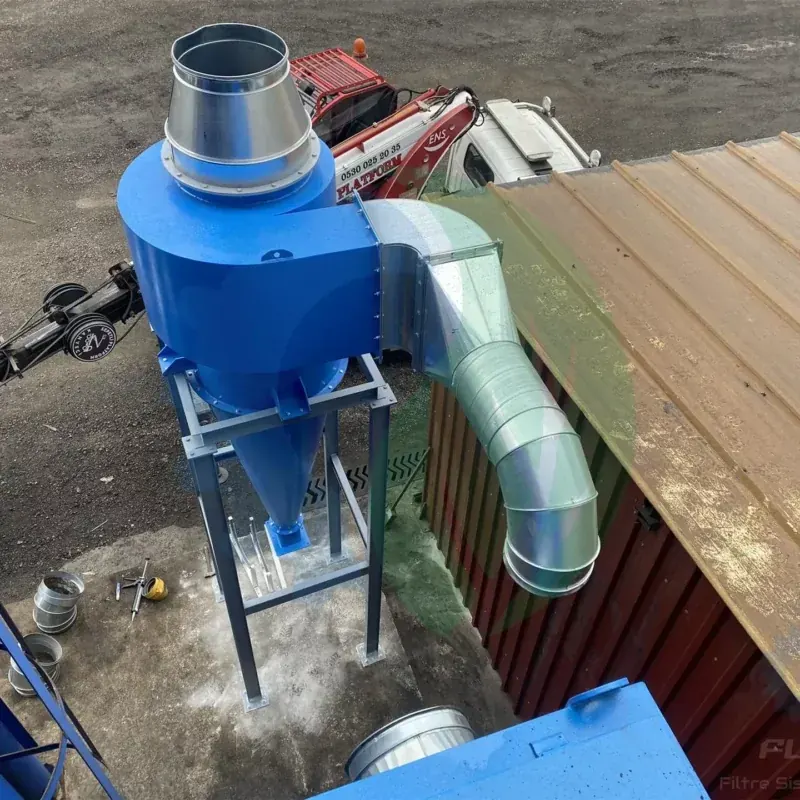
Mechanical ventilation controls the airflow with a fan, so it gives a predictable result. The suction and supply flow rates are adjusted separately, so the desired pressure balance is established in the environment. There are two approaches in this arrangement. General ventilation sweeps the entire volume. Local exhaust, on the other hand, captures the contamination at its source. For jobs that produce point-source contamination, such as welding, grinding and casting, local exhaust gives better results with less flow. On lines carrying coarse particles and sparks, a pre-separator cyclone is placed ahead of the filter.
Roof Ventilation
Factory roof ventilation systems are based on the principle of warmed air collecting at roof level. Aerators, roof fans and monitor-type openings belong to this group. Because the hot air is discharged from the highest point, the temperature at working level falls. The application is planned according to ceiling height and heat load. In plants with a high heat load, such as foundries, glassworks and rolling mills, roof solutions form the basis of the system. Covers that prevent rain and snow from entering are also included in the design.
Components of a Factory Ventilation System
An industrial ventilation installation consists of four interconnected main groups. The fan moves the air, the ducts carry it, the filter cleans it, and the automation manages the whole flow. When one of the components is wrongly selected, the performance of the others drops as well.
Ventilation Fans
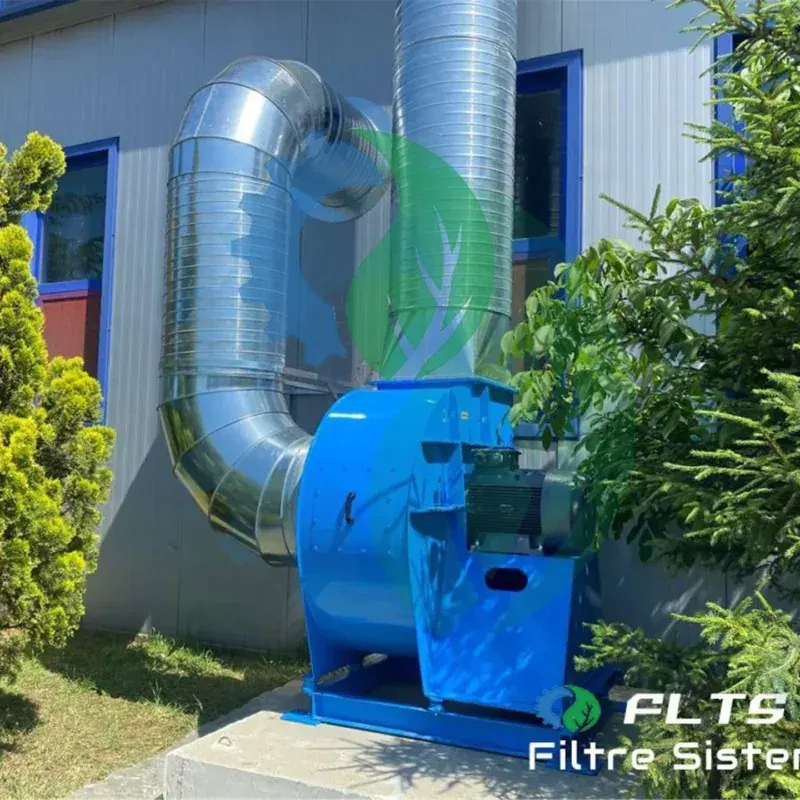
The fan determines the air flow rate and pressure of the system. Before selection, these two values are calculated. Centrifugal and radial fans are used on long duct lines requiring high pressure, and axial fans in low-pressure, high-flow applications. Cabinet fans are placed inside an enclosure to reduce noise. If the fan is not sized according to the total pressure loss made up of duct length, number of elbows and filter resistance, the flow rate falls below what is expected. The options are described on the industrial fans page.
Air Ducts and Grilles
Air ducts make the connection between the suction point and the filter unit. Because the cross-section determines the air velocity, it is designed together with the flow calculation. A narrow duct increases the pressure loss, and a wide duct leads to dust settling. Grilles and diffusers distribute fresh air into the environment. If the distribution is not balanced, dead spots form in some zones and the air in that area is not renewed. For this reason, grille positions are planned according to the production layout.
Filtration and Dust Collection Units
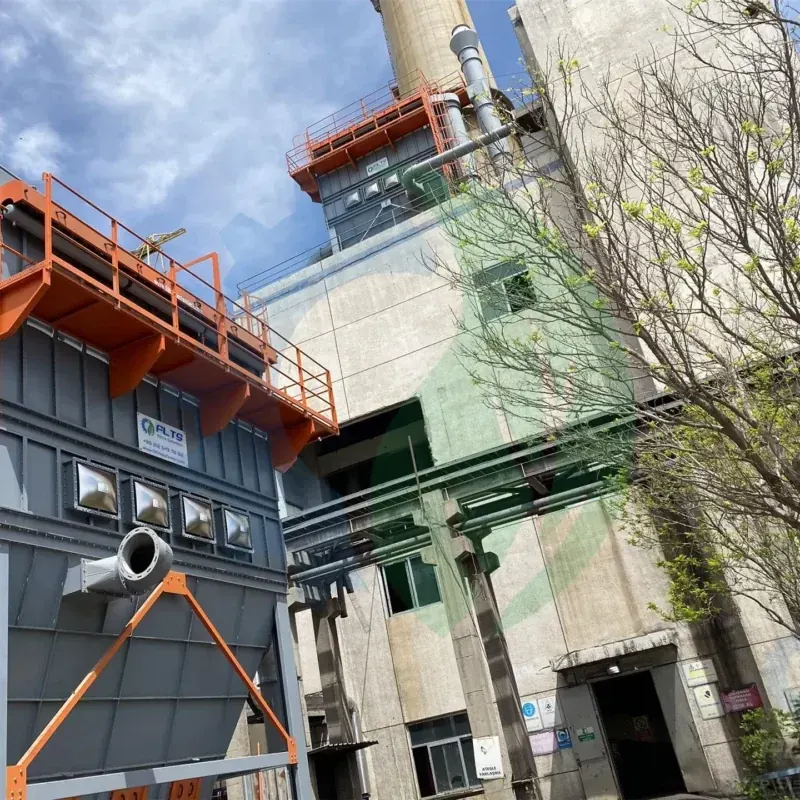
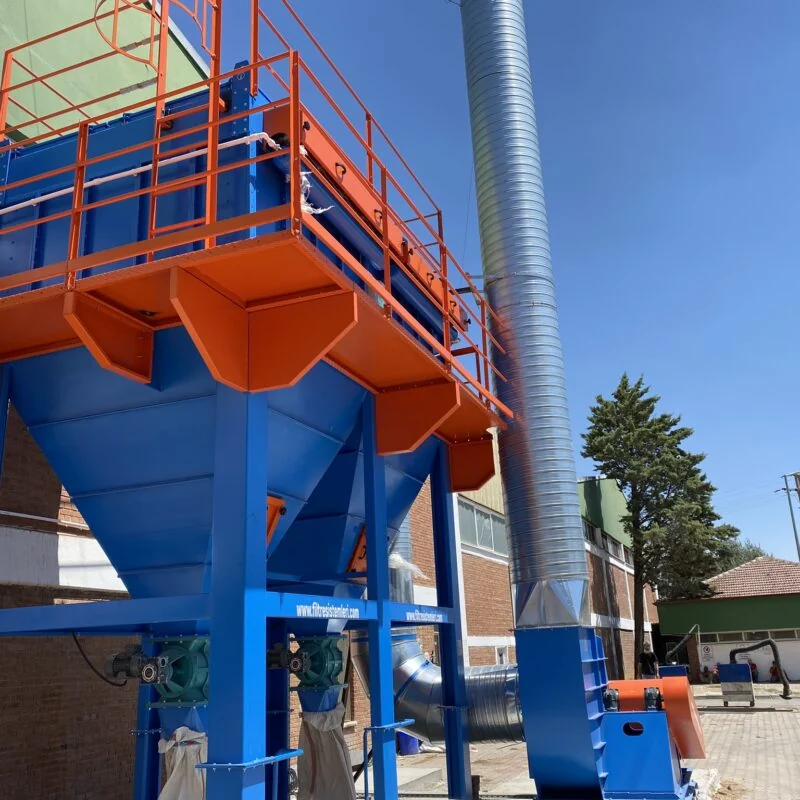
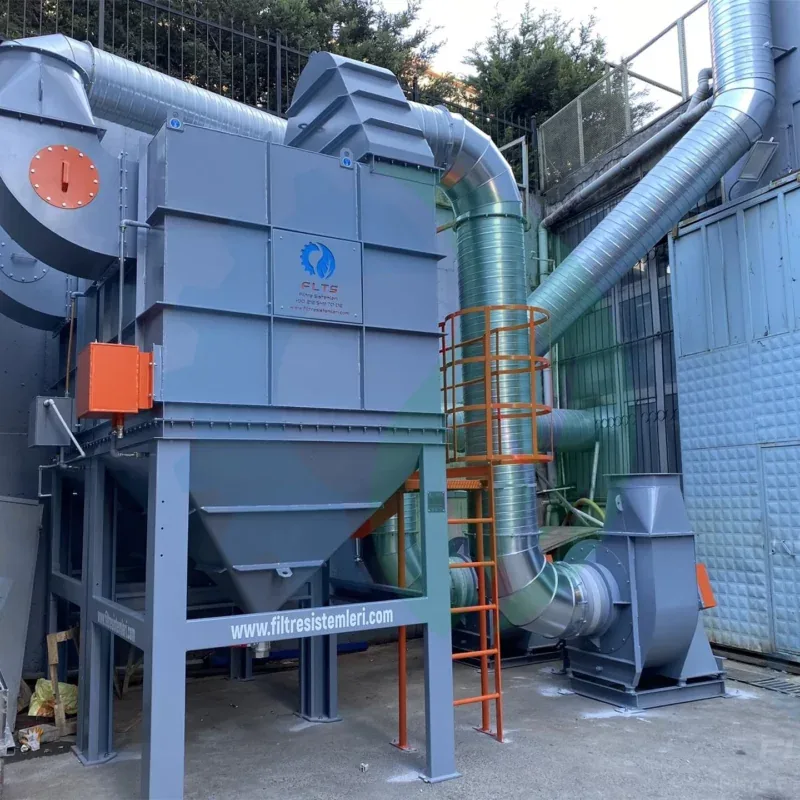
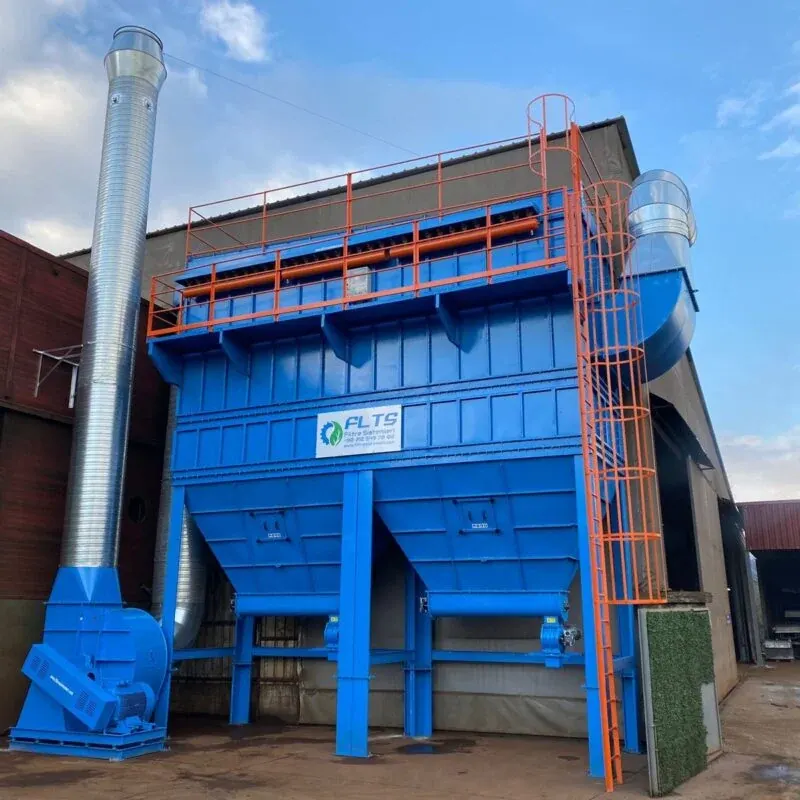
The filter unit ensures that the air discharged outside does not exceed emission limits. Panel filters are used at low and medium dust loads. On lines carrying heavy dust, jet pulse bag filter or cartridge filter units are preferred. For gases carrying high temperature, a gas cooling unit is placed ahead of the filter. The filter material is selected according to the dust type. For oily, humid and sticky dusts, a surface-treated material is used. A wrong selection leads to early clogging and a permanently high differential pressure.
Automation and Control
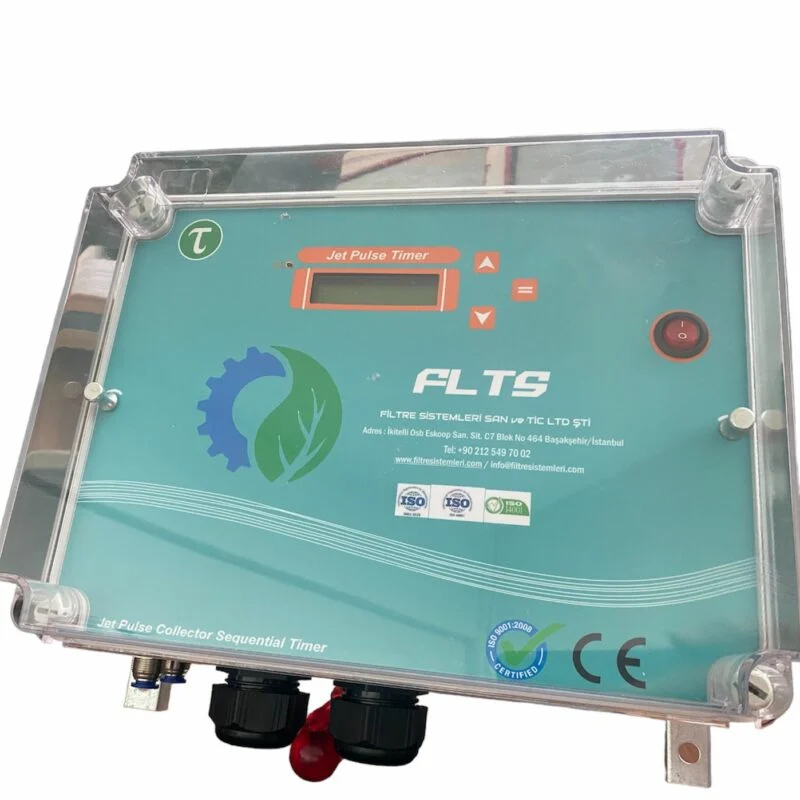
The automation panel determines when and at what capacity the system will run. A frequency inverter adjusts the fan speed to production intensity and reduces energy consumption during idle periods. Temperature and pressure sensors continuously monitor ambient conditions. Once shift hours, line occupancy and outdoor air temperature are defined, the system starts and stops by itself. In this way, the desired ambient condition is achieved with the least energy.
What Should Be Considered When Selecting a Factory Ventilation System?
The first question is the type of contaminant. Dust, fumes, gas and heat call for different solutions, and a single system does not handle all of them with the same efficiency. In selection, the following items are evaluated together:
- Type of contaminant, and the number of source points and their distance from one another.
- Plant volume, ceiling height and heat load.
- The share of machines running at the same time and the shift pattern.
- Emission values staying within legal limits.
- Explosion protection measures if combustible dust or vapor is present.
- The thermal effect of fresh air intake in winter and summer conditions.
- Whether the system can be expanded with new machines in the future.
The capacity calculation is just as decisive. When the flow rate is under-calculated, the environment is not cleaned. When it is over-calculated, energy is wasted unnecessarily and the heating load rises in winter.
How Is a Factory Ventilation Project Prepared?
A factory ventilation project starts with measurement and ends with commissioning. The plant volume, heat load, contaminant type and existing layout are examined on site. A capacity estimate given without measurement often fails to meet the real requirement. The project process proceeds with the following steps:
- Site survey and volume measurement.
- Determination of the contaminant type and source points.
- Flow calculation based on the air change rate and suction points.
- Duct route and suction point layout.
- Selection of fan, filter and automation.
- Manufacturing, installation and commissioning.
- Flow measurement and handover.
The measurement taken during commissioning shows that the calculated flow rate is also achieved in the field. In sections where paint is applied, ventilation is designed together with wet paint booths with water curtain.
Installation and Maintenance of Factory Ventilation Systems
Installation starts with laying the duct route so that it does not obstruct the production flow. The fan is isolated so that its vibration is not transmitted to the structure, and the duct connections are made airtight. Before commissioning, the flow rate is measured and the fan speed is set to the calculated value.
The basis of maintenance is monitoring the differential pressure. When the difference between the filter inlet and outlet rises, clogging has begun. Fan belts, bearings and build-up inside the ducts are also checked at regular intervals. When replacement time comes, the filter bags are renewed according to the plant’s dust type. A system maintained regularly keeps its flow rate and uses less energy.
Factors Determining the Price of a Factory Ventilation System
Prices of factory ventilation systems are not given from a fixed list. The main items that determine the cost are the plant volume, the calculated air flow rate, the duct length, the filter type and the scope of automation. When two plants of the same size carry different contaminants, the budget also diverges markedly. Stainless or corrosion-resistant ducts, ex-proof equipment and the need for gas cooling are among the items that raise the cost.
In the evaluation, the operating cost is taken into account as well as the initial investment. A system with a frequency inverter has a higher initial cost, but its energy consumption stays low and the difference closes over time. For a plant-specific price, a quotation can be requested by providing the volume, contaminant type and operating hours.
Factory Ventilation Setup by Industry
Factory ventilation systems are set up differently by industry. In some plants heat stands out, in others dust or vapor. The table shows which setup is preferred for which pollutant.
| Industry | Role of the system | Selection point |
|---|---|---|
| Foundry and melting | Removal of heat and furnace fume | Installing roof exhaust together with extraction at the furnace |
| Welding and grinding workshop | Capturing fume at its source | Local exhaust, discharge after the filter |
| Paint shop | Extraction of paint particles and solvent vapor | Booth extraction, fan that does not generate sparks |
| Wood and furniture | Sawdust and general ambient air | Extraction at the machine, combustible dust precautions |
| Food and feed | Dust and humidity control | Cleanable duct, hygienic vent placement |
| Plastics and chemicals | Removal of vapor and odor | Corrosion-resistant duct and fan housing |
| Warehouse and shipping | General air renewal | Low air change, mixed natural and mechanical solution |
Fan-side options are described on the industrial fans page, and the solution for sections where painting is done on the wet paint booths with water curtain page.
Information to Prepare for a Factory Ventilation Project
For industrial ventilation systems, collecting the following information before the site survey shortens the quotation process:
- Layout plan of the production area, floor dimensions and ceiling height.
- Type of pollutant: dust, welding fume, solvent vapor or excess heat.
- Number of machines producing pollutants and their positions in the layout.
- Shift pattern and the proportion of machines running at the same time.
- If there is an existing fan, duct or filter, label information and photos.
- Latest emission and ambient measurement reports and, if available, the notes of the occupational safety specialist.
- Space that can be allocated for equipment on the roof or on the exterior.
This data ensures that the factory ventilation flow is based on measurement, not estimation.
Frequently Asked Questions
How is the capacity of a factory ventilation system calculated?
The capacity is found by multiplying the plant volume by the air changes per hour. If there are local suction points, the flow rate of each point is added separately. The contaminant type and heat load change this number directly.
Should general ventilation or local exhaust be chosen?
If the contamination comes from specific machines, local exhaust gives better results with less flow. For heat and scattered contamination, general ventilation is needed. In most plants both are installed together.
Which plants are factory roof ventilation systems suitable for?
They work efficiently in plants with a high heat load and a suitable ceiling height. Foundries, rolling mills and glass production come first in this group.
How is a factory ventilation fan selected?
The fan is determined from the calculated air flow rate and the total pressure loss of the system. Duct length, number of elbows and the resistance of dirty filters are included in the calculation.
How long does a factory ventilation project take to complete?
The duration varies with the size of the plant and the scope of the system. The time from survey to commissioning becomes clear after project approval.
How often are factory ventilation systems serviced?
The filter differential pressure is monitored continuously, while mechanical checks are carried out at set intervals. In plants with high dust density, the maintenance interval is shorter.
What is an Industrial Dust Collection Machine?
Industrial dust collectorIt is an equipment used to clean dust, smoke and particles produced in industrial facilities. It is equipment used to clean dust, smoke and particles produced in industrial facilities. It collects airflow using a vacuum or filtration system and captures the dust into a collection chamber or filter bags.
What are the Prices of Factory Ventilation Systems?
Factory ventilation systems prices; varies depending on the size of the factory, the type and capacity of the ventilation equipment to be used, the complexity of the installation, local regulatory compliance requirements, and installation labor costs.
What are the Advantages of Factory Roof Ventilation Systems?
Advantages of factory roof ventilation systems It is diverse. It reduces the indoor temperature and increases the comfort of workers by allowing hot and dirty air to be discharged. It improves ventilation performance and indoor air quality by providing fresh air flow. It offers humidity control, helps protect materials and equipment, reduces the risk of fire and saves energy.
General information on dust collection systems
The Importance of Factory Ventilation Systems
Factory ventilation systemsIt is of vital value to ensure the quality of the working environment in industrial facilities and to protect worker health and safety. They also have a significant impact on production efficiency and business performance.
The Role of Ventilation in Terms of Worker Health and Occupational Safety
Industrial ventilation systemsThey play a critical role in terms of worker health and safety. Dust, chemical vapors and other harmful substances that workers in industrial facilities are exposed to can cause long-term respiratory illnesses and other health problems. This industrial dust collection systems, It protects the health of workers and prevents work accidents by removing harmful substances from the atmosphere. A good ventilation system creates a clean and healthy working environment within the facility and ensures the safety of workers.
Impact on Production Efficiency
industrial ventilation Effective design and operation of systems also has a positive effect on production efficiency. A good ventilation system improves worker comfort and increases working efficiency by controlling temperature and humidity levels within the facility. In addition, ventilation systems optimize the air circulation within the facility, increasing the performance of machinery and equipment and ensuring that production processes operate more efficiently. Therefore, factory ventilation systems have a great impact on the overall efficiency and competitiveness of businesses.
Types of Industrial Factory Ventilation Systems
Industrial factory ventilation systems can be designed and implemented using a variety of methods and technologies. Industrial factory ventilation systems can be designed and implemented using a variety of methods and technologies. These systems are designed to meet various needs to improve air quality within the facility, control temperature and humidity levels, and ensure worker health and safety. This diversity varies according to the needs and operational requirements of the factories.
Natural Ventilation Systems
Natural ventilation systems are systems that provide and control the air flow within the facility by natural methods. These systems allow the intake of fresh air outside and the exit of polluted air inside through windows and doors. Natural ventilation works by taking advantage of natural forces such as natural wind effect or thermal forces.
Advantages and Limitations of Natural Ventilation Systems
Natural ventilation systems have many advantages. These include low energy consumption, low operating costs, environmental friendliness and ability to operate independently. Natural ventilation systems can continue their functions even in emergencies such as power outages. However, natural ventilation systems also have certain limitations. In particular, it can be difficult to control air flow and ensure the desired air quality. Additionally, they may not be effective in some climatic conditions and may be insufficient to ensure air circulation within the facility. Therefore, natural ventilation systems must be designed and implemented correctly, taking into account their advantages and limitations.
Mechanical Ventilation Systems
Mechanical ventilation systems are systems that mechanically provide and control the air flow within the facility. These systems; Ventilators are designed using mechanical components such as fans, ducts and air cleaning equipment. Mechanical ventilation systems offer an effective solution to improve indoor air quality, control temperature and humidity levels, and ensure worker health and safety.
Application Areas and Advantages of Mechanical Systems
Mechanical ventilation systems have many application areas and advantages. These systems can be used in a wide range of areas, from industrial facilities to office buildings, from commercial buildings to hospitals. Mechanical industrial ventilation systems Advantages include the ability to control airflow, the ability to precisely manage air quality, the potential to deliver higher efficiency and performance, and the flexibility to adapt to a variety of operating conditions. Additionally, mechanical systems can be integrated with modern technologies such as automation and remote control so they can operate more efficiently. Therefore, mechanical ventilation systems are a widely preferred ventilation solution in various industrial and commercial applications.
How Do Factory Ventilation Systems Work?
Factory ventilation systems are complex structures designed to improve the air quality within the facility and ensure worker health and safety. These systems are formed by the combination of various components and work in a specific way.
Basic Components of Ventilation Systems
Key components include factory ventilation fan, fans, air ducts, air cleaning equipment (filters, cyclones, etc.), air distribution systems (air vents, diffusers, etc.) and control devices. Ventilators or fans move the air within the facility by sucking or pushing it. Air ducts carry and distribute sucked and expelled air. Air cleaning equipment provides clean air by filtering or separating particulate matter in the air. Air distribution systems distribute cleaned air homogeneously throughout the facility. Control devices control the air flow and other parameters in the system.
Control and Management of Air Flow
In factory ventilation systems, air flow is carefully controlled and managed. The speed and operating time of fans, the dimensions and shape of air ducts, the type and efficiency of air cleaning equipment, the layout of air distribution systems and the settings of control devices are important for the control and management of air flow. These parameters affect the air quality, temperature and humidity levels within the facility, and worker health and safety. Effective operation of ventilation systems is ensured by the harmonious combination and correct management of these components. In this way, factory ventilation systems provide a healthy and safe working environment by improving the air quality within the facility.
Selection of Factory Ventilation Systems
Proper selection of factory ventilation systems is extremely important to ensure that the testicle has a healthy and productive working environment. The selection of these systems is a complex process in which factors such as needs analysis, system design, energy efficiency and cost effectiveness must be taken into account.
Needs Analysis and System Design
Selection of a factory ventilation system requires first determining the needs and requirements of the facility. This is done by taking into account factors such as existing air quality, size and shape of the facility, production processes, number of employees and type of activity. As a result of the needs analysis, the design of the ventilation system is determined. This design includes factors such as managing airflow, air purification requirements, energy consumption, and system safety. The system design provides a customized solution to meet the specific requirements of the facility.
Energy Efficiency and Cost Effectiveness
Energy efficiency and cost effectiveness are also of great value when choosing a factory ventilation system. Energy efficiency is a critical factor for reducing the system’s operating costs and reducing its environmental impact. Therefore, equipment with high energy efficiency should be preferred. The cost effectiveness of the system should also be considered. A cost-effective ventilation system reduces long-term operating costs and shortens the return on investment.
Installation and Maintenance of Factory Ventilation Systems
Installation and regular maintenance of factory ventilation systems are critical to ensuring the systems operate effectively and reliably. Professional installation and regular maintenance are essential to ensure a healthy and productive working environment within the facility.
The Importance of Professional Installation
Professional installation of factory ventilation systems ensures that the system is installed correctly and optimized. Experts have experience in correctly positioning system components and making secure connections. Additionally, professional installation increases system performance and helps prevent possible errors. Correct installation ensures that the system has a long life and provides the expected performance.
Maintenance Programs and Routine Checks
Regular maintenance of factory ventilation systems ensures that the system operates effectively and reliably at all times. Maintenance schedules and routine checks include cleaning, lubricating and adjusting the system’s components. These maintenance activities reduce wear and tear on the system, optimize performance and reduce the risk of failure. Regular maintenance increases energy efficiency and reduces operating costs. Maintenance programs must be carried out at specified periods and by authorized personnel, so that the system operates properly and the expected performance is achieved.
- Category
- Dust Collection Systems
- Made in
- İkitelli OSB, Istanbul, Türkiye
- Updated