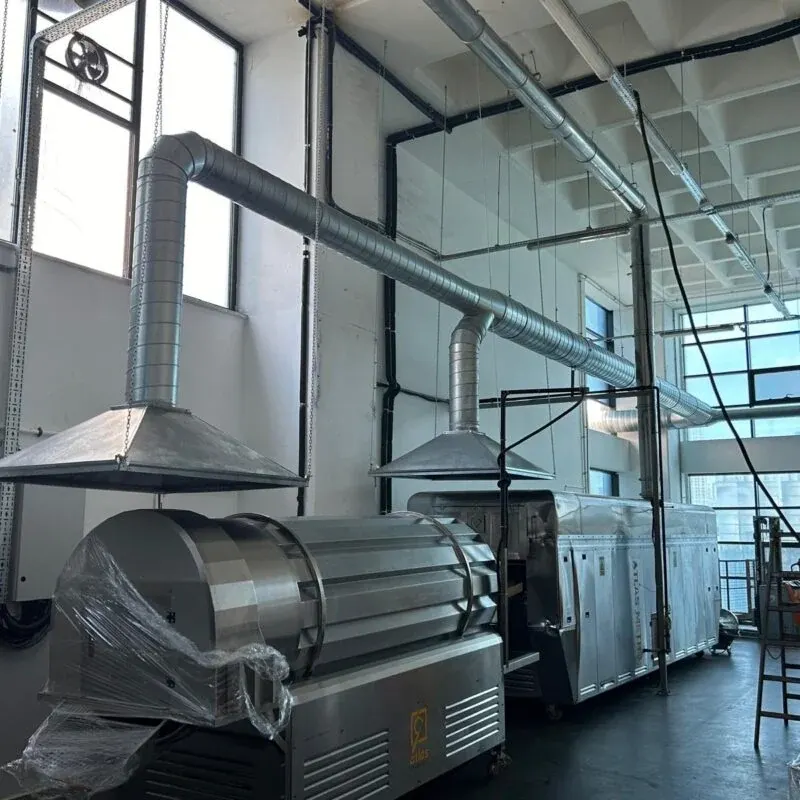





Jet Pulse Cartridge Filter
24 May 2024
Gas Cooling Unit
24 May 2024
Water Filter
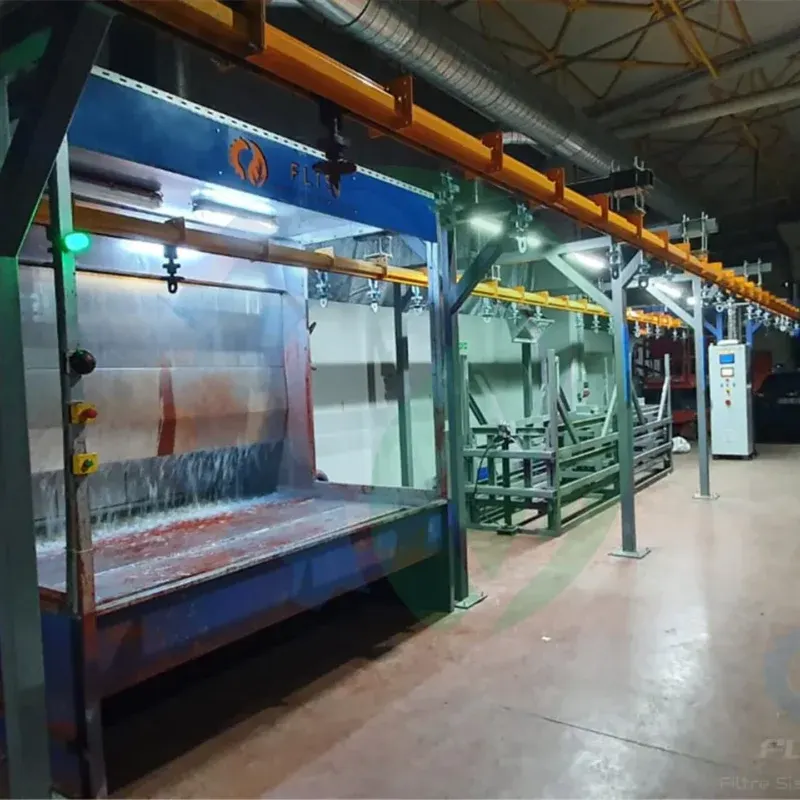
A water filter is a wet-type dust collection system that passes dirty air through water turbulence, causing the dust and particles it contains to settle in the water. When the extraction fan runs, water from the reservoir below the hopper creates turbulence in the scrubber cell with stainless steel separators. Particles are washed out in this turbulence and collect as sludge at the bottom of the reservoir.
It is designed for lines where a dry filter would clog or pose a risk: solvent- or oil-based wet paint, metallizing, glazing and polishing, spark-producing grinding, and forming stations that emit oily or vapor-laden gases. It requires no external pump, water tank or settling pond. FLTS manufactures each unit to measure according to the airflow of the line and the nature of the particles.
- Design without an external pump or settling pond
- Combustible and sticky particles bound in water
- Scrubber cell with stainless steel separators
- Control panel synchronized with the machine
What is an Aqueous Filter?
A Water Filter is a filtration system that uses water to remove dust, particles and gases from the air. In these filters, air and particles are filtered and cleaned by exposure to water. Aqueous filters are used in industrial facilities and areas where air pollution is intense. It is one of the frequently preferred tools among industrial dust collection systems.
working principle
The working principle of aqueous filters is quite simple. Air and particles are filtered by exposure to water. Water captures and retains particles. In this way, if the cleaned air is released into the atmosphere, the particles are separated from the water and collected in the cleaned water. This process ensures effective removal of dust and particulate matter from the air.
Main Advantages of Water Filters
Aqueous filters have many basic advantages. One of the most important among these should ensure high efficiency. Water filter chimneys effectively clean the particles in the air by drawing them into the water. Additionally, water filters are easy to maintain and have low operating costs. Another advantage is that they are environmentally friendly. Because water is the primary materials used during the filtration process and can be recycled. These are the main reasons why aqueous filters are preferred in industrial facilities and environmentally sensitive areas.
Water Filter Technical Specifications
Flue system specifications provide critical information about the design and performance of filtration systems. These features play a decisive role in the effectiveness, durability and efficiency of filters. Technical specifications of aqueous filters include design and structural features, as well as performance and effectiveness criteria.
Design and Structural Features
The design and structural features of aqueous filters include elements such as the size, shape and material of the filter tank, the type and power of the pump used to circulate the water, the material quality of the filtering unit, and the capacity of the water tank. These features are important for the assembly, integration and durability of filters. For example; The fact that the filter tank is made of durable and corrosion-resistant material ensures the long life of the filter system. Additionally, the power and performance of the pump affects the filtration efficiency by ensuring the water circulates effectively.
Performance and Effectiveness Criteria
Chimney filter systems performance and effectiveness determine how effective the filtration is and how efficiently it works. Performance criteria include factors such as particle removal rate from the air, airflow capacity, pressure loss, water consumption and moisture generated during filtration. These criteria indicate how effectively the filters remove dust and particulate matter and how energy efficient they are.
For example; While low pressure loss and low water consumption reduce the operating cost of filters, high filtration efficiency is important for providing clean air. Therefore, the performance and effectiveness criteria of aqueous filters are factors that should be taken into consideration in filter selection and application.
Water Filter Usage Areas
Aqueous filters are effective filtration systems that have a wide range of uses. They are used in a variety of areas, from industrial processes to environmental applications. In industrial processes, the chimney filter system plays a major role in controlling dust and particles. Water filter systems, which are widely used in sectors such as chemistry, metal processing, automotive and food industries, are preferred for purposes such as purifying industrial waste gases, reducing air pollution and protecting worker health. At the same time, aqueous filters are used effectively in various application areas, from outdoor events to construction sites. This diversity shows that aqueous filters are a versatile and effective filtration solution.
Use of Water Filters in Industrial Processes
Aqueous filters have a wide range of uses in industrial processes. In various industries such as metalworking, automotive, chemical, food and beverage industry, aqueous filters are used to effectively control and remove dust and particles generated during the process. For example, aqueous filters are preferred in metal processing facilities to collect metal dust generated during operations such as welding or grinding. Aqueous filters are also used to filter chemical vapors and particles in dye shops and chemical plants.
Various Applications of Aqueous Filters
Aqueous filters have various applications. These include areas such as dust and particle control in industrial facilities, air cleaning systems, reducing air pollution, purifying industrial waste gases and improving air quality. In addition, aqueous filters can be used for dust control at outdoor events, construction sites, railway and port terminals. These various applications of aqueous filters have an important place in reducing environmental impacts and protecting worker health.
How to Choose a Water Filter?
Aqueous filter systems come to the fore in the effective removal of dust and particulate matter in industrial facilities and various application areas. However, choosing the right water filter model is vital for the efficiency and performance of the business. Therefore, carefully determined criteria and correct strategies should be used when choosing a water filter. To choose the right filter model, certain factors must be considered. These include criteria such as filtering need, application area, operating conditions and capacity. In the process of choosing the right water filter model, these criteria must be evaluated in detail and the right filtering solution must be determined.
Criteria for Choosing the Right Water Filter Model
There are some criteria to consider when choosing the right water filter model. These include the need for filtration, the application area, operating conditions and the characteristics of the dust particles. When determining the need for filtration, factors such as what type of dust and particles need to be filtered, filtration efficiency, and air flow capacity should be taken into consideration. Also the application area is important. Because different industrial processes may have different filtration requirements. Operating conditions must also be taken into account; For example, temperature, humidity, and other environmental factors can affect filter selection. All these criteria should be evaluated and the correct water filter model should be selected.
Capacity and Sizing Tips
Capacity and sizing tips should also be taken into consideration when choosing a water filter. The filter must have a capacity appropriate to the operating conditions and filtering needs. The air flow capacity of the filter must be sufficient to meet the air cleaning needs of the business. The size of the filter tank and the capacity of the water tank are also important. Correct sizing of the filter increases the effectiveness and efficiency of the filtering process. Therefore, capacity and sizing tips should be taken into consideration when choosing a filter.
Water Filter Installation and Maintenance
Installation and regular maintenance of aqueous filters are needs that require careful attention for the effectiveness and durability of the filters. The installation process is the correct installation and commissioning of the filter system. This ensures that the filters work efficiently. However, regular maintenance routines maintain the long-term performance and functionality of filters.
Installation Process and Things to Consider
Proper installation of aqueous filters is essential for effective filter operation. The installation process must be carried out by technical experts and must include certain steps. These steps include correct positioning of the filter tank, installation of the water tank, installation of the pump, and placement of the filtration unit. During installation, there are certain considerations that must be taken into account for the safety and efficiency of the filtration system. For example, the filter tank must be mounted on a solid foundation, the water tank must be checked for leaks and all connections must be placed tightly. The instructions provided by the manufacturer should be followed carefully during the assembly process.
Maintenance Routines and Recommendations
Regular maintenance of aqueous filters ensures long-lasting and effective operation of the filters. Maintenance routines are carried out at certain intervals and include operations such as cleaning filters, checking the water level, and examining the condition of the pump. Performing maintenance routines regularly increases the performance of filters and helps prevent malfunctions. There are also some recommendations to consider during maintenance. For example, operations such as using appropriate cleaning materials to clean the interior of the filter tank, regularly disinfecting the water tank and lubricating the pump should be carried out. Performing maintenance routines regularly and professionally increases the long-term performance and durability of filters.
Advantages of Water Filter
The chimney type aqueous filter is a widely used filtration solution for the effective removal of dust and particulate matter in industrial facilities and various application areas. These filters offer several advantages, such as being environmentally friendly and energy efficient. The advantages of aqueous filters include providing environmentally friendly solutions, recyclability of water, energy efficiency and operational savings.
Environmentally Friendly Solutions and Sustainability
Water chimney filters offer environmentally friendly filtration solutions and an option that complies with sustainability principles. The water used in these filters has a minimal impact on the environment as it is used as the main cleaning agent in the filtration process. In addition, the fact that water is recyclable and can be made reusable after the filtering process minimizes water waste. This contributes to the protection of natural resources and reduction of water consumption. The environmental friendliness of aqueous filters is an advantage for businesses looking to comply with environmental regulations in various industries.
“Energy Efficiency and Operational Savings”
Aqueous filters reduce operating costs by providing energy efficiency and operational savings. Chimney water filter systems, which have lower energy consumption compared to other filtration systems, minimize energy requirements because water is used as a natural cleaning agent in the filtering process. Maintenance and operation of aqueous filters are simpler and require less labor than other systems. This reduces the operational costs of businesses and increases efficiency. Energy efficiency and operational savings are important factors in choosing water filters. Because it allows businesses to remain competitive and adopt sustainable growth strategies.
Water Filter System Applications
A water filter system is installed on lines where a dry filter would clog or carry risk. The common point is that the air carries oily, humid, sticky or combustible particles. The table below shows the most common applications.
| Industry / process | Role of the water filter | Selection point |
|---|---|---|
| Metallized coating | Settling the metal particles produced during coating in water | Combustible metal dust, keeping the water level constantly maintained |
| Wet paint lines | Capturing solvent-based or oil-based paint particles | How often the paint sludge is removed from the tank, corrosion resistance of the housing |
| Glazing and polishing | Washing out glaze and polish particles | Sticky particles must not build up in the cell |
| Wire and metal strip bending | Capturing the oily vapor produced during forming | Oil load, water change interval |
| Grinding and welding | Washing out sparking metal dust and fume | Sparks are a risk for a dry filter; a water cell reduces this risk |
| Chemical and process gases | Separating particles in humid or vapor-laden gas | Chemical composition of the gas, selection of housing material |
Difference Between Water Filter, Scrubber and Venturi
Scrubber is the general name for wet washers, and the water filter belongs to this family. In a venturi type, the gas is accelerated through a narrowing throat and mixes with the water droplets sprayed into it. A classic wet stack system mostly works with a nozzle, an external pump and a settling basin. In the water filter we manufacture, water turbulence forms in the washing cell through the suction of the fan, and no external pump or basin is required. This is sufficient to capture particles. If a water-soluble gas or odor component is targeted, whether an additional washing stage is needed is evaluated separately.
Information to Prepare When Requesting a Quotation for a Water Filter
The cell size, the fan flow and the tank volume all follow from the same data. If the information below is ready, the scope is settled at the first meeting.
- The process that is the source of the particles (such as painting, coating, glazing or grinding).
- The type of paint or chemical used, and whether it is solvent-based or oil-based.
- Number of suction points and the booth or hood size at each point.
- Gas temperature and the vapor or oil load in the air.
- How often and how the sludge will be removed, and the plant's wastewater practice.
- Whether the unit will be placed indoors or outdoors, and whether there is a risk of freezing in winter.
If you are looking for a solution together with a booth for a wet paint line, see the wet paint booths with water curtain page; for other options for dry dust, see the industrial chimney filter page.
How is performance verified in chimney water filter systems?
In a chimney application, neither the appearance of the water nor the running of the fan shows the capture performance. The operating values recorded during commissioning form the reference for later checks.
| Check | Why is it monitored together? |
|---|---|
| Water level and sludge accumulation | Shows whether the operating condition of the washing cell is maintained. |
| Unit pressure loss and air flow | Helps evaluate the effect of changes in the duct, cell or separator on suction. |
| Gas temperature and changes in the process | Can affect evaporation, condensation and the pollutant load at the inlet. |
| Particle measurement at the chimney outlet | Verifies whether the required outlet value is achieved under actual operating conditions. |
While the water level looks normal, the flow or the pollutant load may have changed. In a maintenance decision, these records are evaluated together; an emission result is not drawn from a single manometer reading.
Frequently Asked Questions
How Much Are Water Filter Prices?
Water filters prices; It varies depending on filtering capacity, purpose of use and quality. However, it may be effective in pricing policy for special demands or higher capacity systems.
What is a Smokeless Odorless Chimney Filter?
The smokeless odorless chimney filter is a filtration system used to remove smoke and odor in the chimneys of heating and cooking systems used in homes or commercial buildings. It is designed with carbon or electric filtering technology. It effectively removes smoke and odor, improves indoor air quality and pollutes the environment less.
What are the Advantages of Water System Ventilation?
Water system ventilation is an effective method for cleaning dust and particles in industrial facilities. The advantages of these systems include high efficiency, elimination of odors, low fire risk, environmental friendliness and low operating costs. Water system ventilation provides an economical solution by reducing operating costs while making working environments clean and healthy.
Is the white appearance at a water filter chimney always a dust leak?
A white appearance may come from condensing water vapor, carried-over droplets or particles. The appearance alone does not show which is dominant. Gas conditions, the state of droplet separation and a suitable chimney measurement are evaluated together.
Can any cleaner or chemical be added to the water filter water?
The choice of additive is evaluated together with the chemistry of the pollutant, compatibility with the housing and gaskets, foaming tendency and waste management. Converting a unit that captures particles into a gas or odor treatment system by adding chemicals at random would not be correct; the appropriate process design is clarified with the manufacturer.
General information on dust collection systems

- Category
- Dust Collection Systems
- Made in
- İkitelli OSB, Istanbul, Türkiye
- Updated