

Radial Fan
5 October 2026
ATEX Fan
5 October 2026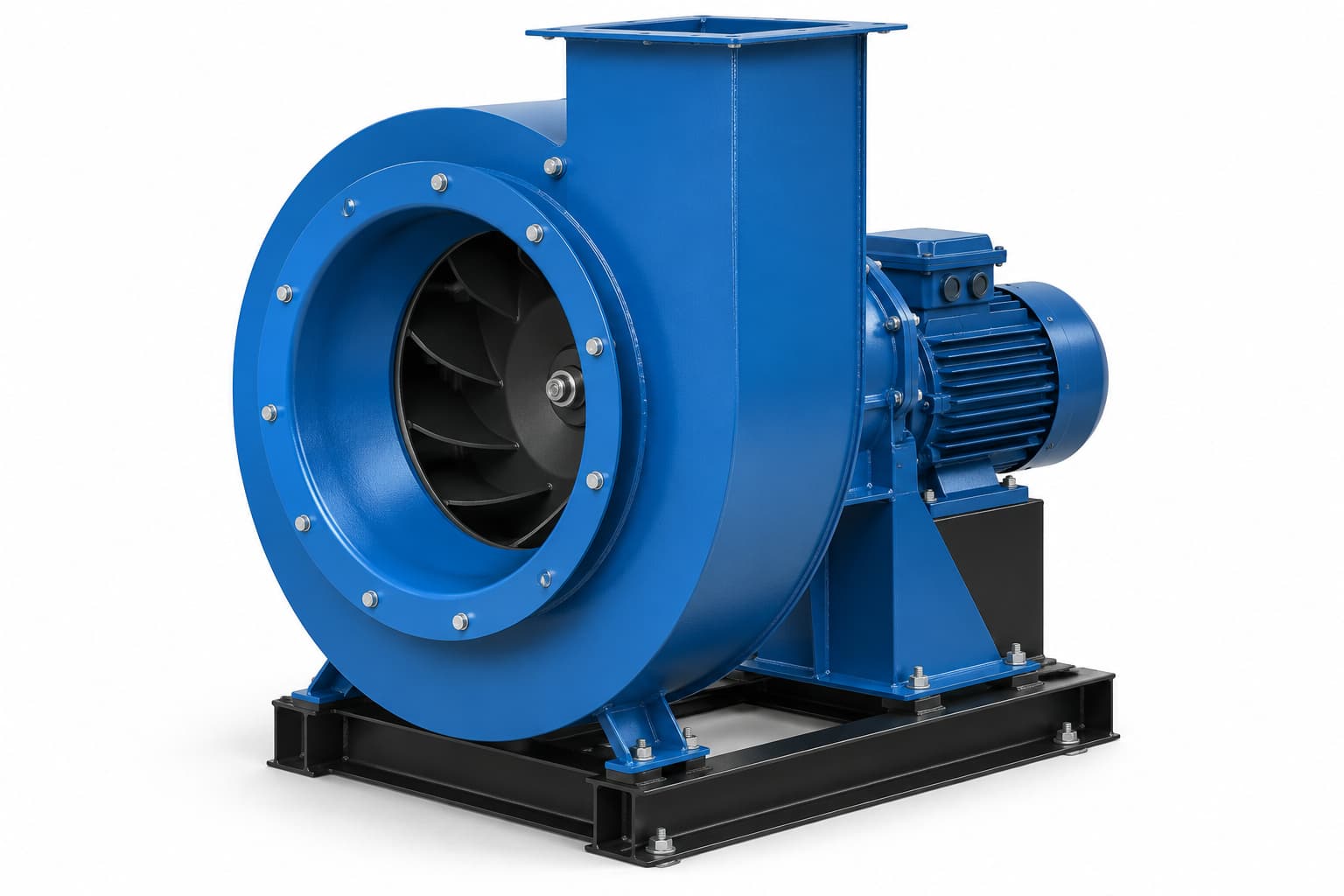

Centrifugal Scroll Fan
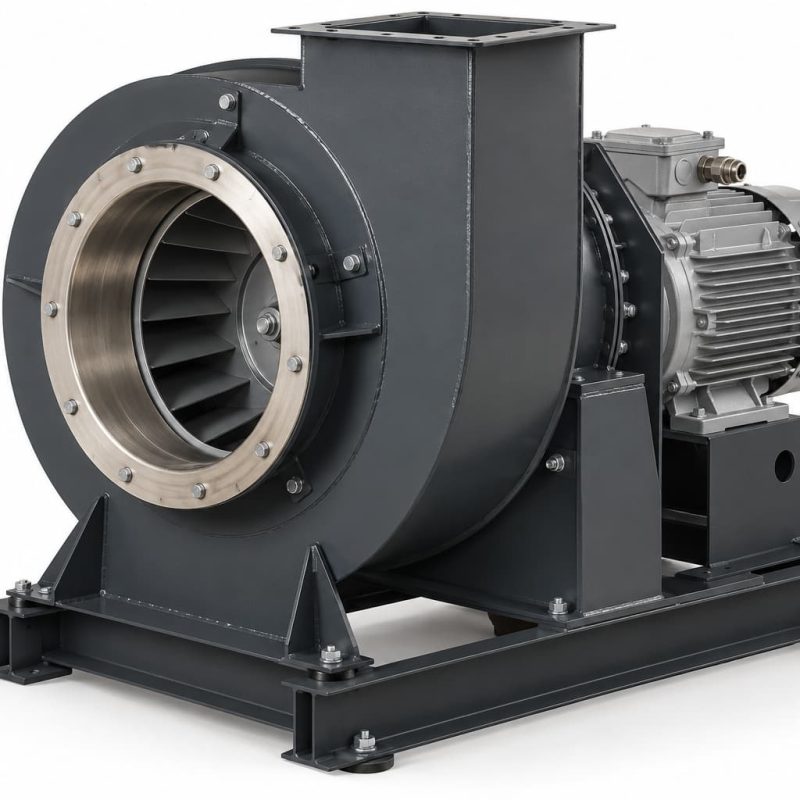
A centrifugal scroll fan is a type of centrifugal fan named after its spiral-shaped housing and known for generating high pressure. It is the equipment that overcomes the resistance found in long ductwork runs and filter-connected systems.
At FLTS, we manufacture centrifugal scroll fans for a wide range of facilities, from foundries to woodworking plants. Sizing is based on a combined assessment of airflow, pressure and the characteristics of the air being handled.
Capacity, filter area and housing dimensions are sized for your plant according to dust type, dust load and air flow. Share your process details and we will define the right system and quotation with you.
- Centrifugal Scroll Fan made in-house in İkitelli OSB
- Site survey and engineering for Centrifugal Scroll Fan
- Centrifugal Scroll Fan installation and commissioning
- Centrifugal Scroll Fan spare parts and maintenance
What Is a Centrifugal Scroll Fan?
A centrifugal scroll fan is a machine that draws air into the center of its housing, flings it outward with the impeller blades and guides it along the spiral casing to the outlet. In the process, the air turns through ninety degrees and gains pressure.
The term industrial scroll fan covers the entire centrifugal family, because every fan in this group has a scroll-shaped housing. In the industry, the names scroll-type fan and volute fan describe the same equipment, and scroll-type fan is especially common in conversations on site.
Centrifugal Scroll Fan Working Principle
The motor shaft drives the impeller, and the rotating scroll fan impeller throws the air at the center out toward the blade tips. Centrifugal force both accelerates and compresses the air.
This is where the spiral housing comes in. Because the cross-section widens toward the outlet, air velocity drops and the lost velocity is converted into static pressure. The clearance between the scroll fan impeller and the housing directly determines how efficient this conversion is.
Centrifugal Scroll Fan Types
Centrifugal scroll fan types are classified by the pressure they generate and by their blade shape. The table below compares the blade types.
|
Blade type |
Efficiency |
Noise |
Suitable air |
|---|---|---|---|
|
Backward-inclined |
High |
Low |
Clean, low dust |
|
Forward-curved |
Medium |
Lowest |
Clean, low airflow |
|
Straight radial |
Medium |
High |
Abrasive and sticky |
Mini scroll fan and small scroll fan models follow the same principle, the only difference being housing size and motor power. When choosing among centrifugal scroll fan types, the cleanliness of the air is assessed first, followed by the pressure requirement.
Low Pressure Scroll Fans
Low pressure models are used on short duct runs and for general area ventilation. Where resistance is low, they deliver high airflow economically.
General workshop ventilation, fume extraction and short transfer lines are typical applications for this group.
Medium Pressure Scroll Fans
The medium pressure group comes into play as the duct run gets longer and the number of elbows increases. It is the most common choice for unfiltered but convoluted duct systems.
Paint shop extraction lines, drying booths and conveying lines in food plants are served by this group.
High Pressure Scroll Fans
High pressure models are built with narrow-bladed impellers and overcome the toughest system resistance. They are the standard solution for dust collection lines connected to a filter unit.
Because resistance rises as the filter loads up, fans in this group are selected based on the dirty filter value. Otherwise the system loses suction within a few weeks.
Backward-Inclined Blade Scroll Fans
With blades facing away from the direction of rotation, the backward-inclined design delivers the highest efficiency. Because it uses less energy for the same airflow, it is preferred on lines that run for long hours.
Efficiency drops once dust starts building up on the blades, so this type is used with clean or filtered air.
Forward-Curved Blade Scroll Fans
Forward-curved impellers have a large number of blades and run at low speed. Since low speed translates directly into low noise, this is the type to choose for applications that call for a quiet scroll fan.
Quiet scroll fans are preferred in places with noise limits, such as offices, retail stores and hospitals. Their efficiency is lower than that of the backward-inclined type, so they are not used for prolonged heavy-duty service.
What Are the Technical Specifications of a Centrifugal Scroll Fan?
Centrifugal scroll fan specifications are grouped under airflow, static pressure, speed, motor power and housing material. These values are interdependent: when one changes, the others are recalculated.
Scroll fan dimensions are defined by impeller diameter, and the inlet and outlet cross-sections are sized according to this diameter. For lines that fall outside standard scroll fan dimensions, the housing is custom built. In small scroll fan models, the smaller impeller diameter means a higher speed for the same airflow. To size the scroll fan motor, airflow multiplied by pressure is divided by fan efficiency, and among all scroll fan specifications, motor power is the item that affects cost the most.
Centrifugal Scroll Fan Applications
A centrifugal scroll fan works on any line where air is moved against resistance. Scroll fan ventilation solutions are installed especially to renew the air in enclosed production areas.
Foundries, cement, woodworking, food, chemical and metalworking plants are where industrial scroll fans are used most intensively. In factory ventilation systems, scroll ventilation units serve as the main equipment, while mini scroll fan models are used for individual machine extraction.
Using Scroll Fans in Dust Extraction Systems
The centrifugal scroll fan is the heart of a dust extraction line, because it is the equipment that generates the negative pressure. Without the fan, no extraction hood will pull in any dust.
The fan is usually positioned after the filter unit, so the impeller receives cleaned air. Where dust has to pass through the fan, a radial scroll fan is used, as its straight-blade design does not let abrasive dust build up. On Jet Pulse Bag Filter lines, the scroll fan performs its extraction duty from the clean side after the filter, while for abrasive dust a pre-separator cyclone is added upstream of the radial scroll fan.
How Do You Select a Centrifugal Scroll Fan?
Centrifugal scroll fan selection starts with determining airflow and static pressure together. High airflow alone is not enough on long lines.
The second step is the character of the air. Backward-inclined blades stand out for clean air, straight radial blades for dusty air, and forward-curved blades where noise limits apply. During scroll fan selection, operating temperature and explosion hazard classification also determine the housing material.
Centrifugal Scroll Fan Calculation
The scroll fan calculation starts with the total airflow of the extraction points, and the pressure loss of the duct run is then added. Elbows, reductions and filter resistance are all included in this total.
The two resulting values are plotted on the fan curve, and the point where it intersects the system resistance curve gives the actual operating point. Once the scroll fan calculation is complete, the required motor power follows automatically.
Centrifugal Scroll Fan Design and Manufacturing
Scroll fan design begins with measurements taken at the facility. The correct impeller and housing cannot be selected until air temperature, dust concentration, humidity and chemical content have been determined.
At the scroll fan manufacturing stage, impeller shape, housing sheet thickness and material are decided together. Mild steel is used under normal conditions, stainless steel where there is a risk of corrosion and galvanized steel for outdoor installation. The scroll fan design is finalized with this material decision. After production, the impeller is dynamically balanced; if this step is skipped, bearing life is noticeably shortened. That is why it is important to ask for a balancing report when choosing among scroll fan manufacturers, since not every workshop that builds scroll fans can provide this measurement.
Centrifugal Scroll Fan Prices
Centrifugal scroll fan prices are not quoted from a ready-made list; each unit is priced according to the project. The same applies to scroll-type fan prices. Airflow, pressure, motor power, housing material and drive type are the main cost items in scroll fan prices.
Scroll-type fan prices move into the upper band for models with stainless steel housings and motors rated for explosive atmospheres. Energy cost is just as decisive: in a unit that runs most of the day, an efficient impeller recovers the difference in initial investment within a few years. The difference between two quotes that look similar is usually hidden in sheet thickness and motor efficiency class. When comparing scroll fan manufacturers, these two items should be requested separately from the technical data sheet. You can get a price for your project by filling out our quote request form.
What Should Be Considered When Installing a Centrifugal Scroll Fan?
A scroll fan is installed in a way that prevents vibration from being transmitted to the structure. The unit is set on anti-vibration mounts and connected to the ductwork with a flexible connector.
Leaving a straight duct length at the inlet and outlet must not be overlooked either. Air entering the fan through an elbow disturbs the flow and reduces airflow. After installation, the direction of rotation must always be checked: an impeller running in reverse still moves air but delivers only a small fraction of the airflow. The same checks apply to the other types in our industrial fans range.
Frequently Asked Questions
Why are airflow and pressure important when selecting a scroll fan?
Airflow indicates the amount of air moved, while pressure shows the ability to overcome duct resistance. Two fans delivering the same airflow at different pressures will perform completely differently on site.
How is scroll fan motor power determined?
Motor power is found by multiplying airflow by static pressure and dividing by fan efficiency. When selecting the scroll fan motor, a protection class suited to ambient conditions is added, along with an explosion-proof design if required.
Which direction does a scroll fan rotate?
The impeller rotates in the direction in which the housing spiral opens, and this direction is marked with an arrow on the housing. A fan wired in reverse still blows air, but its airflow falls well below what is expected.
How often should industrial scroll fans be serviced?
Impeller cleaning and bearing checks should be carried out every three months, and belt tension and motor current measurements every month. On lines carrying abrasive or heavy dust loads, these intervals are shortened by up to half.
- Category
- Dust Collection Systems
- Made in
- İkitelli OSB, Istanbul, Türkiye
- Updated