







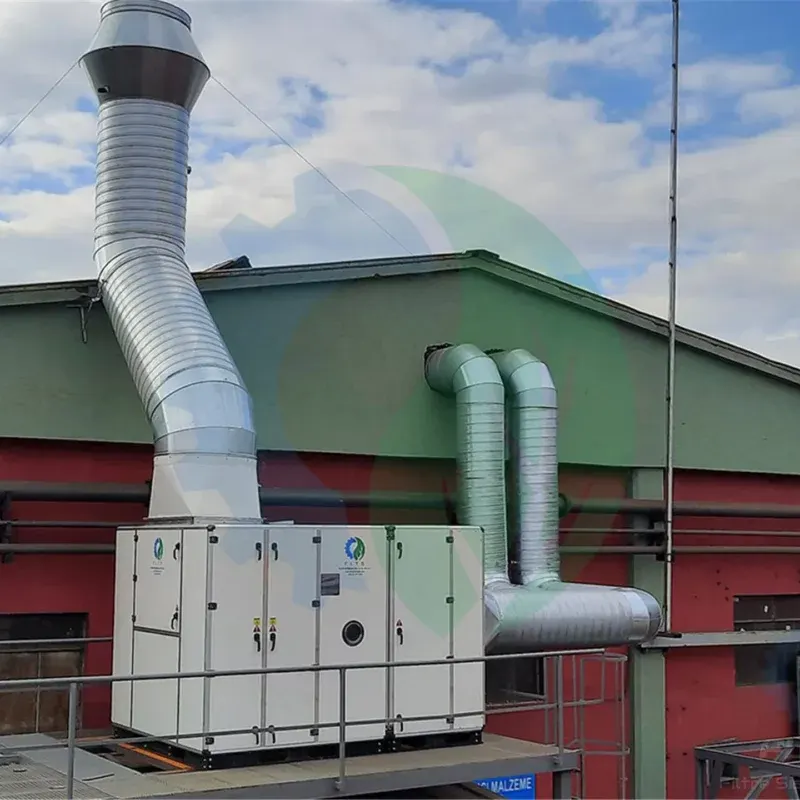
Which Product for Which Job?
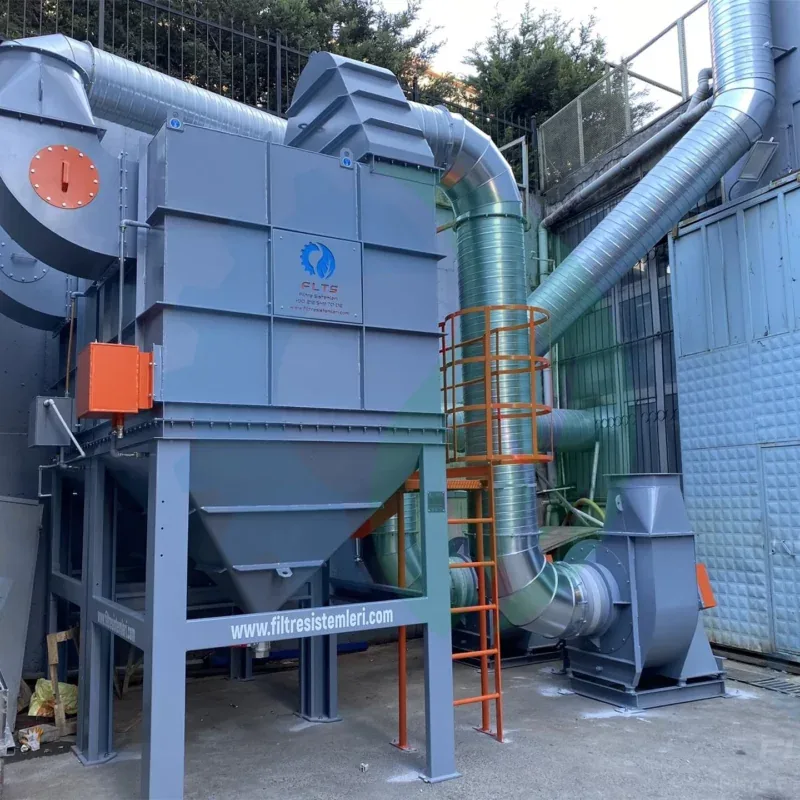
Each unit in this category solves a different problem. The table below summarizes which dust collection machine is useful according to the type of dust or fume in your plant.
| Product | What it does | When it is selected |
|---|---|---|
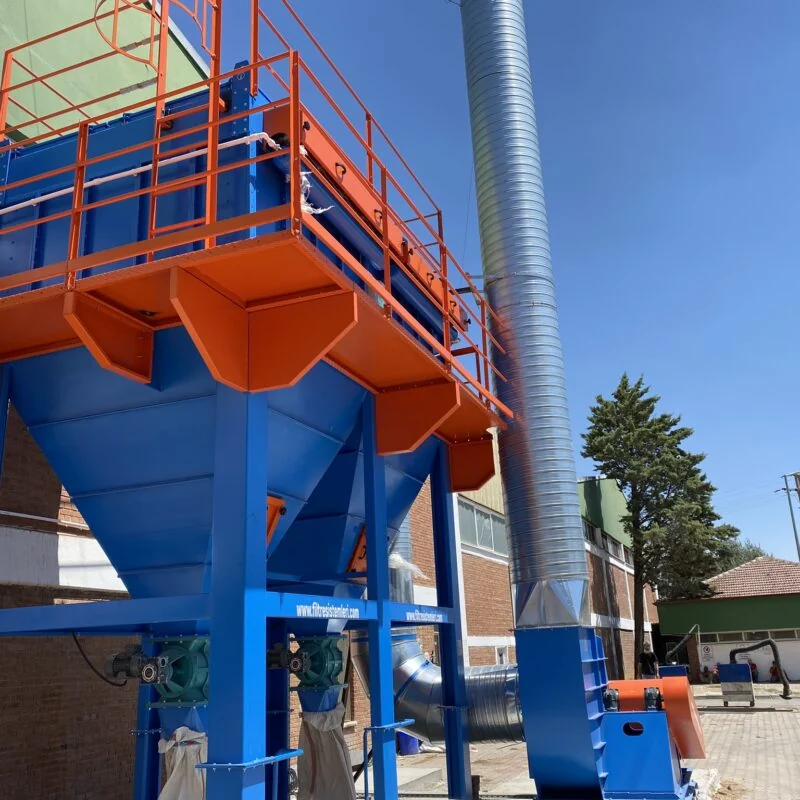
| Jet Pulse Bag Filter | Captures heavy dust on the bag surface, cleaned with a compressed air pulse | If the dust load is high and the line runs continuously |
| Jet Pulse Cartridge Filter | Captures fine, dry dust with a pleated cartridge | If there is welding, laser or plasma fume, or space is tight |
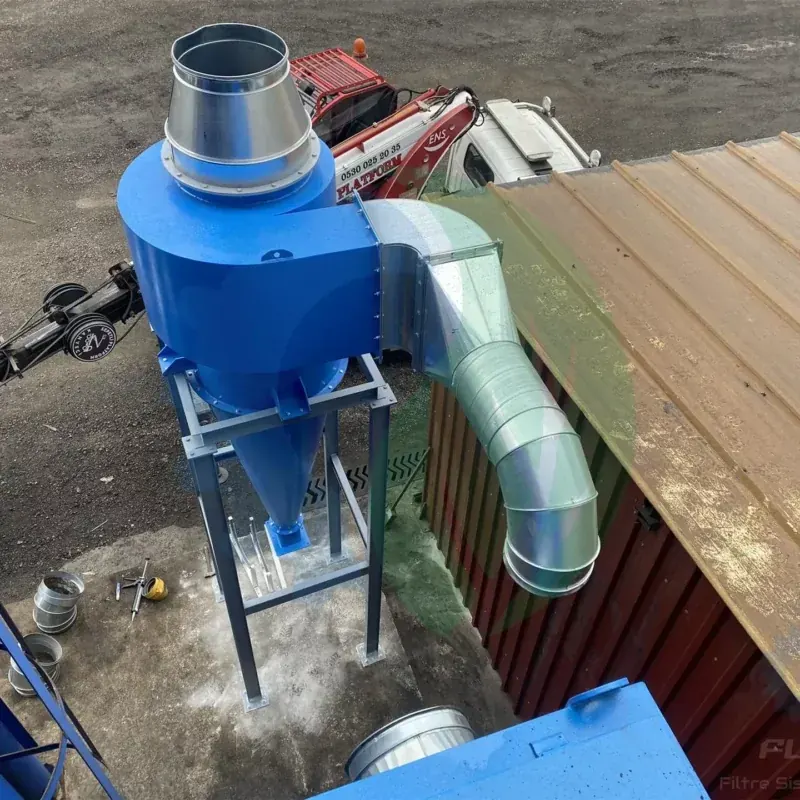
| Cyclone Filter | Separates coarse particles and sawdust before they reach the filter | If a pre-separator is needed before a sawdust extraction machine |
| Water Filter | Binds dust with water and removes it as sludge | If there is sparking, sticky or combustible dust |
| Gas Cooling Unit | Cools hot process gas before it enters the filter | If the gas temperature exceeds the bag's resistance |
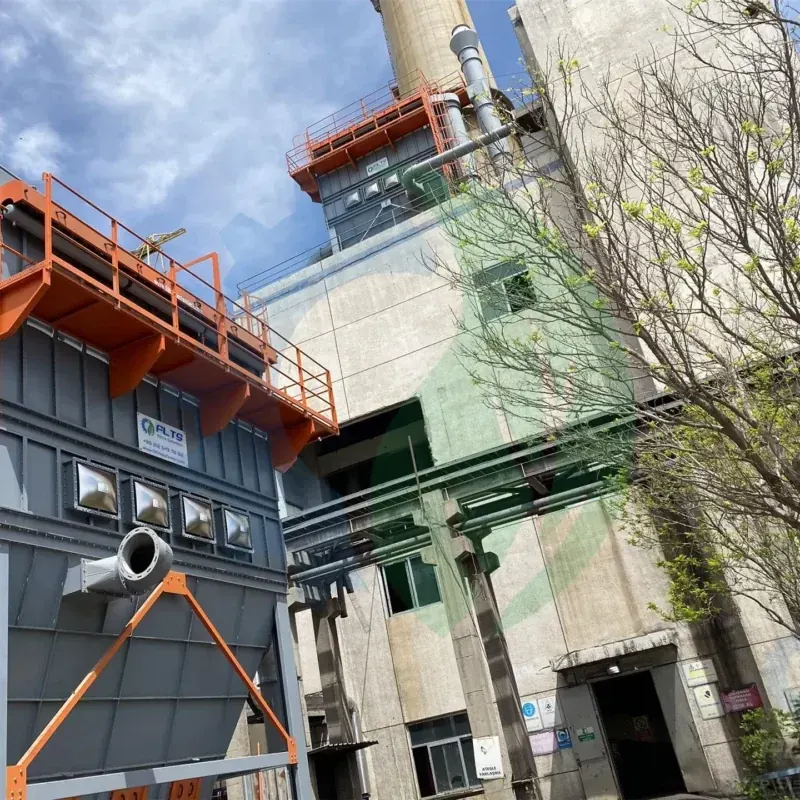
| Industrial Chimney Filter | Captures dust leaving the stack before it is released to the atmosphere | If the limit value is exceeded in emission measurement |
| Industrial Oil Mist Filter | Separates oil mist and oil vapor from the air | If there is oil mist in CNC, press and machining operations |
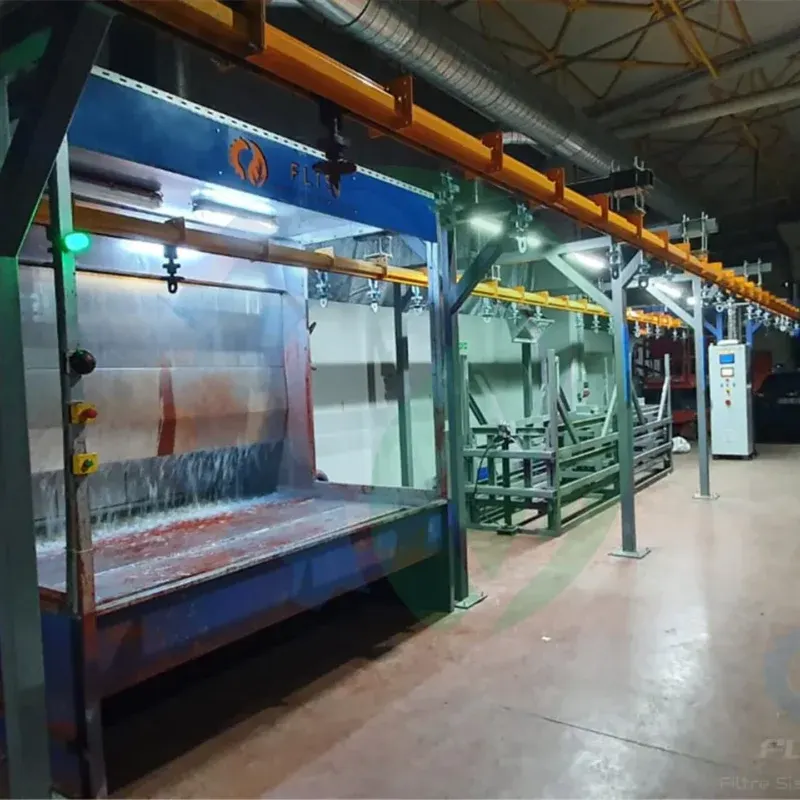
| Wet Paint Booth with Water Curtain | Captures paint overspray with a water curtain | If spray painting with wet paint is done |
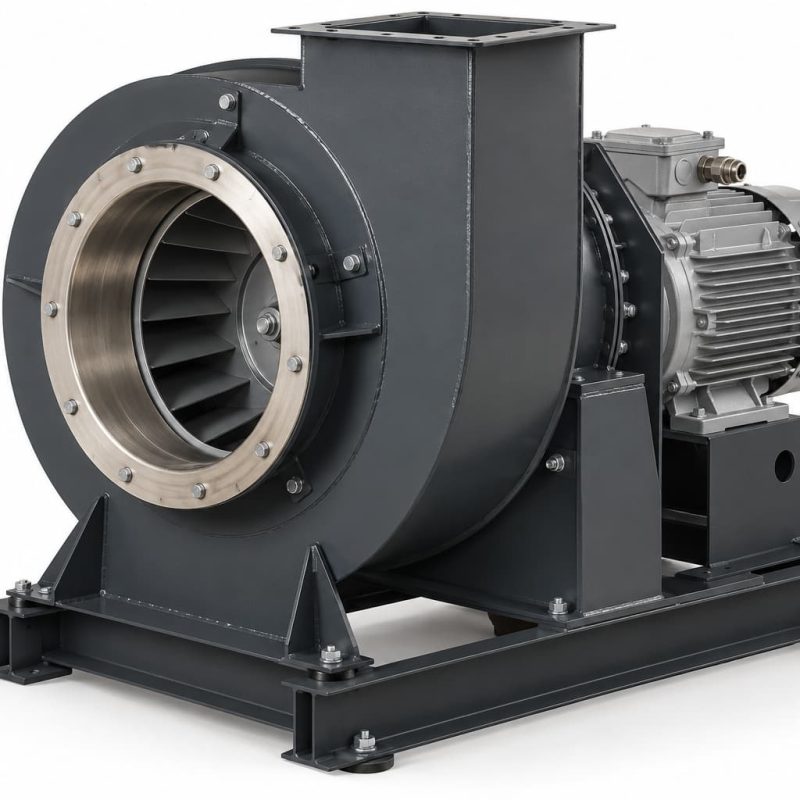
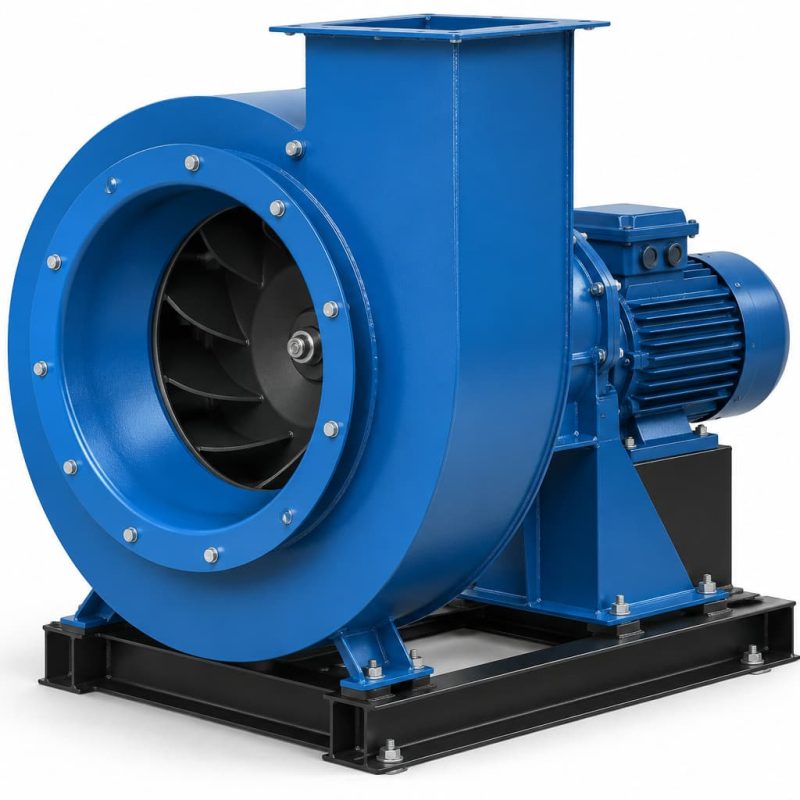
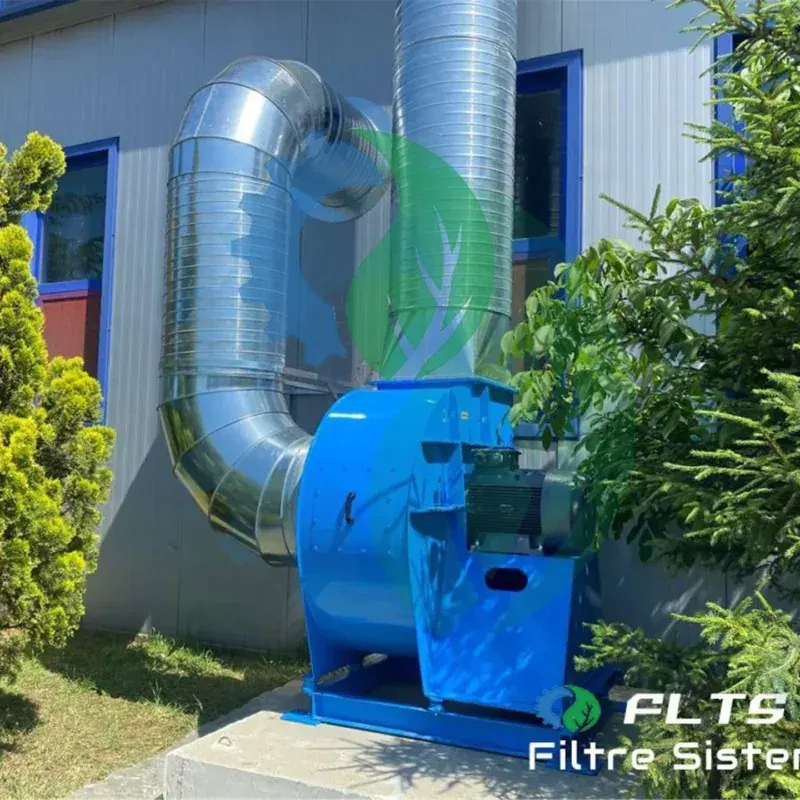
| Industrial Fans | Produces the suction and pressure required on the line | If a new line is being installed or the existing suction is not enough |
| Factory Ventilation Systems | Changes the general air of the hall | If the volume that point extraction does not reach is polluted |
Dust Collection Unit Recommendation by Industry
Even within the same industry, the line can differ. The table is meant to give direction at the first meeting; the final selection is made with measurements taken at the plant.
| Industry | Typical need from this category | Recommended product |
|---|---|---|
| Foundry, iron-steel | Hot and heavy dust, melting fume | Gas cooling unit with bag filter |
| Wood and furniture | Sawdust and fine sanding dust | Cyclone with bag filter |
| Metalworking, automotive supplier industry | Welding fume, grinding dust | Cartridge filter |
| Aluminum sanding | Sparks and combustible metal dust | Water filter |
| Food, pharmaceuticals, chemicals | Fine dust, hygiene and recovery | Cartridge filter |
| Paint shop | Wet paint particles | Wet paint booth with water curtain |
| Machining | Oil mist and oil vapor | Oil mist filter |
Information to Prepare for a Dust Collection System Quotation
Before requesting a quotation for a dust extraction machine or a central system, collecting the following information shortens the process:
- Type of dust or fume, if possible a small dust sample.
- Number of machines to be connected, the suction opening size of each machine and their simultaneous operation.
- Temperature and humidity of the process gas and whether there is oil or sparks.
- Your information on whether the dust is combustible or explosive, or the safety data sheet.
- Where the filter unit can be placed, whether it is indoors or outdoors, and its rough dimensions.
- Whether the captured dust will be disposed of or recovered.
- If you have an existing dust filter, its brand, age and the problem you are experiencing.
With this information you can fill in the quotation form, or call our project manager and request a plant visit.
DWG Drawing and Acceptance Checks in a Central Dust Collection Project
For a DWG layout drawing to be applicable on site, the suction points, duct route and service access are shown together. Using a drawing belonging to another plant by changing its scale does not provide the same flow and suction performance.
| Information to show in the drawing | Its counterpart at commissioning |
|---|---|
| Machine suction openings and points operating simultaneously | Capture at each point and the total air flow are checked. |
| Duct diameters, branches, elbows and dampers | Flow distribution, conveying conditions and system resistance are evaluated. |
| Filter, fan and dust discharge layout | Maintenance access, working direction and uninterrupted discharge are checked. |
| Design flow and reference pressure values | Actual operating measurements are recorded to form a basis for later maintenance. |
Design assumptions, equipment information and commissioning measurements are added together to the project file. In this way, when a new machine is connected in the future, not only the empty spot on the drawing but also the measured capacity of the system is considered.
Frequently Asked Questions
Can a dust collection system DWG drawing found on the internet be applied directly?
A sample drawing can describe the general layout; it does not verify the suction opening dimensions, the dust, simultaneous operation or duct resistance at your site. The working drawing is prepared with these inputs and checked with commissioning measurements.
If there is a HEPA filter, can the cleaned air be returned directly to the work area?
The presence of a HEPA filter alone is not a sufficient assessment. The nature of the pollutant, the tightness of the main and final filters, the monitoring and alarm/stop arrangement, and the plant's exposure conditions are examined together. A particle filter does not automatically remove gases and vapors either; air recirculation is determined specifically for the project.
