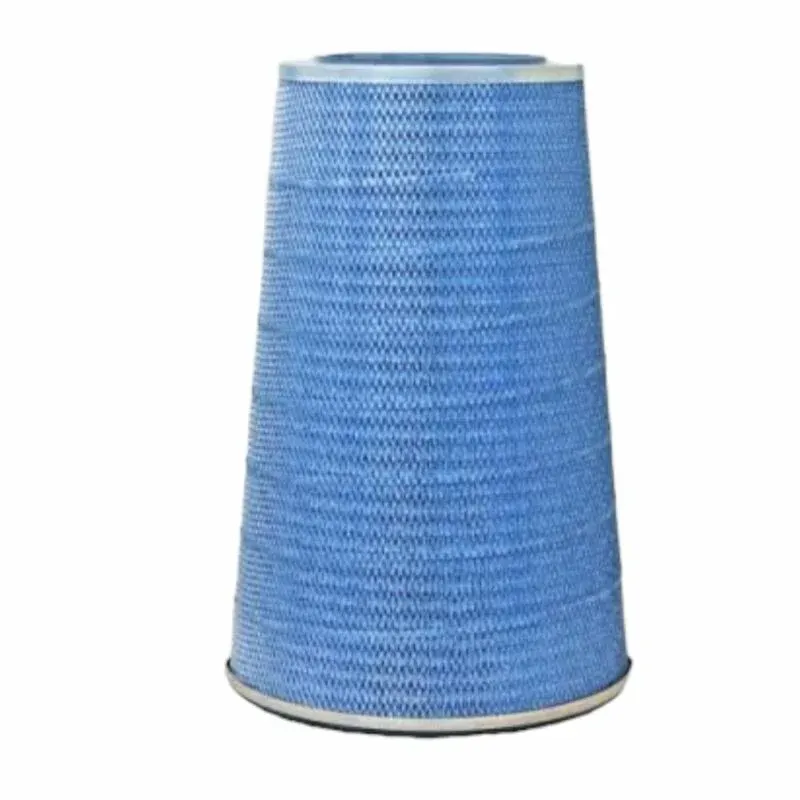





Antistatic Cartridge Filter
11 August 2026
Gas Turbine Intake Filter
18 August 2026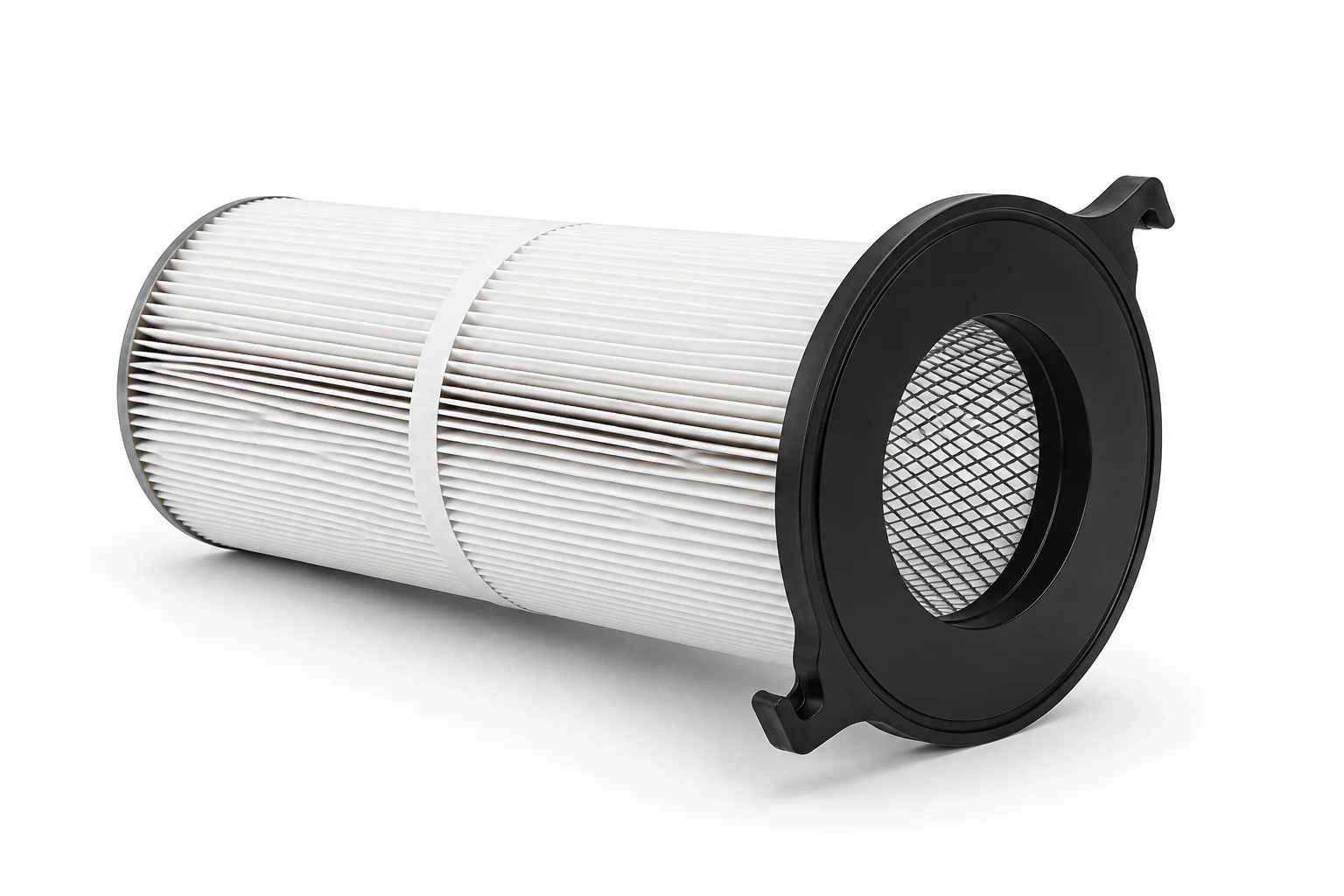
Flanged Cartridge Filter
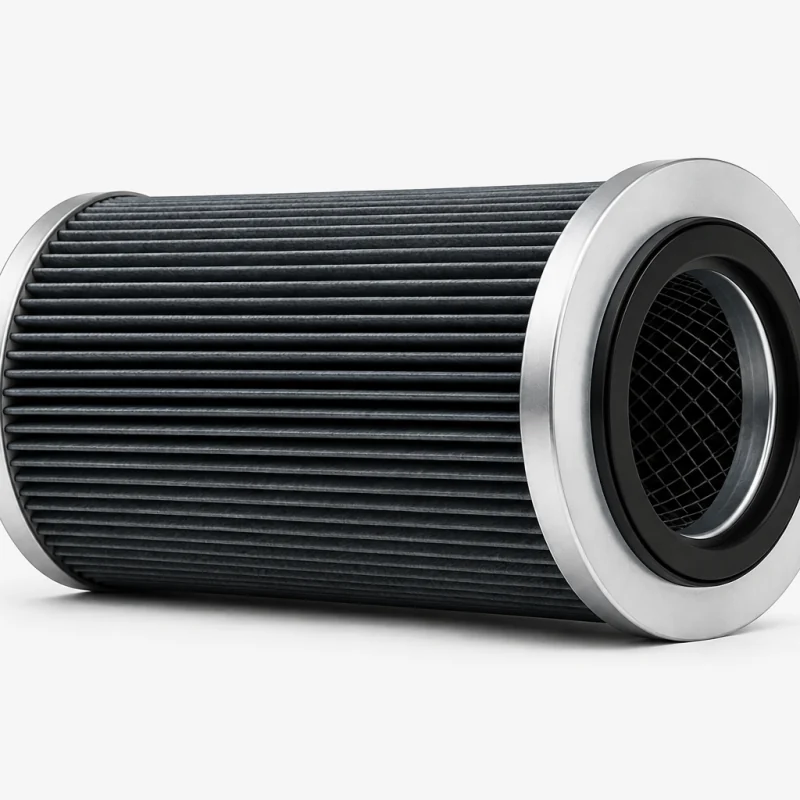
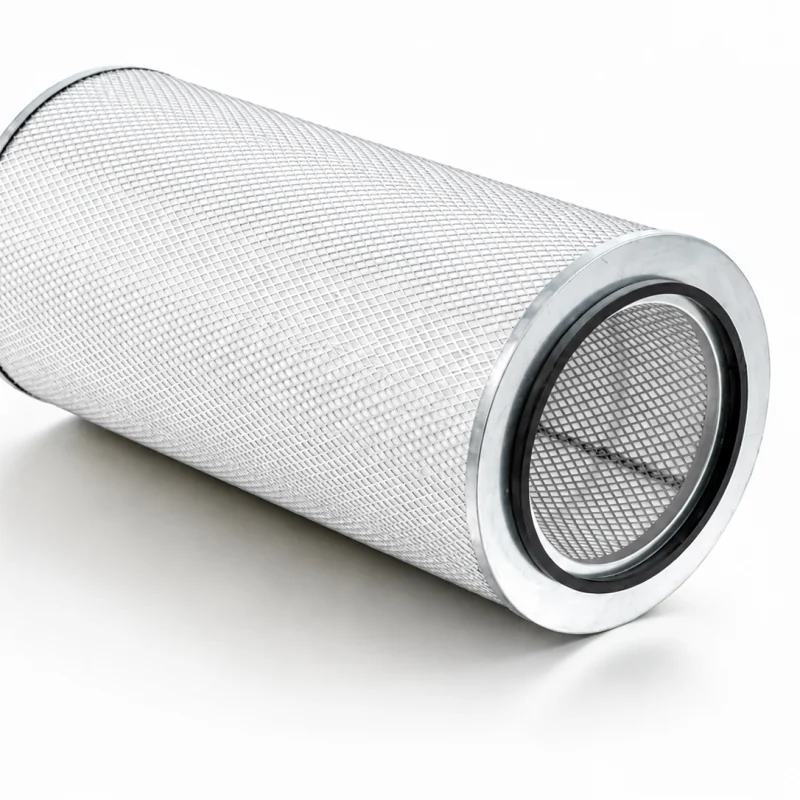
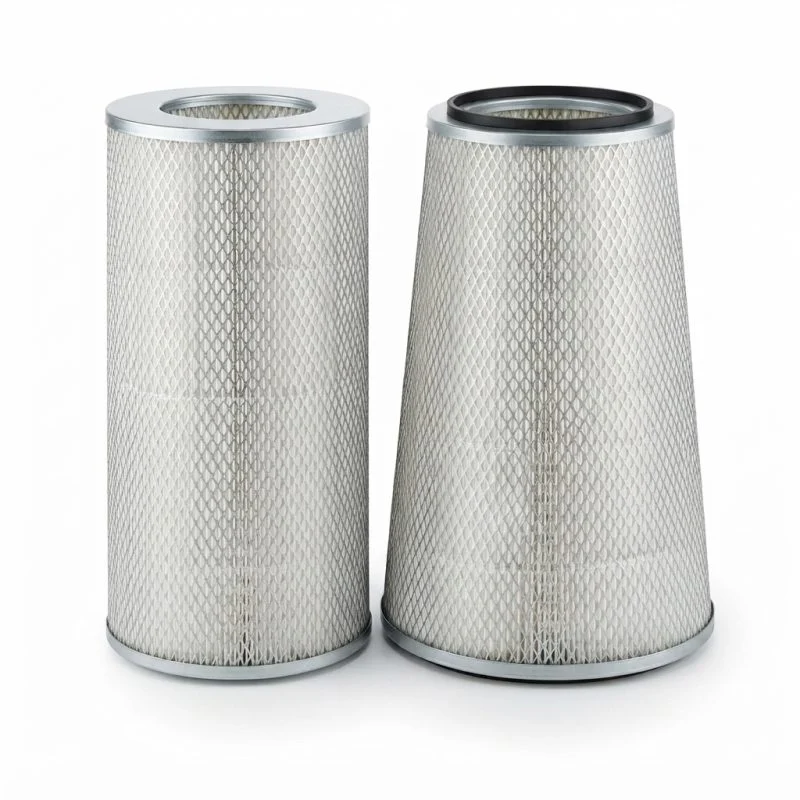
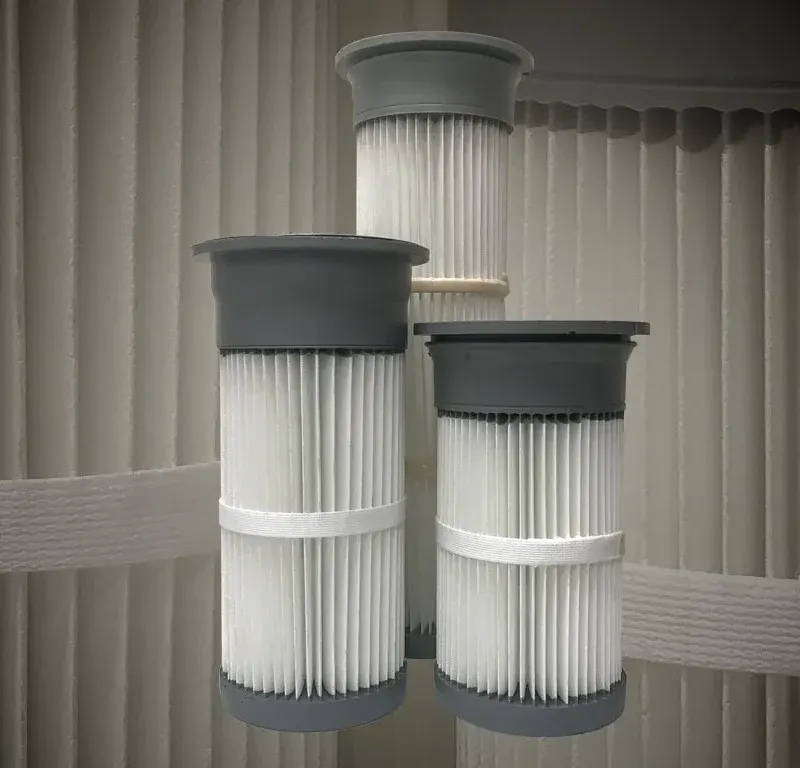
Flanged cartridge filters are pleated elements secured to the tube sheet by a top or bottom flange. The flange and gasket seal the housing connection, while pleats provide a large filter area in a compact volume.
They serve dust collectors, welding extraction, laser and plasma cutting, blasting, cement, foundry, wood and food plants. Incorrect flange dimensions, bolt holes or gasket seating cause edge leakage. FLTS manufactures cartridges to existing dimensions, connection and dust conditions, including lug-mount versions.
- Flange diameter and hole pattern matched to the housing
- Polyester, cellulose, nanofibre or membrane-coated media
- Construction suitable for pulse-jet cleaning
- Flanged and lug-mount connection options
What Is a Flanged Cartridge Filter?
A flanged cartridge filter, mounted by a flange at its upper or lower end, fits the filter housing, tube sheet or associated equipment. It captures dust and particles generated by industrial production.
Its pleated cylindrical construction provides a large filtration area in a small volume, useful where space is limited. The flange provides a sealed, repeatable connection at one end of the cartridge.
The filter medium depends on dust properties, temperature, humidity, airflow and required filtration performance. For general cartridge types, see the cartridge filter page.
How Does a Flanged Cartridge Filter Work?
Dust-laden air passes from the outside to the inside of the cartridge. Dust remains on the outer pleats, while clean air leaves through the cartridge and flange opening into the clean-air chamber. The flange gasket separates the dirty and clean sides.
Pulse-Jet Cleaning
In modern dust collectors, flanged cartridges are used with pulse-jet cleaning. Compressed-air pulses introduced through the flange opening remove accumulated dust from the surface, maintaining the cartridge’s operating performance.
- Pulse sequence and duration are set by a pulse valve control panel.
- Some cartridges have a venturi at the opening to direct the cleaning pulse into the cartridge.
- The flange and support structure must withstand repeated cleaning pulses.
Flanged and Lug-Mount Cartridges: The Difference
Lug-mount cartridges are also common in industrial filtration. The difference is how the cartridge connects to the housing.
- Flanged cartridge: A flat flange at the end seats on the tube sheet and is secured with bolts, clamps or a retaining element.
- Lug-mount cartridge: Lugs on the end cap enter matching housing slots and lock by turning. This suits housings requiring an alternative to a standard flange connection.
- The existing filter seat determines the type. Check its dimensions, fixing points and operating conditions.
Diameter and length alone are insufficient when selecting either type. Connection design, filter medium and filtration area also matter.
Flanged Cartridge Filter Components
Flange and End Caps
The flange forms the mounting end. Its diameter, thickness and bolt holes, where applicable, match the existing tube sheet. A bottom cap closes the opposite end.
Filter Medium
Polyester, cellulose, synthetic and surface-treated media are selected for the application. Nanofibre or membrane-coated media may suit very fine fume; antistatic media are considered for combustible dust.
Support Cage and Gasket
The internal cage prevents the pleats deforming under airflow and cleaning pulses. The flange gasket seals the cartridge against the tube sheet.
Flanged Cartridge Filter Specifications
Cartridge dimensions match the existing system. The following table lists the details confirmed when ordering.
| Feature | Options | Selection basis |
|---|---|---|
| Filter diameter and length | To suit the existing housing | Old cartridge or housing drawing |
| Flange | Flange diameter, thickness, bolt-hole number and spacing | Filter tube sheet |
| Mounting direction | Top or bottom flange | Filter unit design |
| Filter medium | Polyester, cellulose, nanofibre or membrane-coated, antistatic | Dust type, humidity, temperature and combustibility |
| Total filtration area | According to pleat number and depth | Airflow and filtration velocity |
| Gasket | Above or below the flange; application-specific type | Tube-sheet seating surface |
| Opening detail | With or without venturi | Existing cleaning system |
How to Select a Flanged Cartridge Filter
Correct selection directly affects system performance. Establish the following technical information first:
- Filter diameter and length, flange diameter and connection dimensions.
- Total filtration area and filtration velocity.
- Airflow and operating temperature.
- Dust particle properties, moisture and combustibility.
- The machine or filter system in which it will be used.
Incorrect selection causes high pressure drop, short service life, poor dust capture and reduced performance. For abrasive dust, see sandblasting filters; for fine cutting fume, see plasma cutting cartridge filters.
Flanged Cartridge Filter Manufacturing
FLTS manufactures flanged cartridges in application-specific dimensions. Diameter, length, connection, filtration area and medium are selected for the duty, with particular attention to media selection at high dust loads.
Dust concentration, particle size, airflow, temperature and humidity vary between facilities and directly affect performance. Select a cartridge for actual conditions, rather than standard dimensions alone, to achieve longer life, controlled pressure drop and efficient dust collection.
Installation and Maintenance
- Clean the tube sheet and gasket seating surface before installation.
- Tighten opposite bolts or clamps evenly; uneven tightening crushes the gasket and causes leakage.
- Monitor differential pressure. Pressure remaining high after cleaning indicates a blocked cartridge.
- If dust appears at the stack, check for a leaking gasket or torn cartridge.
- Drain water and oil from the compressed-air line regularly.
- Replace cartridges together where possible.
What Determines the Price?
Flanged cartridge filter prices depend on:
- Cartridge diameter, length and filtration area.
- Filter medium and any surface coating.
- Flange dimensions, connection type and gasket.
- Additional opening details, such as a venturi.
- Order quantity.
For an accurate quote, provide the cartridge diameter, length, connection dimensions and intended system together.
Choosing Flanged Cartridge Filter Media by Industry
The size of a flanged cartridge filter is determined by the existing housing, but what really determines its life is the filter media. The table below shows what is considered when selecting media in common applications. The exact media recommendation is made after the dust information is received.
| Industry | Role of the cartridge | Selection point |
|---|---|---|
| Laser and plasma cutting | Captures metal fume and very fine dust | Media with nanofiber or membrane coating that performs surface filtration |
| Welding fume extraction | Captures fume particles | Large filtration area for fine fume |
| Powder coating shops | Captures paint powder | Easily shaken-off media with a smooth surface |
| Sandblasting machines | Captures abrasive dust | Wear-resistant polyester media, pre-separation |
| Wood and furniture | Captures fine sanding dust | Antistatic media because of combustible dust |
| Food production | Captures flour, sugar and additive dusts | Food-grade media; water-repellent surface in humid environments |
| Central vacuum systems | Captures mixed dust arriving from different points | Large area and robust flange for mixed dust load |
On lines handling combustible dust, see the antistatic cartridge filter option. For the unit in which the cartridge is installed, the jet pulse cartridge filter page is a guide.
Points to Note When Measuring an Existing Flanged Filter
In an order for a replacement flanged filter, a wrong dimension causes the cartridge not to seat on the housing or to let dust escape at the edge. Check the following points on site:
- Measure the outer diameter of the flange and the outer diameter of the cartridge body separately.
- If there are bolt holes, note their number and the distance between the holes.
- Photograph the position of the gasket (on top of or under the flange) and the gasket type.
- Measure the cartridge length both with and without the flange.
- Check whether there is a venturi or an inner support tube at the cartridge opening.
- Record the label and codes on the old cartridge.
- Confirm at the connection point whether it is flanged or lugged.
You can send the dimensions and photos with the quotation form.
Frequently Asked Questions
Where are flanged cartridge filters used?
They are used in industrial dust collectors, welding fume extraction, laser and plasma cutting, blasting machines, and cement, foundry, wood, chemical and food plants.
What is the difference between flanged and lug-mount cartridges?
A flanged cartridge seats on the tube sheet and is clamped down. A lug-mount cartridge locks into the housing using end-cap lugs. The existing housing determines the type.
Can flanged cartridges use pulse-jet cleaning?
Yes. They are widely used in pulse-jet dust collectors. Cleaning air enters through the flange opening.
What does the venturi do?
It directs compressed cleaning air into the cartridge and helps distribute the pulse along its length. If the existing cartridge has a venturi, retain that detail in its replacement.
Why might dust leak around a cartridge?
Common causes are uneven flange tightening, a crushed or misplaced gasket, and a flange that does not fit the housing.
Do you manufacture custom flanged cartridges?
Yes. Diameter, length, flange dimensions and medium are specified to suit the existing system.
- Category
- Filter Cartridges
- Made in
- İkitelli OSB, Istanbul, Türkiye
- Updated