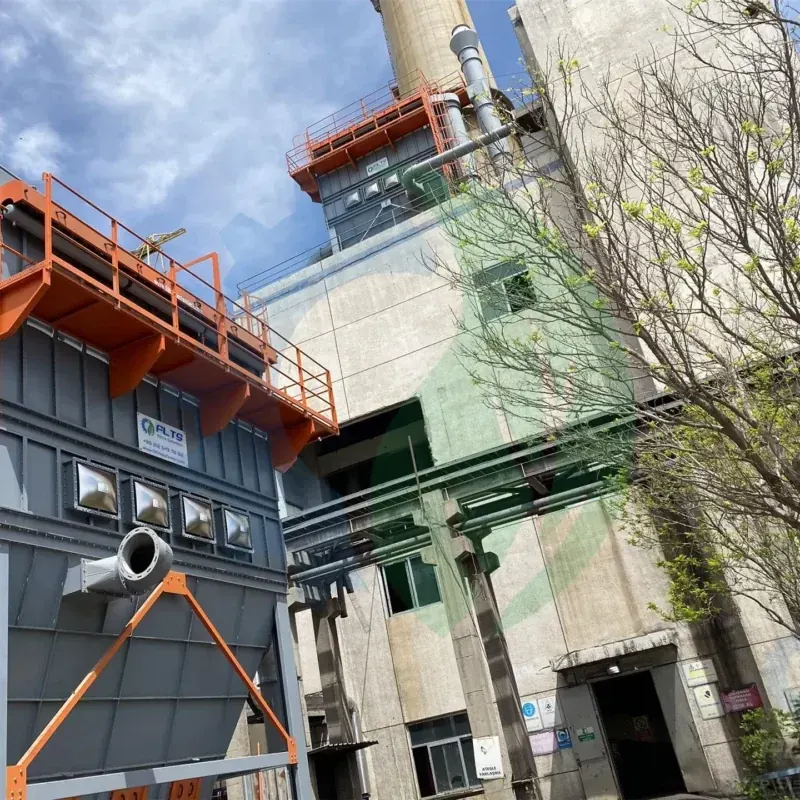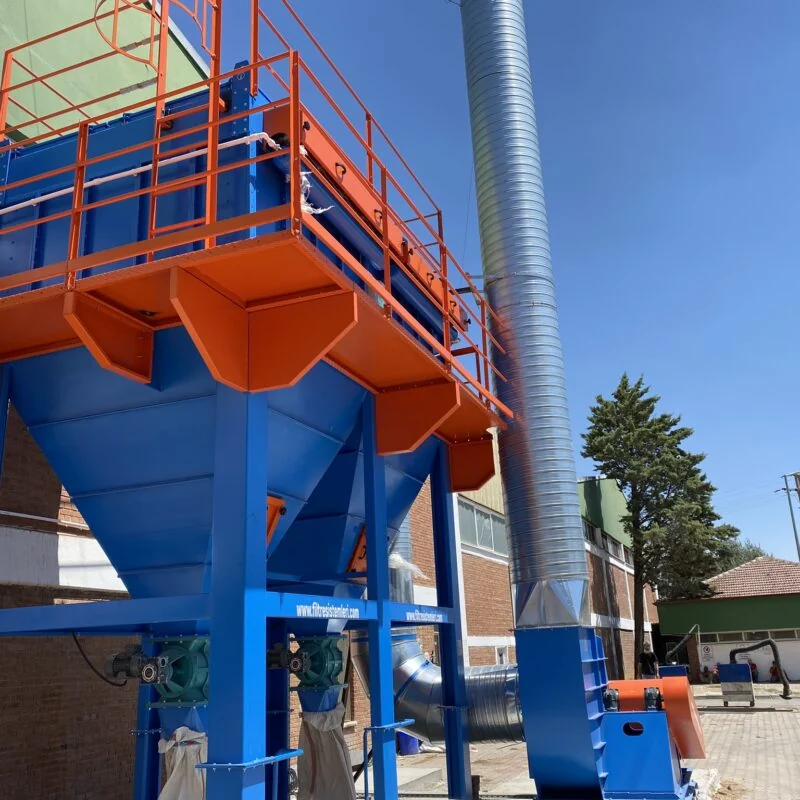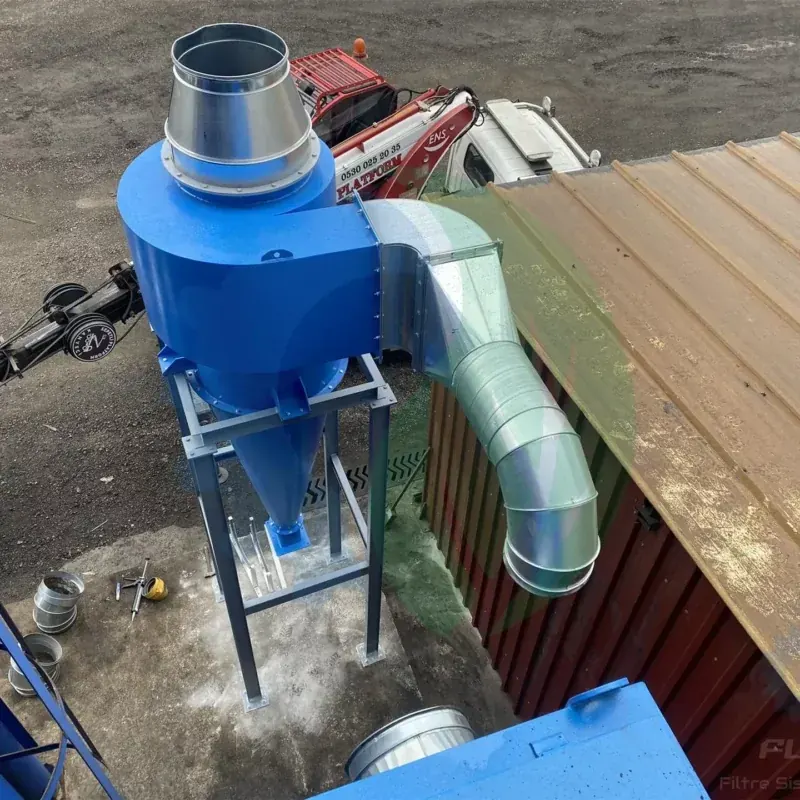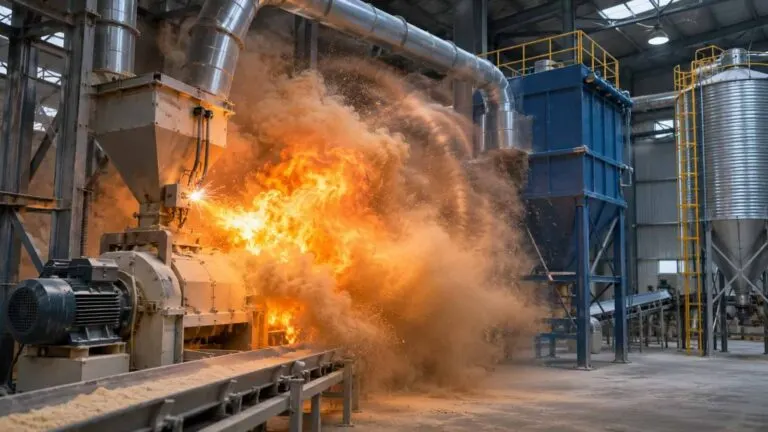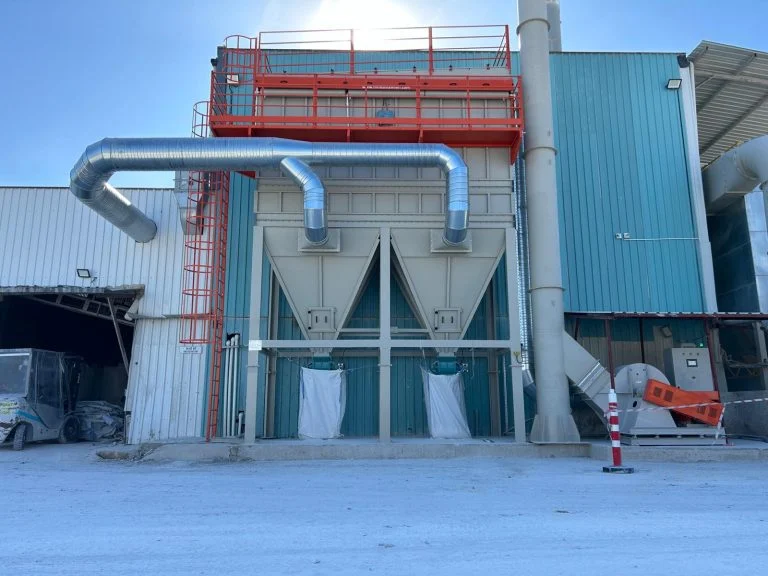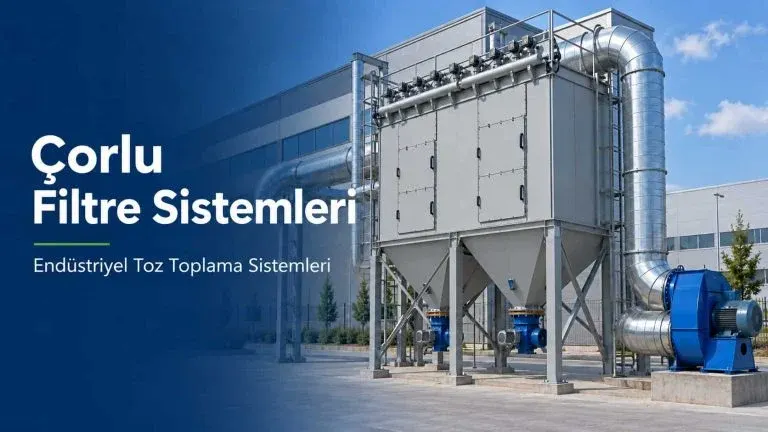






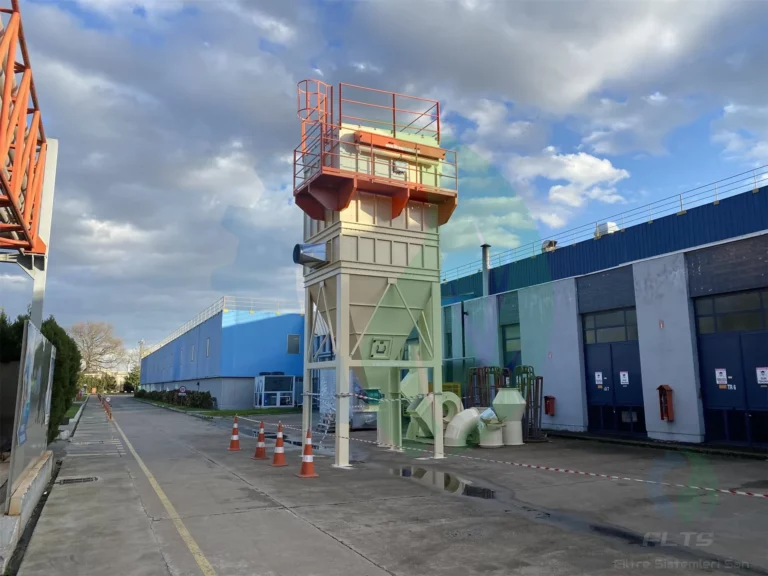
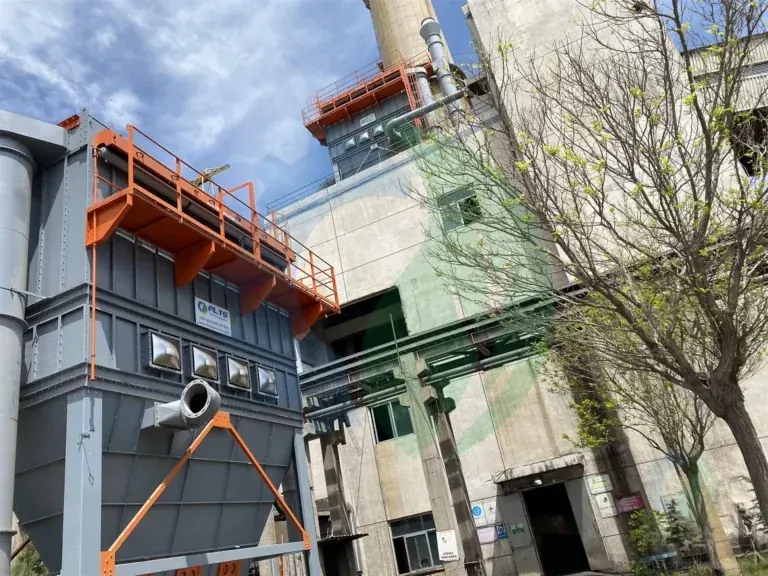
A silo top jet filter is an industrial filter system that cleans the dusty air generated during pneumatic filling. Mounted on top of the silo, the system captures dust particles and allows clean air to be vented outside. It helps control dust in facilities where cement, calcite, gypsum and similar bulk materials are stored.
FLTS Filtre Sistemleri offers filter solutions suited to different silo capacities and production conditions. Automatic cleaning technology allows the dust accumulated on the filter surface to fall back into the silo. Systems designed to suit the project reduce material loss and support controlled filling operations.
What Is a Silo Top Jet Filter?
A silo top jet filter is a filtration unit that separates from the air the dust created by bulk materials conveyed into silos. It is used especially in filling operations carried out with compressed air. The conveying air entering the silo also carries fine dust particles with it. While the filter elements capture these particles, the cleaned air is vented from the system outlet.
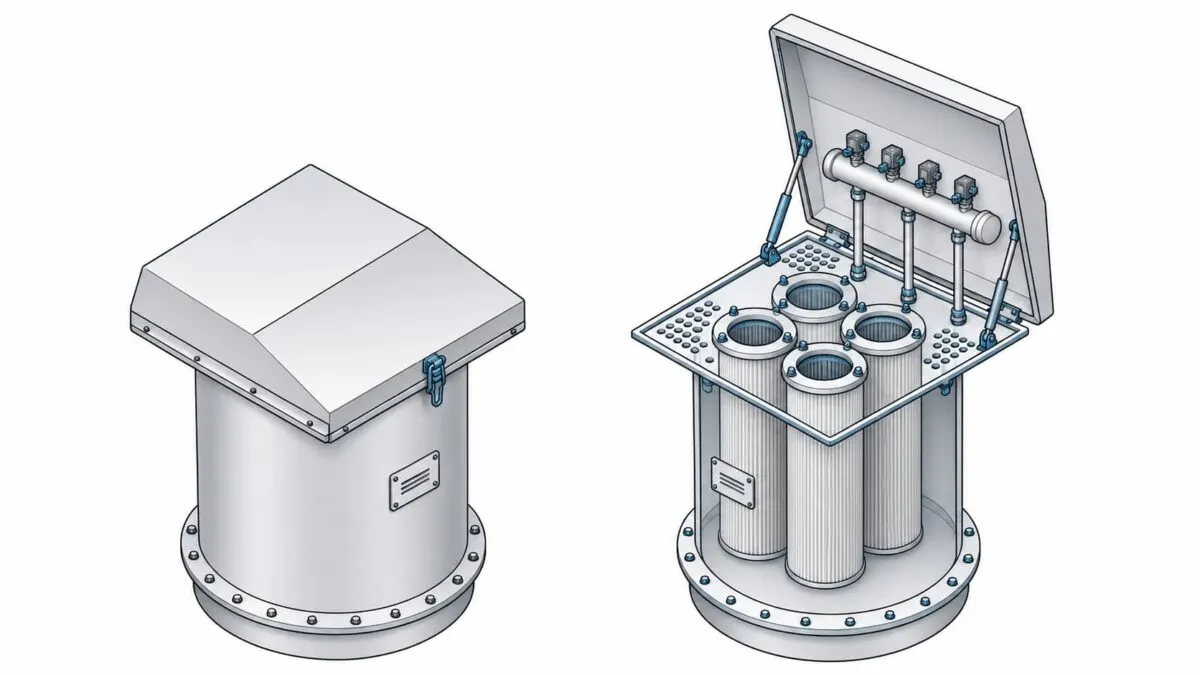
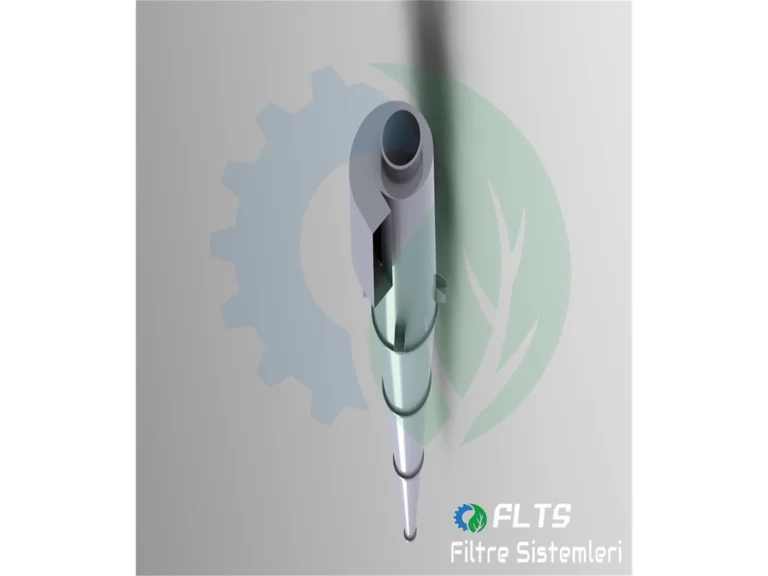
The equipment installed on the silo consists of a compact housing and automatic cleaning components. Material retained on the filter surface falls back into the silo with the help of compressed air pulses. This helps protect the stored product and reduce the amount of dust released into the environment. The capacity of the system is determined according to the properties of the material used and the airflow generated during filling.
How Does a Silo Top Jet Filter Work?
A silo top jet filter works on the principle of passing air through filter elements and cleaning off the accumulated dust. Material arriving from a bulk tanker or pneumatic conveying line is transferred into the silo with the help of compressed air. The dusty air generated during filling is directed to the filter unit and separated from the particles.
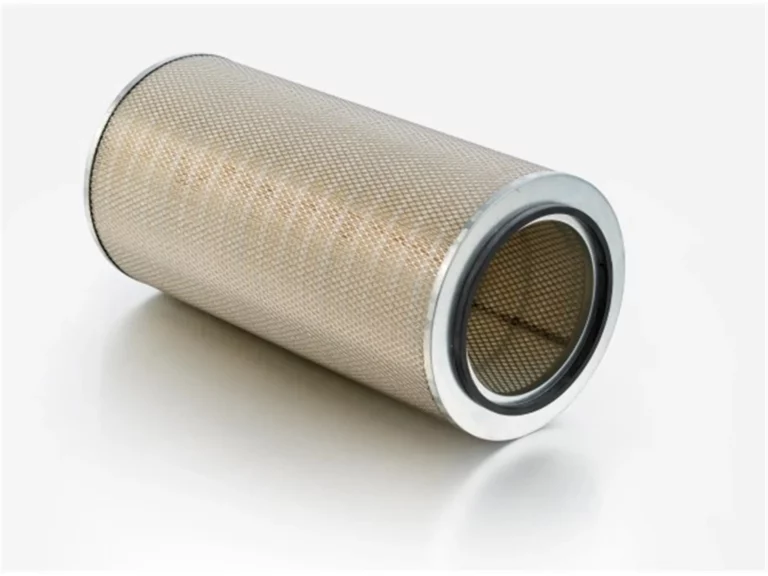
The bag or cartridge filter elements in the system retain airborne particles on their surfaces. While the cleaned air is vented outside, the accumulated dust is removed by the automatic cleaning system. This process helps keep the airflow resistance across the filter surface under control.
The operating process consists of four basic stages:
- Material filling: Bulk raw material is conveyed into the silo with the help of compressed air.
- Dust separation: Dusty air passes through the filter elements and particles are retained on the filter surface.
- Air venting: The filtered air is released to the outside in a controlled manner through the outlet section.
- Automatic cleaning: Pulse valves generate short bursts of compressed air. The accumulated dust is released from the filter surface and falls back into the silo.
The jet pulse cleaning mechanism can operate via a timer or differential pressure control. Cleaning frequency is adjusted according to the dust load on the filter and the operating conditions of the plant.
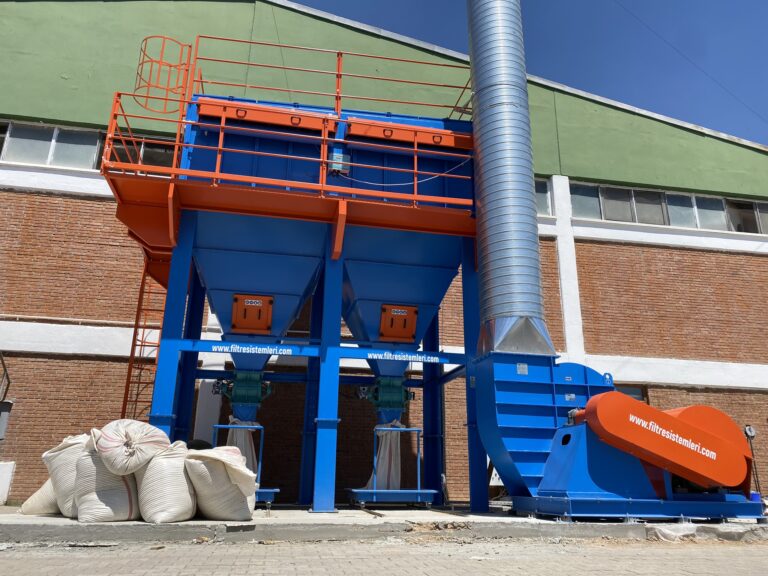
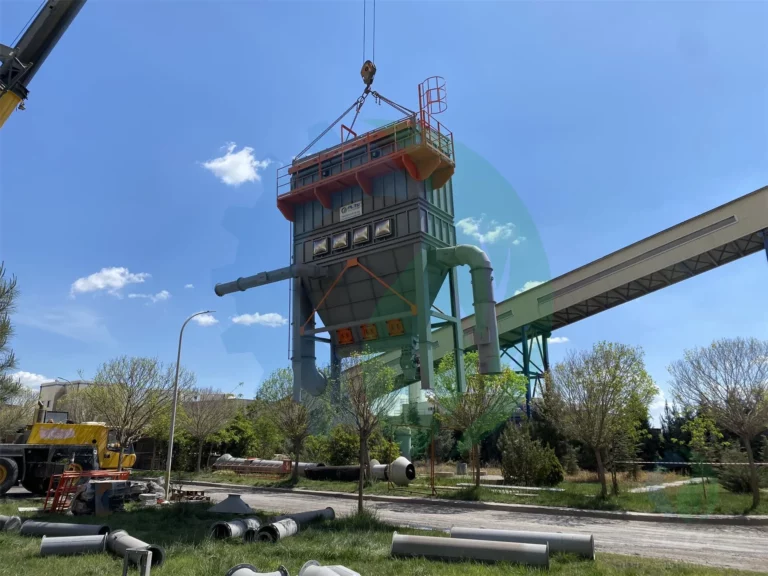
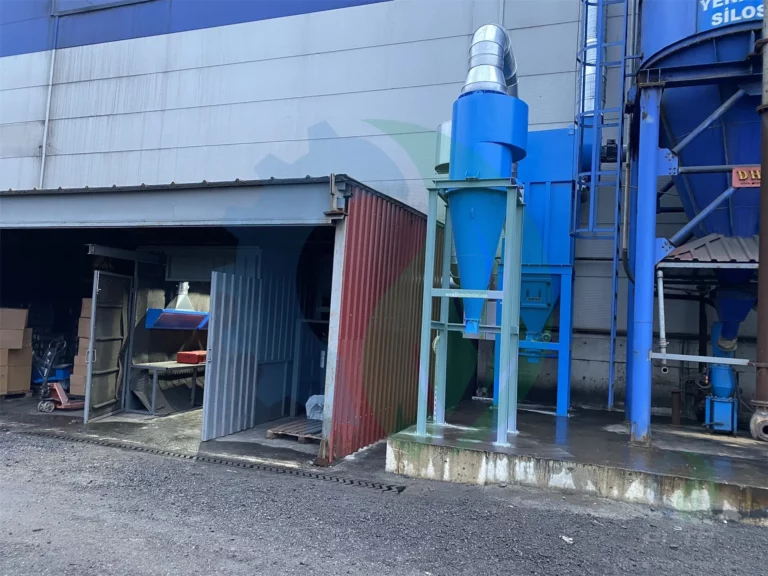
Silo Top Filter Technical Specifications
The technical specifications of silo top filter systems vary according to the nature of the stored product and the operating conditions of the plant. Filtration area, airflow rate, housing construction and cleaning system are among the main design parameters. Bag or cartridge type filter elements can be used in these systems.
Particle size, moisture, temperature and the abrasiveness of the material are taken into account when selecting the filter element. The automatic cleaning mechanism consists of a compressed air tank, pulse valves and control components. Equipment dimensions and connection details are engineered to suit the structure of the silo.
| Technical Specification | Description |
|---|---|
| Filter type | Bag or cartridge filter with jet pulse cleaning |
| Housing construction | Metal housing designed for the project |
| Filter element | Bag or cartridge suited to the material properties |
| Cleaning system | Automatic cleaning with compressed air pulses |
| Control system | Timer-controlled or differential pressure-controlled |
| Filtration capacity | Determined by the filling rate and the volume of conveying air |
| Mounting | Flange or connection system suited to the silo top |
In the technical design, the filter surface area must be matched to the airflow rate. Insufficient filtration area can increase airflow resistance and adversely affect filling performance.
Silo Filter Applications
Silo filters are used in industrial facilities where raw materials in powder or granular form are stored. They are preferred especially in the cement, ready-mixed concrete, mineral processing, building materials, food and chemical sectors. In cement silos, they capture the fine particles generated during filling. In calcite, gypsum and lime plants, they help control dust during the storage of raw materials.
In the food and feed industry, suitable filter systems are used for transferring flour, starch and powdered raw materials. In the chemical and plastics sector, they are used in the storage of powdered chemicals and additives. They can also be used in power plants to capture fine particles such as fly ash. In every application, filter capacity and material selection are determined according to the operating conditions of the plant.
Silo Top Jet Filter Manufacturing and Project Engineering
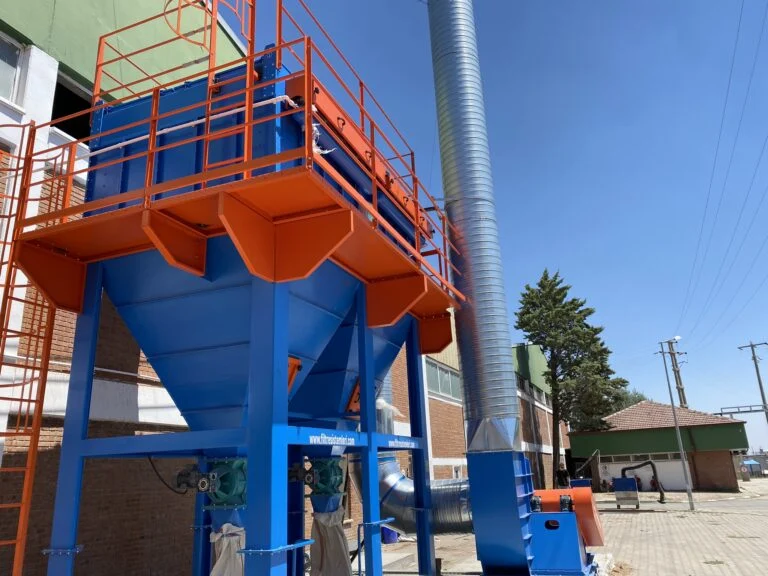
Silo top jet filters are manufactured in line with the filling capacity of the plant and the technical properties of the stored material. During the engineering stage, the air venting requirement, filtration area, housing dimensions and cleaning components are determined. The connection dimensions and support structure required to install the equipment on the silo are also evaluated.
FLTS Filtre Sistemleri provides services in the engineering and manufacturing of filter solutions suited to the operating conditions of industrial plants. Access to filter elements, ease of maintenance and operational safety are taken into account during the design process. The goal is to manufacture filtration equipment that meets the needs of the plant.
Filter Design Matched to Silo Capacity
Silo capacity is one of the basic parameters taken into account when sizing the filtration system. However, the storage volume of the silo alone is not sufficient for filter selection. The amount of conveying air entering the silo during filling directly affects the required air venting capacity.
For this reason, filling rate, airflow rate and filtration area are calculated together. A system designed with the right capacity supports steady air venting during filling. Distributing the load evenly across the filter is important for the operating performance of the filter elements.
Filter Housing and Material Selection
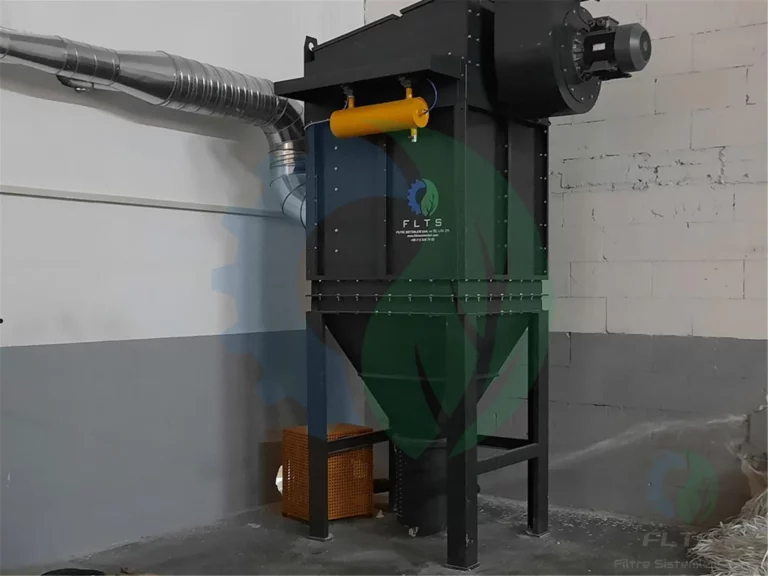
The filter housing is an important component that determines the mechanical strength of the system and its suitability for operating conditions. The abrasiveness of the material, ambient conditions and installation requirements are taken into account in the housing design. The housing material is selected according to the needs of the plant and environmental influences.
The filter elements, on the other hand, are determined according to the particle properties of the stored product. Dry, fine powders and damp or sticky materials can behave differently during filtration. Access doors and connection elements are positioned to make filter replacement easier.
What to Consider When Choosing a Silo Top Jet Filter
When selecting a silo top jet filter, the production capacity of the plant and the physical properties of the raw material are evaluated. Choosing the right equipment requires a match between filter capacity, airflow rate and cleaning system. The silo’s connection dimensions and the maintenance requirements of the system are also taken into account.
The main criteria to consider in filter selection are:
- Filling capacity: The hourly material transfer rate and filling time are evaluated.
- Airflow rate: A venting capacity matched to the conveying air entering the silo is determined.
- Particle properties: The size, moisture and abrasiveness of the dust are taken into account.
- Filtration area: The filter surface is calculated to suit the airflow rate and dust load of the system.
- Cleaning mechanism: The compressed air supply and pulse valve specifications are reviewed.
- Installation conditions: Silo connections, support structure and maintenance access are checked.
Evaluating only the purchase cost is not enough when selecting equipment. Filters engineered to suit the operating conditions of the plant support operational efficiency and help keep maintenance costs under control.
Silo Top Jet Filter Maintenance and Filter Replacement
Silo top jet filter maintenance ensures that the system runs steadily and that venting performance is maintained. During maintenance, the filter elements, pulse valves, compressed air connections and control components are inspected. Dust accumulated on the filter surface can increase airflow resistance and reduce system efficiency. For this reason, the automatic cleaning mechanism and compressed air supply are checked regularly.
Filter replacement frequency varies according to operating time, dust load and the properties of the stored material. Filter elements showing clogging, physical damage or a permanent rise in differential pressure are replaced. Periodic maintenance is carried out in accordance with the manufacturer’s instructions and the plant’s safety procedures. Before maintenance, the system is shut down and compressed air connections are safely isolated.
Silo Top Jet Filter Prices
Silo top jet filter prices vary according to equipment capacity, filtration area, housing material and cleaning system. Silo dimensions, filter element type and the airflow generated during filling affect the cost. When determining cement silo filter prices in particular, the plant’s filling capacity and filtration needs are taken into account. Prices of standard models and custom-built systems differ depending on their technical specifications.
FLTS Filtre Sistemleri provides services in the engineering and manufacturing of filter solutions that meet the needs of each plant. During pricing, silo capacity, the stored material and the characteristics of the filling system are evaluated. Companies can contact FLTS for help selecting suitable equipment and for a silo top filter quotation.
The operating principle, capacity selection and maintenance requirements of silo filters vary according to the characteristics of the plant. The questions below explain the key topics considered during equipment selection and use.
What dusts does a silo top jet filter capture?
A silo top jet filter captures the dust of materials such as cement, calcite, gypsum, lime, flour and minerals. Filtration performance depends on the particle properties and the filter element used.
How is silo filter capacity determined?
Silo filter capacity is determined according to the airflow entering the silo during filling and the required filtration area. The properties of the stored material and the filling rate are also included in the calculation.
How is a jet filter cleaned with compressed air?
A jet filter is cleaned with short bursts of compressed air generated by pulse valves. These pulses remove the dust from the filter surface and allow the material to fall into the silo.
Should a silo top filter use bags or cartridges?
The choice between bag and cartridge filters depends on the particle size of the material and the operating conditions. Both systems can be used with a suitable design and filter material.
How often should a silo filter be cleaned?
A silo filter is cleaned at set intervals by the automatic jet pulse system. Cleaning frequency is adjusted according to dust load, operating time and the differential pressure across the filter.