





PPS Filter Bag
30 May 2024
Antistatic Filter Bag
30 May 2024
Acrylic Filter Bag
Homopolymer Acrylic exhibits good chemical resistance and hydrolysis resistance under temperatures up to 145 °C (instantaneous maximum).
It is recommended for use in quicklime or slaked lime, ground raw gypsum, hemihydrate powders, in areas of acid concentration and in areas of the cement industry that may be susceptible to hydrolysis.
Unit price per m²: 3.50 EUR/m². Contact us for an up-to-date quote.
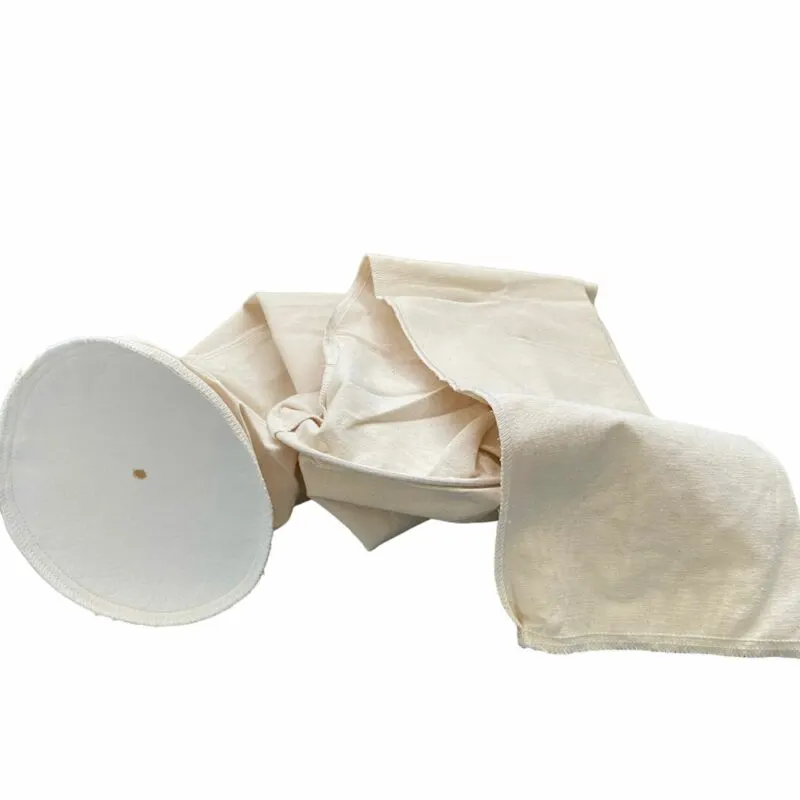
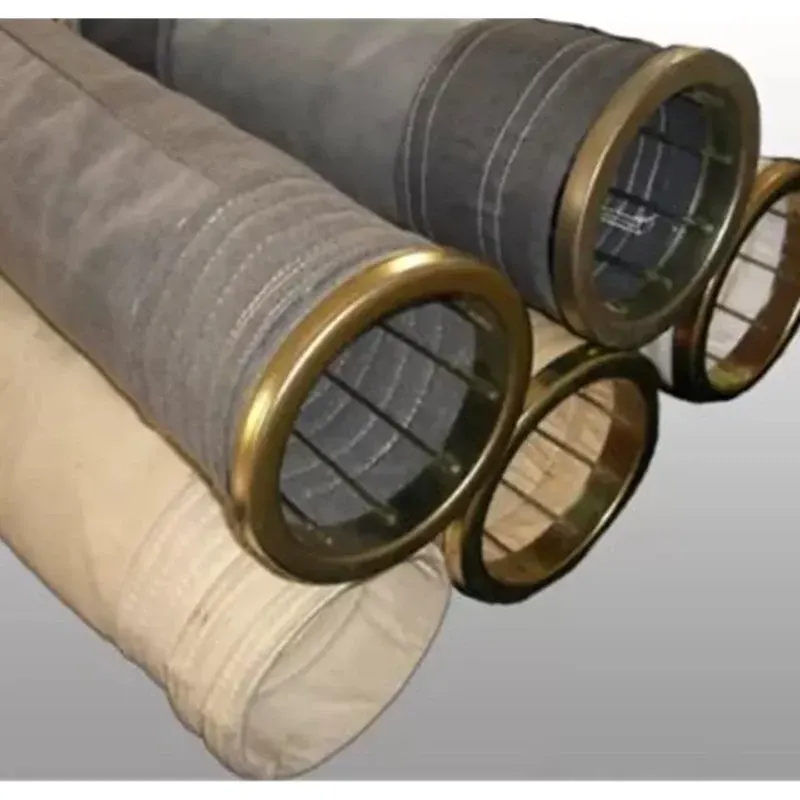
An acrylic filter bag is a felt filter element used for dust collection lines where moisture is a problem. Its fiber is homopolymer acrylic. Polyester weakens in humid and warm gas due to hydrolysis; acrylic keeps its structure in this environment. For this reason it is preferred for dusts that work together with moisture, such as lime, gypsum and cement. The sections below explain the structure, technical values and limits of the bag, as well as production and maintenance conditions.
Structure of the Acrylic Filter Bag
The bag is produced from 100% homopolymer acrylic fiber. Staple fibers are attached by needle punching to both sides of an acrylic supporting scrim. Needling joins the fibers into a randomly distributed pore structure; fine dust is retained on the surface and in the upper layer of the felt.
Homopolymer acrylic is more stable at temperature than copolymer acrylic. Its resistance to hydrolysis is excellent, its solvent and oxidation resistance is good, and its acid and alkali resistance is moderate. Calendering and singeing are applied to the felt surface, followed by a hydrophobic finish that repels water and oil. The finish reduces the adhesion of moist dust to the surface.
How Does an Acrylic Filter Bag Work?
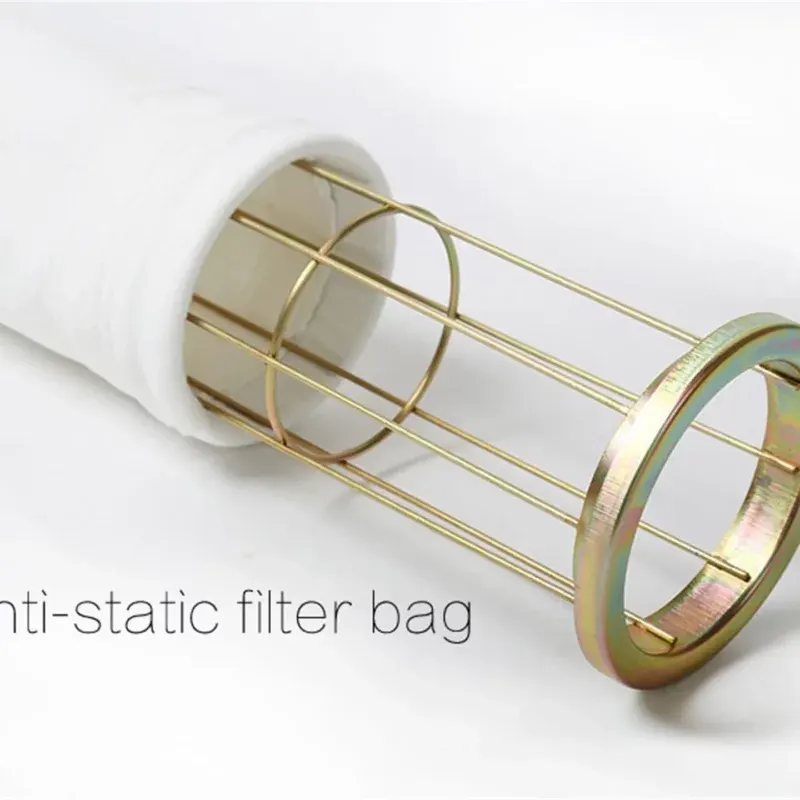
Dusty gas passes from the outer surface of the bag inward, the particles are retained on the surface and the clean gas leaves through the inside of the bag. The wire cage inside the bag prevents collapse under suction. The dust cake that builds up on the surface works like a second filter layer.
When the pressure difference rises, the valve of the jet pulse bag filter unit gives a compressed air pulse and the cake drops into the dust hopper. In humid gas, this cycle working properly depends on two things: the felt not weakening from moisture and the dust not sticking to the surface. Acrylic fiber meets the first, and the hydrophobic finish meets the second.
Dusts such as lime and gypsum harden chemically when they come into contact with moisture. If these dusts form a thin crust on the felt surface, the cleaning pulse cannot break the crust and the pressure difference stays permanently high. An acrylic bag keeps its structure in this condition, but it does not prevent crust formation on its own. For this reason, acrylic selection delivers the expected life when it is considered together with the unit’s insulation and start-up procedure.
Acrylic Filter Bag Technical Specifications
The table summarizes the values of standard acrylic felt. Exact values, including continuous and peak temperature limits, are provided at the quotation stage in the datasheet of the ordered fabric.
| Property | Value |
|---|---|
| Composition | 100% acrylic homopolymer |
| Scrim | Acrylic |
| Weight | 525 g/m² ± 5% |
| Air permeability | 9,000 – 11,000 l/dm²/h (Dp: 200 Pa) |
| Thickness | 2.0 mm |
| Tensile strength | Machine direction 110 kgf/5 cm, cross direction 140 kgf/5 cm |
| Surface treatment | Calendering and singeing, water- and oil-repellent hydrophobic finish |
| Operating temperature | A band close to polyester, dry and humid gas; exact value in the fabric datasheet |
| Acid resistance | Moderate |
| Alkali resistance | Moderate |
| Hydrolysis resistance | Excellent |
| Solvent resistance | Good |
| Oxidation resistance | Good |
Difference Between Acrylic and Polyester
The two fibers operate in a similar temperature band and are produced as bags in the same dimensions. The difference appears in the moisture content of the gas:
- In dry gas, a polyester filter bag is more economical and has higher tensile strength.
- In humid and warm gas, polyester undergoes hydrolysis, hardens and tears early; acrylic withstands this condition.
- In slightly acidic gas, acrylic gives a longer life than polyester.
- If the temperature exceeds the acrylic band, a Nomex filter bag is considered for dry gas and PPS for humid and acidic gas.
In a unit where polyester bags harden in a short time, darken in color and open at the seams, the first thing to check is the moisture content of the gas.
Engineering and Manufacturing
FLTS manufactures acrylic bags according to the dimensions of the existing unit or the newly engineered system. When switching from polyester to acrylic, the bag size and mouth type often stay the same. The following details are planned together in production:
- Felt and surface treatment: selected according to the behavior of the dust with moisture.
- Top: made as snap band, drawstring or flanged, according to the tube sheet.
- Size: the diameter is cut with a suitable allowance for the cage, and the length is determined according to the distance to the dust hopper.
- Inspection: the diameter, length and top dimensions are compared with the sample before shipment.
Installation and Maintenance
During installation, the bag mouth is seated fully on the tube sheet and the cage is lowered into the bag without force. On humid lines, rust forms faster on the cages; a rusty cage both abrades the bag and causes staining on the surface. For this reason the filter cages are also checked when the bags are replaced.
In moist dusts, the main maintenance issue is condensation. If the unit is started up cold, moisture condenses on the housing and on the bag surface; lime and gypsum dust harden with this moisture. At start-up the housing is preheated, and before shutdown the unit is run for a while with hot gas or idle. Housing insulation and dust hopper heating reduce this problem. If the pressure difference does not return to its former level after cleaning, the dust may have formed a crust on the surface. All the bags are replaced at the same time.
Factors That Determine Acrylic Filter Bag Prices
The price of an acrylic bag is slightly higher than polyester and markedly lower than high-temperature fibers. The main items that determine the price are felt weight, surface treatments such as the hydrophobic finish, bag size and quantity, mouth and bottom type, and whether the cages will be renewed. On a humid line, once the replacement frequency and downtime cost of polyester bags are taken into account, switching to acrylic often pays for itself.
What Is an Acrylic Filter Bag and Where Is It Used?
An acrylic filter bag is a felt bag made from homopolymer acrylic fiber. The main reason for using it is moisture. Polyester undergoes hydrolysis in humid, hot gas; the fiber weakens and the bag tears earlier than expected. In this environment acrylic stands out with its resistance to hydrolysis.
For this reason, an acrylic bag is preferred on lines where the temperature stays within the polyester range but the gas is humid or mildly acidic. Moisture-exposed sections of lime, gypsum and cement are among the first of these lines. If the gas is dry, a polyester filter bag is generally the more economical choice.
If the temperature exceeds the acrylic limit, a switch is made to another fiber: Nomex is evaluated for dry hot gas, and a PPS filter bag for humid and acidic hot gas.
Acrylic Filter Bag Applications
| Industry | Role of the bag | Note |
|---|---|---|
| Lime production | Capturing slaked and quicklime dust | Lime dust hardens with moisture; unit insulation and drying after shutdown are important |
| Gypsum industry | Filtration of ground raw gypsum and hemihydrate dust | Calcination gas is humid; the dew point is checked |
| Cement | Dust at mills and moisture-exposed transfer points | It must be verified by measurement that the temperature stays within the acrylic limit |
| Dryer outlets | Separating product dust in humid and warm process gas | Condensation occurs when the gas cools; the first start-up is done with heating |
| Fertilizer and chemicals | Capturing dust in a mildly acidic, humid environment | The acid type and concentration should be shared before quotation |
What Is Needed to Choose the Right Bag
Choosing acrylic is mostly a decision about moisture. The exact values in the fabric datasheet are given at the quotation stage; we ask for the following information:
- Continuous temperature of the gas and, if measured, the moisture content or dew point.
- The type of acid vapor in the gas, if any.
- Dust type; state it if it is a dust that hardens with moisture, such as lime or gypsum.
- How often the unit is stopped and started, and whether the housing is insulated.
- If the existing bag is polyester, how long it lasted and with what symptom it failed.
- Unit model, bag size and top type.
When switching from polyester to acrylic, the bag size and top type often stay the same; only the fiber changes. For this reason, the size and service life of the old bag are the fastest part of the new order to prepare. If the moisture problem comes from unit insulation, this is also addressed in the same meeting.
Frequently Asked Questions
When is an acrylic filter bag selected?
Acrylic is selected when the gas temperature stays within the polyester band but the gas is humid or slightly acidic. The moisture-prone sections of lime, gypsum and cement are typical examples.
What temperature does an acrylic filter bag withstand?
Acrylic operates in a temperature band close to polyester. Continuous and peak temperature values are provided in the datasheet of the selected fabric at the quotation stage.
What does homopolymer acrylic mean?
It is an acrylic fiber produced from a single type of monomer. It is more stable at temperature than copolymer acrylic and is therefore preferred in filter felt.
Can an acrylic bag be installed in place of a polyester bag?
In most cases an acrylic bag of the same size and mouth type can be installed directly. When the size of the existing bag and the signs of deterioration are provided, suitability is checked.
When is an acrylic bag replaced?
Replacement is planned if the pressure difference does not fall after cleaning, if dust is seen at the stack outlet, or if the bag shows tears or crusting.
Is the acrylic filter bag made in custom sizes?
Yes. The diameter, length, top type and bottom construction are produced according to the tube sheet and cage dimensions of the unit.
General information on dust collection systems
- Category
- Filter Bags
- Made in
- İkitelli OSB, Istanbul, Türkiye
- Updated