




Jet Pulse Cartridge Filter
24 May 2024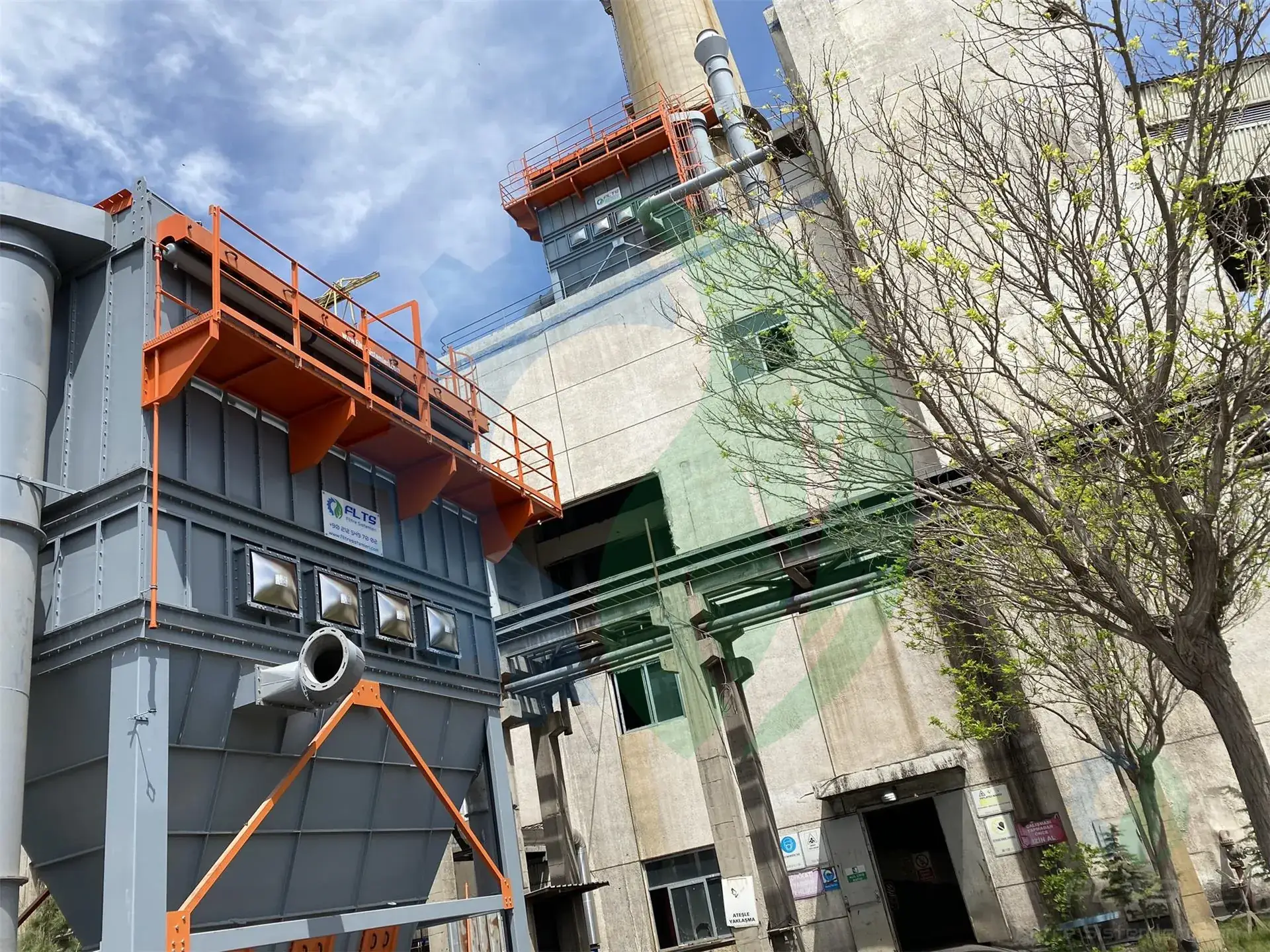
Jet Pulse Bag Filter
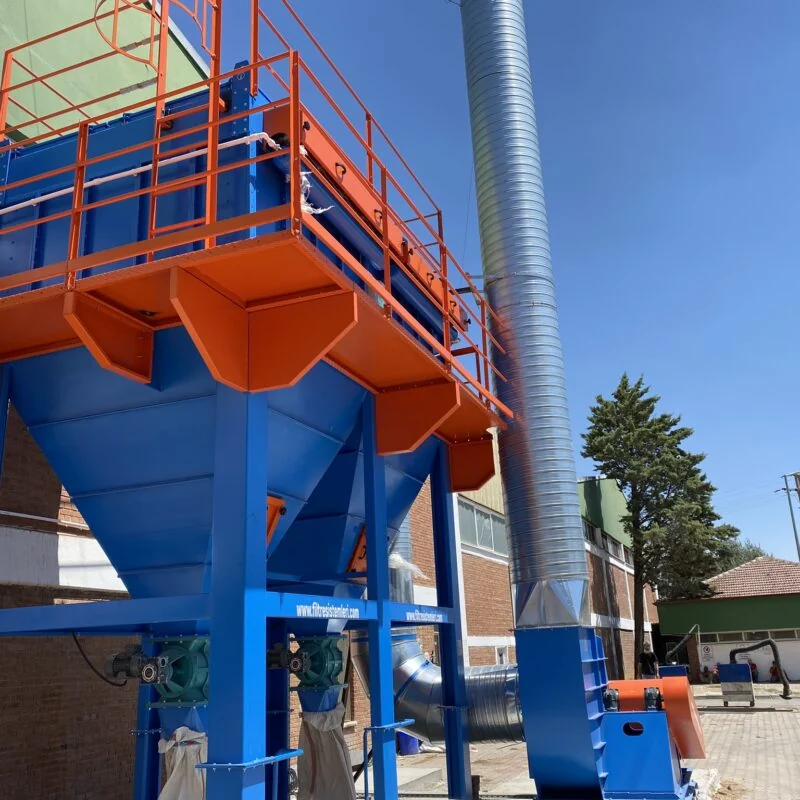
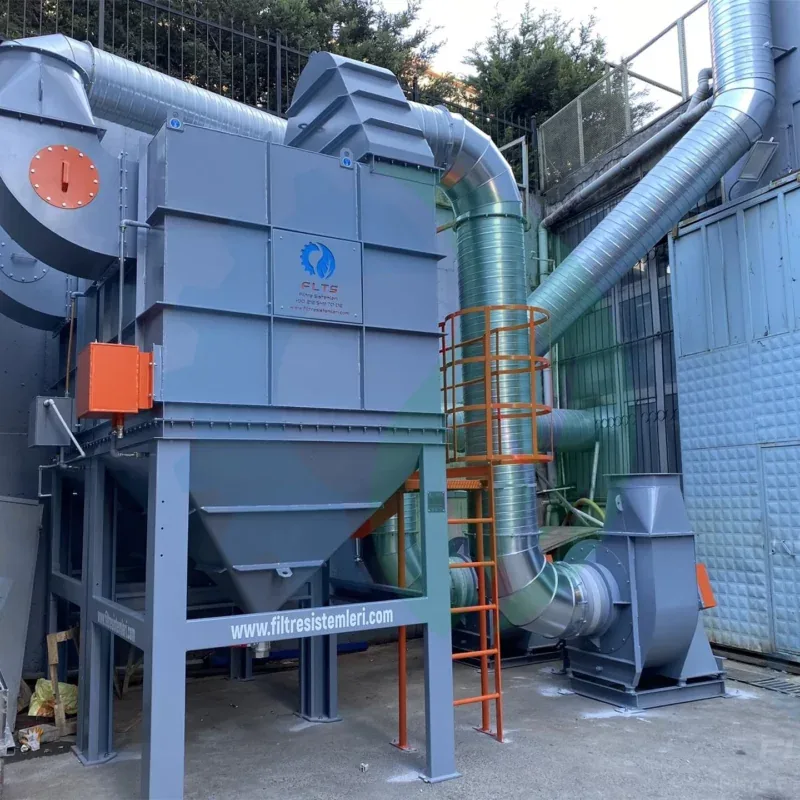
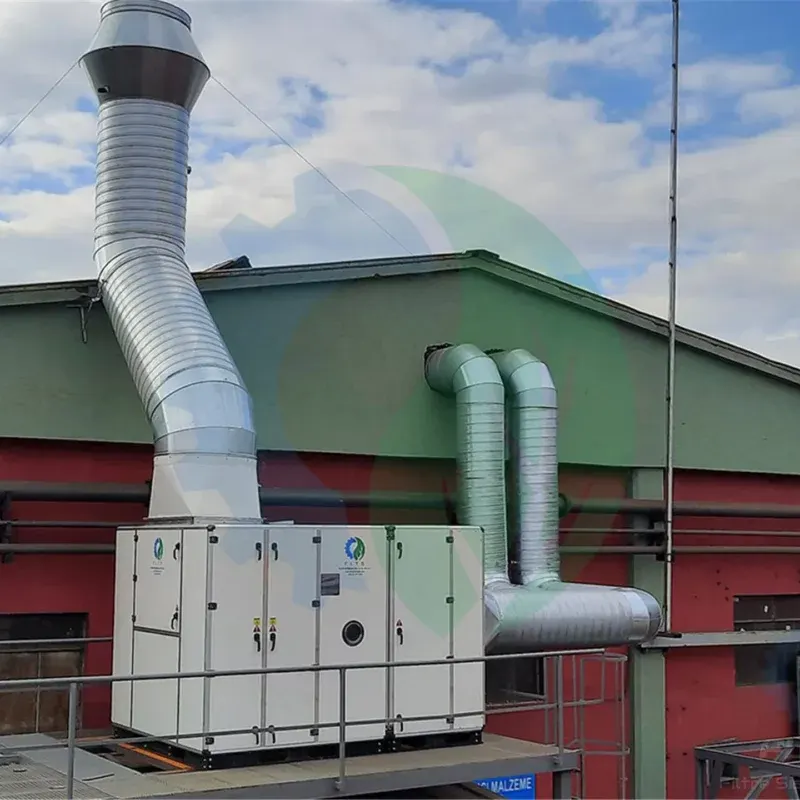
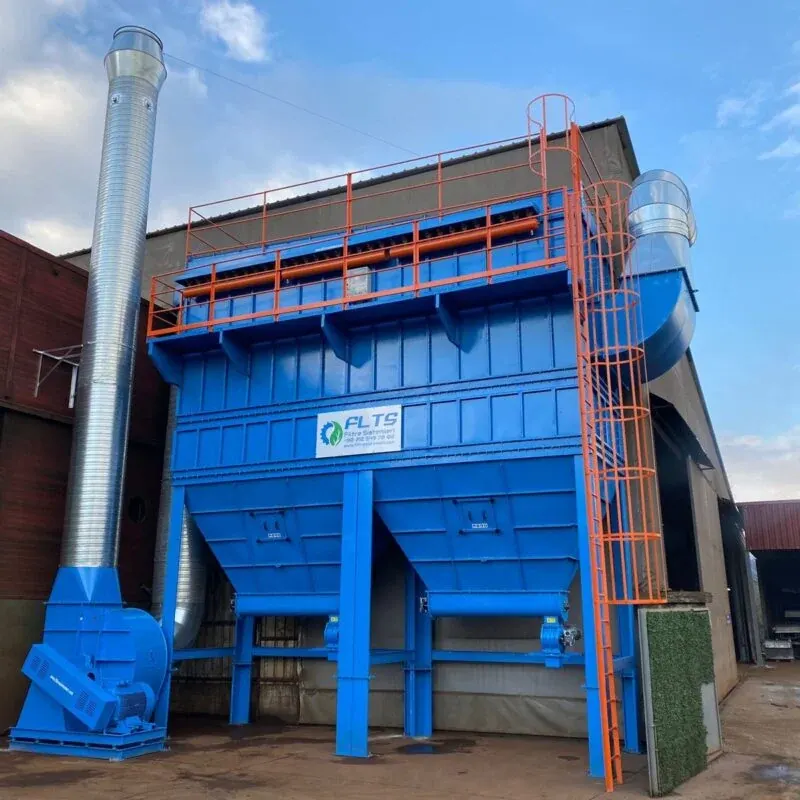
A jet pulse bag filter is a dust collection system that retains the dust and fumes generated in industrial processes in filter bags and cleans the bags automatically with compressed air pulses. Dirty air is drawn into the housing by the fan, is cleaned as it passes through the outer surface of the bags and is discharged through the stack. The dust shaken off the bags collects in the hopper.
It is installed in plants that generate heavy dust, such as foundries, cement, wood, grain and recycling facilities, to bring stack emissions below legal limits and keep the working area clean. Because cleaning is carried out compartment by compartment, production does not stop. FLTS designs and manufactures each unit to measure according to the plant’s airflow, dust characteristics and gas temperature.
- Bag fabric selected according to dust and temperature
- Automatic cleaning based on differential pressure or time
- Discharge via rotary valve into a big bag, bin or conveyor
- Control panel with remote start/stop and alarm signals
What Is a Jet Pulse Bag Filter?
A jet pulse bag filter is a dry-type filtration system that separates dust from process gas and from air contaminated during manufacturing. Filter bags, selected according to the nature of the dust, are installed vertically inside a steel housing. The dust stays on the outer surface of the bag, while the cleaned air rises through the inside of the bag and is discharged to the stack from the clean air chamber of the housing.
The term “jet pulse” in the name describes how the bags are cleaned. The bags are cleaned with short bursts of compressed air while the system is running. For this reason every jet pulse unit is a bag filter, but not every bag filter is cleaned by the jet pulse method. In shaker and reverse-air systems, the section being cleaned is taken out of service during cleaning.
The system is not installed only to capture dust. The material collected in the hopper is transferred by an air lock to a conveyor or to a big bag. In flour, feed, cement and plastics lines that handle valuable raw material, this arrangement returns dust that looks like waste back to production. Treating the polluted air before it is released to the atmosphere is also a requirement of the environmental permit in many facilities.
How Does a Jet Pulse Bag Filter Work?
A bag filter operates in two stages: filtration and cleaning. Both stages run at the same time, so suction continues without interruption throughout the day.
Filtration stage
Dirty air enters the housing through the inlet. Its velocity drops in the inlet zone and the coarse particles fall directly into the hopper. Fine dust adheres to the outer surface of the bags, while clean air passes through the fabric and rises through the inside of the bag. The thin layer of dust that builds up on the surface, known as the dust cake, raises collection efficiency to some extent. As the layer thickens, however, the pressure drop rises and suction weakens.
Jet pulse cleaning stage
The diaphragm pulse valve sends the compressed air in the air tank into the bag as a short pulse through the blow pipe and the venturi. The bag inflates suddenly, the dust cake on the surface breaks up and falls into the hopper. Because the pulses move along row by row, only one row of bags is cleaned at a time and the remaining bags continue to filter.
Cleaning can be started in two ways. In timed operation, pulses are given at fixed intervals. In differential-pressure-controlled operation, cleaning starts when the difference between the dirty and clean sides exceeds the set value. The second method is preferred because it reduces compressed air consumption and bag wear.
Components of a Jet Pulse Bag Filter System
A jet pulse bag filter is not a single housing but a system made up of interconnected parts. Choosing one part incorrectly also reduces the performance of the others. The main components are as follows:
- Steel housing, clean air chamber and dust collection hopper
- Filter bags selected according to the nature of the dust, and the filter cages that support the bags
- Compressed air tank, pulse valve diaphragm, blow pipes and venturis
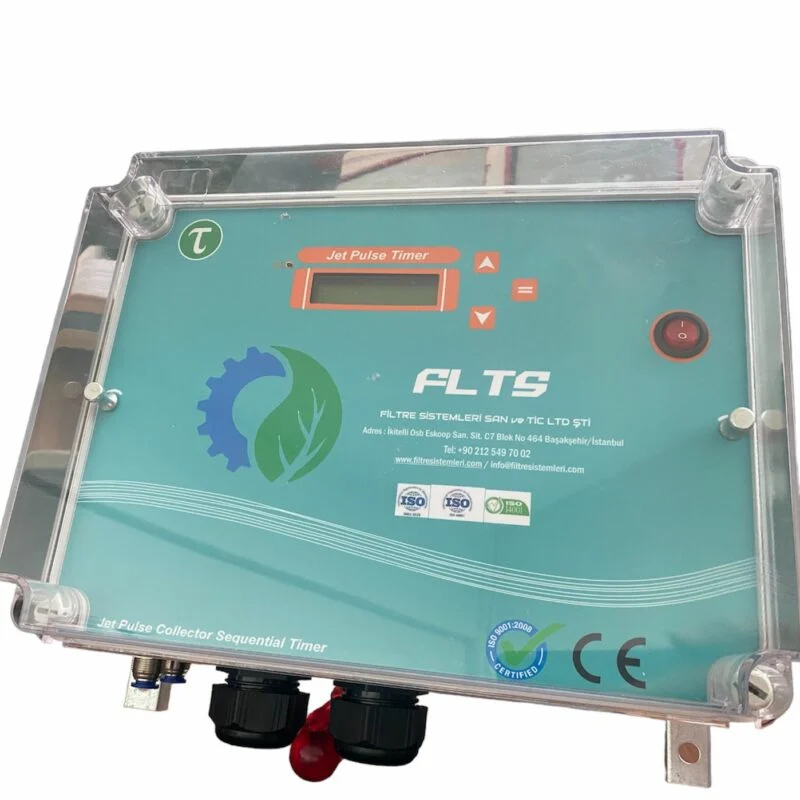
- The pulse valve control panel that controls the pulse sequence and duration
- Air lock (rotary valve), screw conveyor or dust transfer conveyor under the hopper
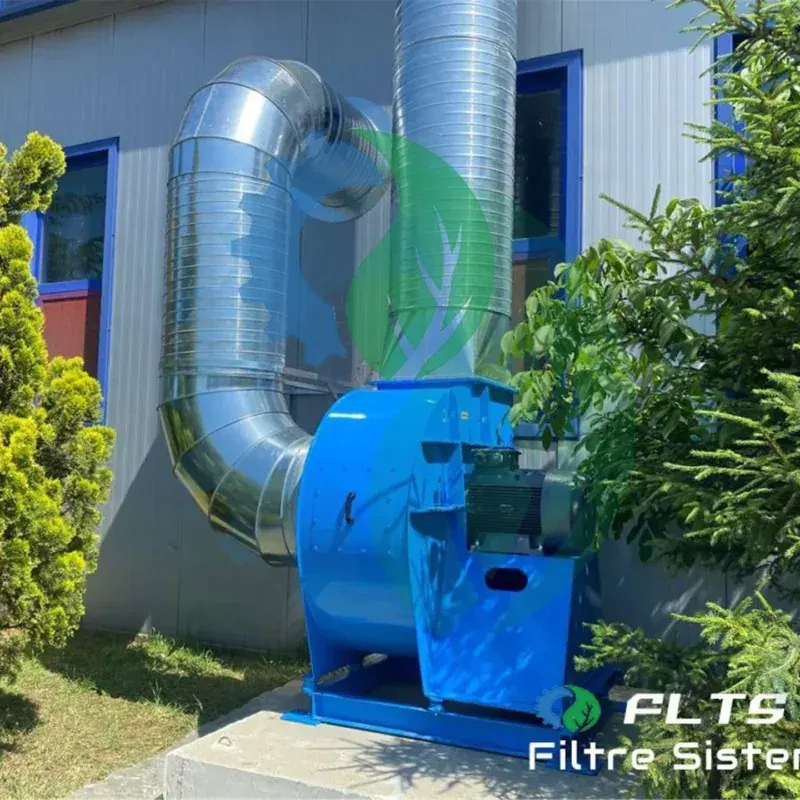
- Industrial fan that provides suction, ductwork and discharge stack
- Automation panel that controls the fan, valves and discharge group together
The control panel is designed specifically for each project so that it works in synchronization with the machine or station the filter serves. Remote start and stop commands, operating status and alarm signals are provided to the plant as dry contacts. This way the filter can be monitored and controlled from a single point together with the production line it is connected to.
Types of Jet Pulse Filter Bags
Different fabrics can be fitted to the same housing. For this reason, bag selection directly determines the service life and operating cost of the filter. The selection is made according to gas temperature, moisture and acid conditions, dust fineness and whether the dust is combustible. The exact temperature limit of the fabric is provided in the quotation together with the fabric datasheet.
| Bag type | Suitable condition | Point to note |
|---|---|---|
| Polyester felt | General-purpose dry dust, medium temperature | In hot and humid gas the fiber weakens due to hydrolysis |
| Antistatic felt | Combustible dusts such as wood, flour, sugar and aluminum | Does not function without grounding of the housing |
| Meta aramid (Nomex) | Hot gas lines such as foundry, cement and asphalt | The fiber fatigues in acid and moisture; operate above the dew point |
| PTFE membrane | Fine and sticky dust, low emission target | The base fabric is selected according to temperature and chemical conditions |
Polyester Filter Bag
Polyester needle felt is the most widely used fabric in jet pulse units. It provides both surface and depth filtration and delivers high efficiency on general-purpose dry dust. Its limit lies on the moisture and chemical side. In highly humid and hot gas, the fiber strength decreases. In this case the base fabric is changed or the gas is cooled at the inlet.
Antistatic Filter Bag
In an antistatic bag, the conductive yarn woven into the felt carries the accumulated static charge to the housing through the cage. On lines carrying combustible dust, it is not sufficient on its own. An explosion relief panel or explosion vent is added to the housing, and the relief direction is turned toward a safe area.
Meta Aramid (Nomex) Filter Bag
Because meta aramid fiber does not change dimensions at high temperature, the fit between the bag and the cage is maintained. It is preferred on lines carrying hot gas, such as foundry and cement. In flue gas containing sulfur the fiber fatigues quickly, so the gas temperature must be kept above the dew point.
PTFE Membrane Filter Bag
A thin microporous membrane is laminated onto the base felt. The dust does not penetrate into the depth of the felt; it stays on the surface of the membrane and is easily released by the pulse. On fine and sticky dust it noticeably reduces the pressure drop. In facilities with low emission limits, the dust concentration at the stack outlet remains more stable.
Jet Pulse Bag Filter Technical Specifications and Calculation
The values that define a unit are interdependent and are given together in the quotation. When one changes, the others change as well. The table below summarizes the technical parameters and the factors that determine them.
| Technical parameter | What it means | Determining factor |
|---|---|---|
| Air flow rate | Air volume filtered per hour | Number of suction points, hood size, duct velocity |
| Filter surface area | Total filtration surface of the bags | Bag diameter, length and quantity |
| Air-to-cloth ratio | Air volume passing through a unit of surface | Dust fineness and stickiness |
| Operating pressure drop | Difference between the dirty and clean sides | Dust cake thickness and cleaning frequency |
| Pulse pressure | Tank pressure of the cleaning air | Bag length and valve size |
| Body material | Resistance to abrasion, corrosion and temperature | Black sheet, galvanized or stainless sheet |
| Operating temperature | Continuous gas temperature withstood | Selected bag fabric |
Pressure drop is the most closely monitored value in operation. When the value rises above the usual range, the cleaning setting or the condition of the bags is reviewed. A difference that stays consistently low, on the other hand, may indicate a tear in the bag or a seating leak.
How Is a Jet Pulse Filter Calculated?
The calculation begins with determining the air volume to be collected. The number of suction points, hood dimensions and the conveying velocity in the duct give this volume. Then the air-to-cloth ratio is selected according to the fineness and stickiness of the dust. When the air volume is divided by this ratio, the required filter surface area is found.
The surface area of one bag is calculated as the product of its diameter, its length and pi. The number of bags is obtained by dividing the total area by this value. On fine and sticky dust the air-to-cloth ratio is kept low, so the same air volume requires more bags. In the final step, the number of valves, tank volume and fan pressure are determined from these data. For this reason, a jet pulse filter calculation is made from measurement data taken on site, not by selecting from a catalog.
What Should Be Considered When Selecting a Jet Pulse Bag Filter?
The first thing to look at in selection is the dust itself. Particle size, moisture, stickiness and combustibility change both the fabric and the housing design. A selection made without clarifying the items below may look sufficient on paper but may not deliver the expected suction on site.
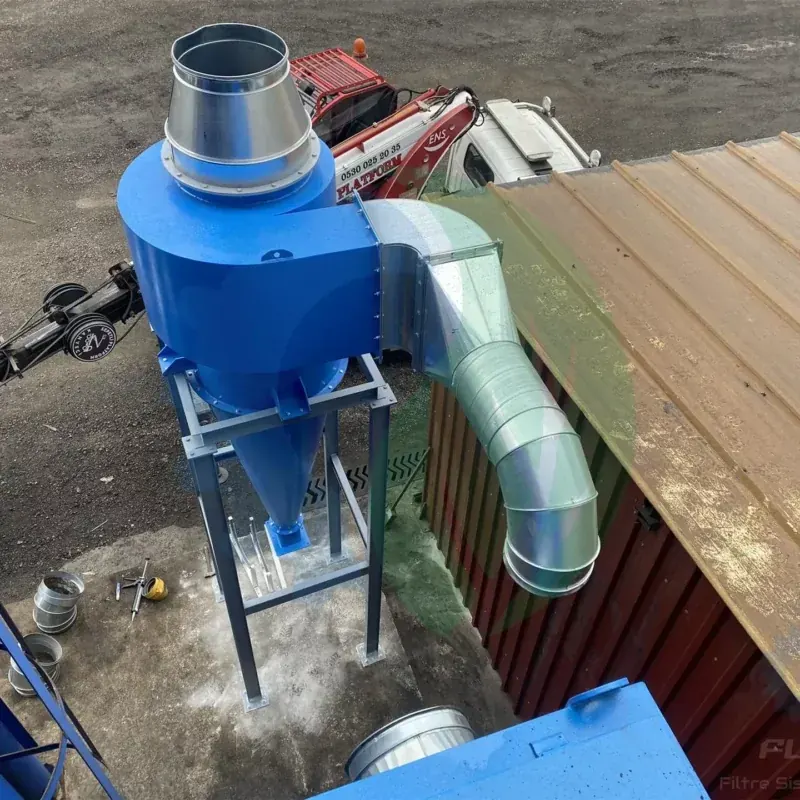
- Dust characteristics: For abrasive dust, a wear allowance is left in the inlet zone, and for coarse particles a cyclone is used upstream.
- Gas temperature: If the temperature is above the continuous operating limit of the bag, a gas cooling unit is placed at the inlet or a heat-resistant fabric is selected.
- Moisture and dew point: On lines with condensation the dust sticks to the bag, so housing insulation and fabric are selected accordingly.
- Combustible dust: Antistatic bags, grounding and explosion relief are planned together.
- Dust quantity and discharge: The daily dust quantity determines the hopper volume and the choice between a rotary valve and a big bag or bucket.
- Layout: Top access allowance for bag replacement, indoor or outdoor conditions and the compressed air infrastructure are evaluated.
For very fine and dry dust, where space is limited, a jet pulse cartridge filter can provide the same filter surface in a smaller housing than a bag filter. When the dust load is high or the gas is hot, a bag-type design is more suitable.
Jet Pulse Bag Filter Engineering and Manufacturing Process
Engineering begins by taking measurements on site. The location of the dust source, operating temperature, daily dust quantity and the existing duct layout are recorded. A design made without these data often fails to deliver the expected suction on site.
After measurement, the housing size, number of bags, valve layout and fan selection are determined, and the manufacturing drawings are prepared. After the housing is fabricated, the weld seams are checked for tightness, because a leaking housing directly weakens suction and may release the captured dust back into the air. The control panel is prepared at the same stage according to the plant’s automation infrastructure. The unit is shipped in sections to shorten the on-site installation time.
Jet Pulse Bag Filter Installation and Maintenance
Installation and commissioning
Installation begins with fixing the housing to the floor or to the steel structure. Then the duct connections, compressed air line, air lock and fan are put in place. Fitting a moisture separator on the compressed air line is a step that must not be skipped, because humid air wears out the diaphragms and the bags.
During commissioning, the fan is started first and the velocity at the suction points is measured. Then the pulse sequence, pulse duration and pause interval are set from the control panel. In the last step, the pressure difference between the dirty and clean sides is recorded. This value becomes the reference for later maintenance.
Maintenance and bag replacement
Pressure difference monitoring is at the center of maintenance. When the value rises above the reference range, the compressed air pressure and the diaphragm valves are checked first. The air lock under the hopper is also monitored regularly, because a full hopper causes dust to climb back into the bags.
Bag replacement usually comes up when the pressure drop rises permanently or when dust is seen at the stack outlet. Replacement is done not one by one but by section, with the bags replaced together. When new and old bags run mixed, air is drawn toward the new bags and they wear out faster. The cages are checked at the same time, since a bent or rusty cage will tear a new bag in a short time.
Factors That Determine Jet Pulse Bag Filter Prices
Jet pulse bag filter prices are not given from a fixed list. The main items that determine the total cost are as follows:
- Air volume and the resulting filter surface area and number of bags
- Bag fabric and housing material
- Fan power, duct length and stack
- Automation scope and integration with the machine
- Additional units such as a cyclone, gas cooler or explosion protection
- Installation scope and on-site steel structure
The evaluation is not made on investment cost alone. Fan energy, compressed air consumption and the bag replacement interval make up the operating cost. A unit with an undersized filter area may look cheap at the initial investment, but it runs with a higher pressure drop and requires more frequent bag replacement.
Choosing a Jet Pulse Bag Filter by Industry
The same jet pulse bag filter housing calls for a different bag fabric and different auxiliary units depending on the industry. The table below summarizes the cases most often met in the field. The exact temperature limit of the fabric is given in the quotation together with the fabric datasheet.
| Industry | Role of the filter | Selection point |
|---|---|---|
| Foundry and iron-steel | Collecting melting and sand preparation dust together with the hot gas | If the gas temperature is high, a gas cooling unit at the inlet and a heat-resistant bag |
| Cement and ceramics | Capturing dense, abrasive mineral dust | Wear allowance in the inlet zone, a cyclone upstream for coarse particles |
| Wood and furniture | Collecting sawdust and sanding dust | Combustible dust: antistatic bag, housing grounding and an explosion vent |
| Grain, flour and feed | Capturing product dust and returning it to the line | Combustible dust class, food-grade bag and an easily discharging hopper |
| Plastics and recycling | Separating crushing and grinding dust | For sticky and mixed dust, a membrane bag and a low air-to-cloth ratio |
| Mining and quarries | Collecting dust at crusher, screen and belt transfer points | High dust load, a housing suitable for outdoor use, discharge with a rotary valve |
| Power plants | Capturing ash and flue dust | In humid and acidic gas, operation above the dew point and a fabric suited to it |
Information to Prepare When Requesting a Quotation for a Bag Filter
An accurate bag filter quotation depends on data from the site. If you have the information below, the housing size and scope are largely settled at the first meeting.
- Dust type and particle size (send a sample if available).
- Number of suction points, and the machine and hood dimensions at each point.
- Gas temperature and humidity, with normal and maximum values.
- Whether the dust is combustible and, if known, its explosion class.
- Daily dust quantity and how the dust will be removed from the hopper (big bag, bucket or conveyor).
- The area where the filter will be placed, the duct route and the compressed air infrastructure in the plant.
- If there is an existing jet filter, its bag size, fabric type and the problem experienced.
Information that is not ready is measured together during a site visit. A jet pulse bag filter selected with incomplete data may not deliver the expected suction in the field, even if it looks adequate on paper.
Units and Net Filter Area in Jet Pulse Bag Filter Calculation
If the air flow is given in m³/h and the filtration velocity in m/min, an hour-to-minute conversion is made in the calculation. In the same unit system, the required filter area is found with A = Q / (60 × v). Here Q is the air flow, v is the filtration velocity selected in the project, and A is the operating filter area.
In a sample calculation, a flow of 12,000 m³/h and a filtration velocity of 1 m/min require 200 m² of active area. The lateral surface of a cylindrical bag 160 mm in diameter and 3 m long is about 1.51 m²; in this example the calculation result is rounded up to 133 bags to meet the area. The filtration velocity in the project is selected separately according to the dust load and cleaning conditions.
If compartments will be closed for maintenance or there are different operating scenarios, the check is made on the net operating area. Showing the flow, the number of bags and the maintenance scenario on the same calculation sheet prevents capacity from being judged by the total number of bags alone.
Frequently Asked Questions
Are a jet pulse filter and a bag filter the same system?
Bag filter is the general name, while jet pulse describes the method of cleaning the bags with a compressed air pulse. Every jet pulse unit is a bag filter, but the reverse is not always true.
How is jet pulse filter capacity determined?
Capacity comes from the air volume and the air-to-cloth ratio selected according to the fineness of the dust. These two values give the required filter surface area, and the surface area gives the number of bags.
How much compressed air does a jet pulse filter consume?
Cleaning pulses generally operate at four to six bar, and each pulse lasts around one hundred milliseconds. Total consumption depends on the number of valves and the pulse frequency. Differential-pressure-controlled cleaning reduces consumption.
Can a jet pulse bag filter be manufactured to comply with ATEX conditions?
Yes, it can. With antistatic bags, grounding, an explosion relief panel and equipment selected for the zone, it is made suitable for lines carrying combustible dust. The plant’s explosion risk assessment is taken as an input to the design.
When should filter bags be replaced?
Replacement is planned according to measurement, not the calendar. If the pressure drop rises permanently despite cleaning, or if dust is seen at the stack, the bags are inspected and replaced together by section.
Can a jet pulse bag filter be manufactured in custom dimensions?
Yes. The housing size, number of bags and connection directions are determined according to the plant layout and the calculated air volume.
How are jet pulse filter emission values measured?
Measurement is carried out with a sample taken isokinetically from a sampling point opened on the stack. In plants that require continuous monitoring, a dust monitoring device is installed in the stack.
Can the flow on the fan label be used directly in the filter area calculation?
The flow on the fan label or in the catalog belongs to a specific operating point. For the filter area, the design flow at the duct and dirty-filter resistance is taken as the basis. On an existing line, this value is verified with the fan curve and site measurements.
Is the total bag area sufficient when one compartment is closed for maintenance?
The check is made with the net area of the bags that are actually filtering the air. While one compartment is out of service, the filtration velocity in the remaining area rises. If this mode of operation is planned, the compartment layout and the required capacity are taken into account from the start of the design.
General information on dust collection systems

- Category
- Dust Collection Systems
- Made in
- İkitelli OSB, Istanbul, Türkiye
- Updated