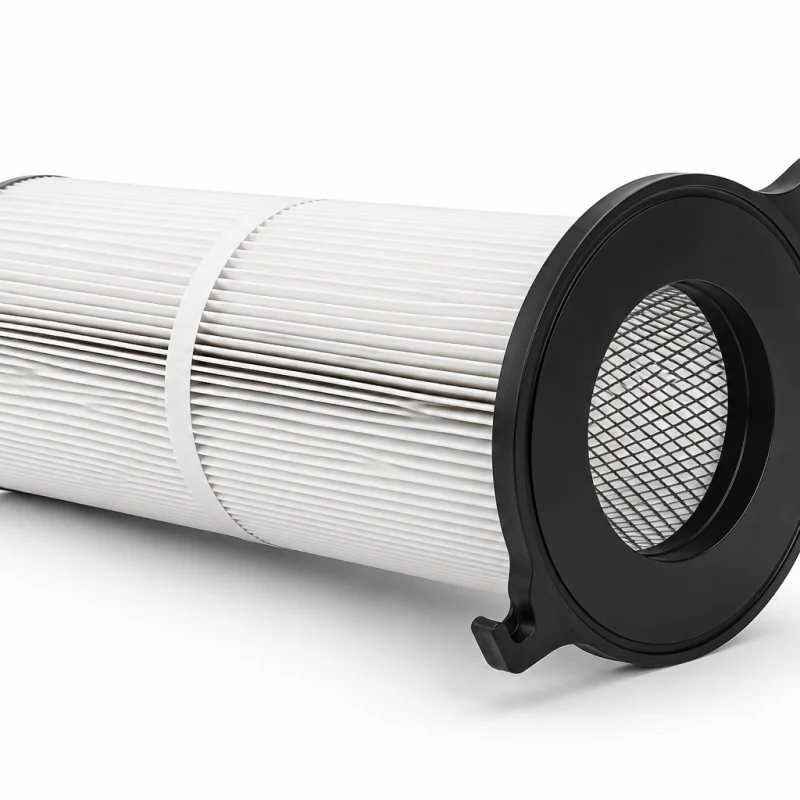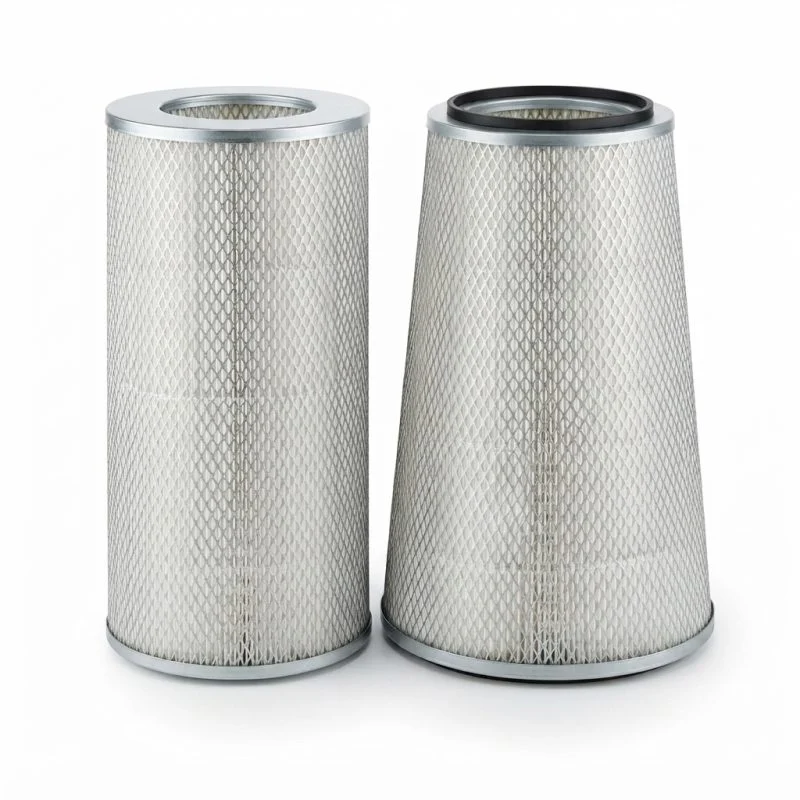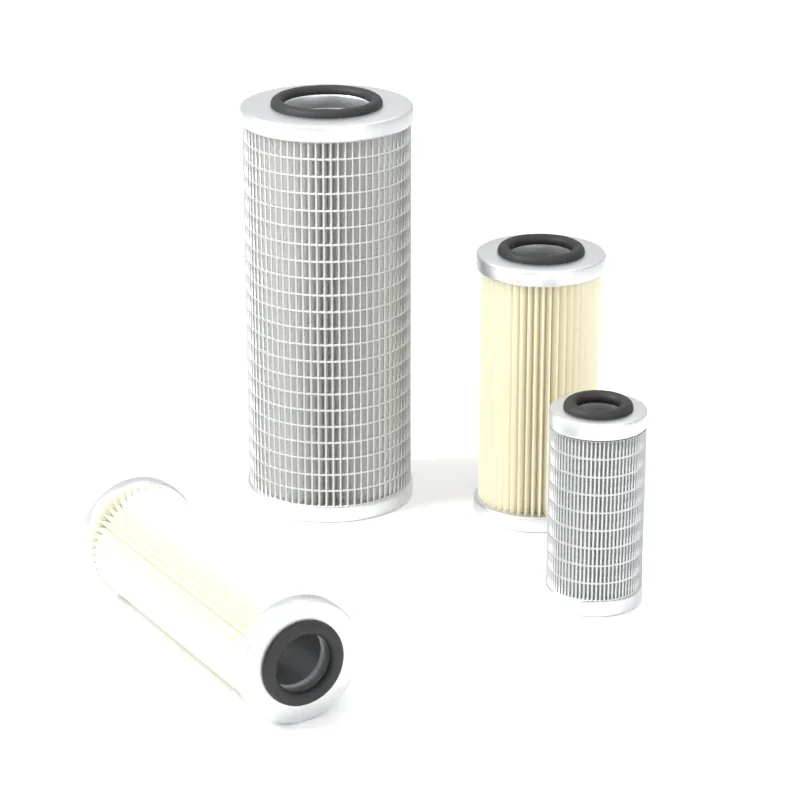





Panel Cartridge Filter
13 June 2024
Flame-Free Ventilation Chimney
14 June 2024
What Is an Explosion Vent?
An explosion vent is a thin-walled panel manufactured to rupture when a certain pressure is reached. In the industry it is also called an explosion panel or explosion relief panel. Because it is considered a protective system in regulatory language, it is subject to independent certification.
Its working logic is based on limitation rather than prevention. When ignition occurs, pressure rises within milliseconds. The vent opens and directs the flame and pressure outward, and the pressure remaining in the housing stays at a level the equipment can withstand. For this reason the term explosion pressure relief vent describes the same product. The name explosion disc is used more for pipelines and equipment with circular housings.
An explosion vent does not prevent dust from igniting. Its job is to limit the damage inside the equipment when ignition occurs and to prevent the housing from splitting and parts from being thrown. For this reason, in a plant with a dust explosion risk it is considered together with measures such as grounding, control of ignition sources and appropriate fan selection.
How Does an Explosion Vent Work?
Three pressure values are read together in the system:
- Static activation pressure: The pressure at which the vent ruptures.
- Reduced explosion pressure: The maximum pressure reached in the housing during relief.
- Design strength: The pressure the equipment housing can carry without permanent damage.
The activation pressure of the vent is selected below the strength of the equipment. The reduced pressure must stay below the strength under all conditions. If the relief area is calculated insufficiently, the pressure splits the housing. If the activation pressure is selected lower than necessary, the vent opens during pressure fluctuations in normal operation and the line stops unnecessarily.
When an explosion indicator is added, the opening of the vent produces a signal immediately. This signal is used to stop the fan, the feed screw or the rotary valve. This reduces the chance of the flame spreading to connected lines.
Types of Explosion Vents
The types differ according to housing structure and the requirements of the operating environment. All three work on the same principle; the difference is in material, surface quality and opening tolerance.
| Type | Housing structure | Key feature | Typical use |
|---|---|---|---|
| Composite type | Multi-layer metal and insulation | Economical, wide size range | Filter, cyclone, silo |
| Hygienic type | One-piece stainless, smooth surface | Cleanable, inner surface that does not retain product | Food, pharmaceutical, milk powder |
| High performance | Reinforced special profile | Narrow opening tolerance, vacuum resistance | Mill, dryer, atomizer |
Geometry also affects selection. The panel form is used on square and rectangular equipment. The explosion disc form is preferred on pipelines and circular housings. All three types can be prepared in these two geometries; what determines the choice is the flange size of the equipment.
Composite Type Explosion Vents
The composite type is produced by pressing a metal layer and an insulation layer together. This structure keeps the activation pressure in a narrow band and keeps the cost low. Most of the vent requirement in dust collection systems is met with this type, because it offers a wide choice in square and rectangular sizes. The gasket and mounting frame are supplied together with the vent.
Hygienic Type Explosion Vents
The hygienic type is produced with a one-piece stainless housing that does not allow product to build up on the inner surface. Its structure, which leaves no weld marks or pockets, is suitable for washdown. This group is preferred in food, milk powder, starch and pharmaceutical production. If requested, a vacuum support plate is added and the vent can also be used on lines where negative pressure occurs.
High-Performance Explosion Vents
High-performance vents are produced for lines that require a narrow tolerance on activation pressure and where pressure changes constantly. Thanks to the reinforced profile, they are resistant to fatigue. Mills, dryers and atomizers are the typical areas for this group. Their cost is higher than the other groups, and in return the risk of false opening is lower.
Explosion Vent Technical Specifications
The values in the technical data sheet determine which equipment the vent can be installed on. These values are evaluated together with the analysis of the dust sample.
- Static activation pressure: The pressure value at which the vent ruptures.
- Reduced explosion pressure: The maximum pressure reached in the housing during relief.
- Relief area: The opening calculated according to the equipment volume and dust class.
- Dust explosion class: The value that defines the rate of pressure rise of the dust.
- Temperature range: The temperature limits within which the vent can operate.
- Vacuum resistance: Resistance to the negative pressure that occurs on the suction side.
- Certification: The declaration of conformity that the product holds as a protective system.
The explosion class of the dust is determined in the laboratory and is the basic input of the relief area calculation. Aluminum and magnesium dust are in the highest class; wood and grain dust remain in a lower class. If two pieces of equipment of the same volume carry different dusts, the required relief area also turns out different. For this reason an explosion vent cannot be selected by taking another plant as an example.
Vent Placement on Dust Collectors and Process Equipment
A filter housing that extracts combustible dust is considered a volume with explosion risk. The vent is therefore placed on the dirty air side of the housing, close to the zone where the dust forms a cloud. Placement varies according to the equipment type.
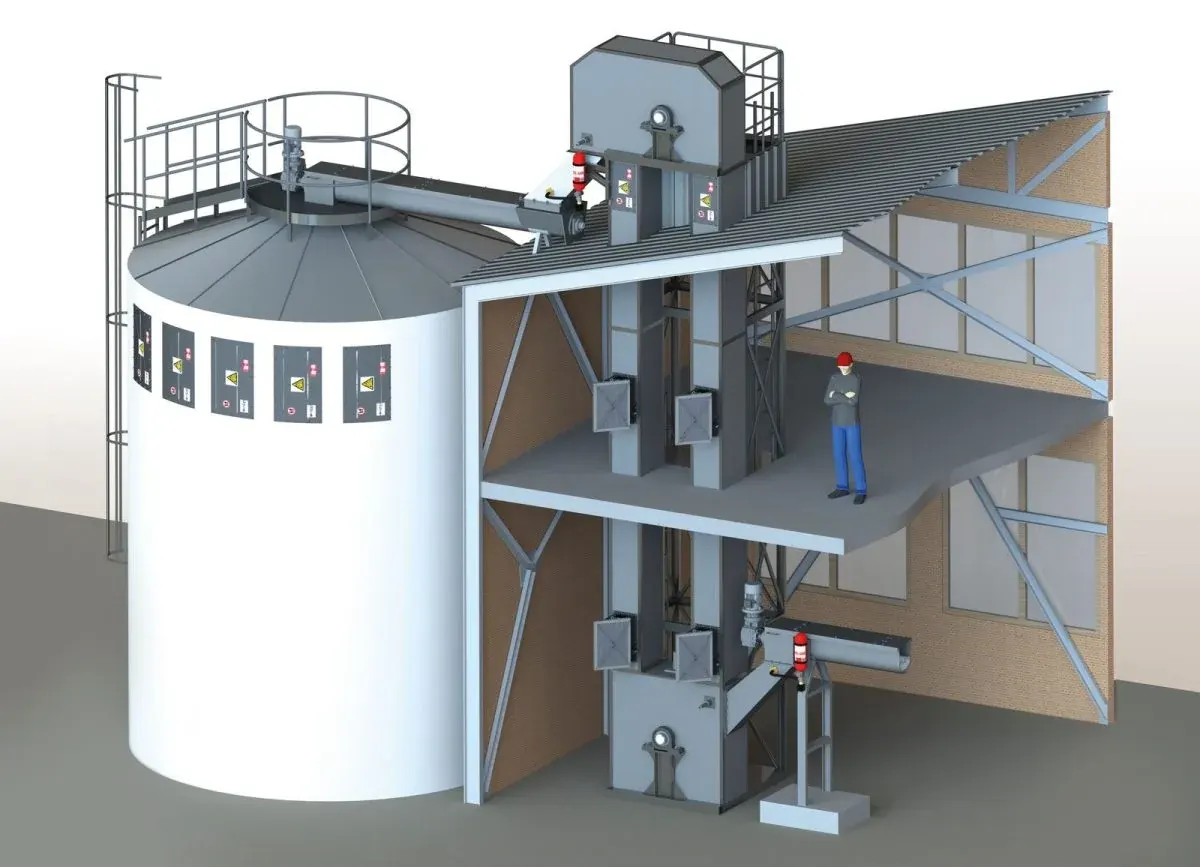
- Jet pulse bag filter: Because the housing volume is large, more than one panel is usually required.
- Jet pulse cartridge filter: A size suited to the limited area is selected on the compact housing; a single panel may be sufficient.
- Silo top jet filter: The silo body and the filter are evaluated together.
- Cyclone and pre-separator: Placed on top of the housing in volumes that capture coarse particles.
- Bucket elevator: Vents are applied along the housing at certain intervals.
- Pneumatic conveying line: The circular type suited to the pipe diameter is used.
The relief direction is also important on silos, because silos usually stand high and near walkways. If the vent will open into an enclosed area, the fireball also comes out. In this case the vent is used together with a flame-free ventilation chimney. On lines with explosive dust in the environment, an ATEX exproof fan is also preferred on the fan side.
What to Consider When Selecting an Explosion Vent
Selection begins with three pieces of data: the volume of the equipment, the explosion class of the dust and the design strength of the housing. Conditions on site are added to these.
- Equipment volume: The first input of the relief area calculation.
- Dust analysis: The explosion class and maximum explosion pressure are determined in the laboratory.
- Housing strength: The limit that the reduced pressure must stay below.
- Relief direction: An area with no personnel passage and no neighboring equipment is selected.
- Indoor condition: Flame-free relief is required in an enclosed volume.
- Reaction force: The load on the housing at the moment of relief is taken into account in the supporting structure.
- Hygiene requirement: Surface quality is decisive in food and pharmaceutical lines.
- Indicator need: Whether the opening of the vent should be converted into a signal is determined from the start.
When supplying an explosion vent, the declaration of conformity and the user manual must be delivered with the product. An uncertified panel may look cheap, but it is not accepted at inspection and puts insurance coverage at risk. For silo vents located high up, maintenance access must also be planned from the start; otherwise the panel stays uninspected for years.
Explosion Vent Installation and Maintenance
During installation, the direction of the vent and the sealing of the frame are decisive. A vent installed backwards or with a missing gasket will not open at the calculated pressure.
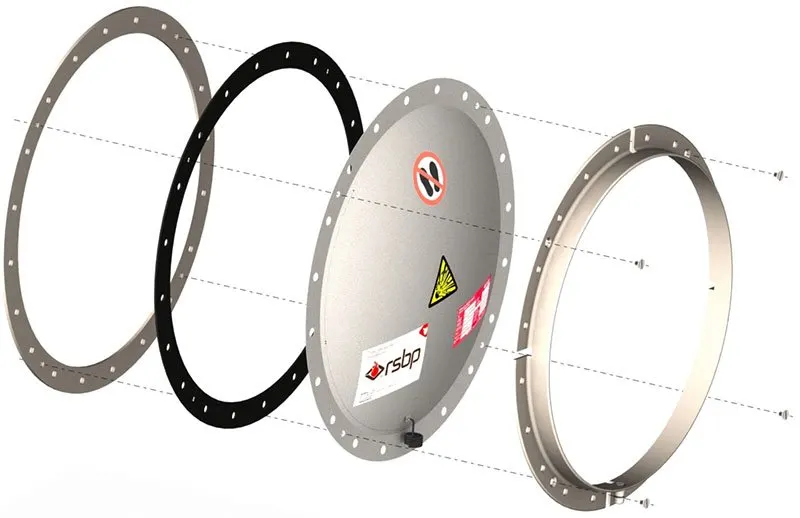
The frame bolts are tightened to the torque value given by the manufacturer. Overtightening deforms the panel and changes the activation pressure. The vent surface is inspected every six months for corrosion and impact marks; if a dust crust has formed on the inner surface, it is cleaned. A vent that has been covered, painted or loaded with weight loses its function. This is the most common defect found on site.
After a vent has opened, it is replaced with a new one. Before replacement, the cause of the ignition is investigated and the inside of the filter and the connected ducts are checked. It is also verified during periodic inspection that no material, pallets or new equipment have been left over time in the relief area in front of the vent.
Advantages of Using an Explosion Vent
The main benefit of the vent is life safety. In addition, it protects the equipment and production continuity.
- Passive protection: Works without an electrical or control connection.
- Low maintenance: There are no moving parts, so periodic work is minimal.
- Housing protection: Prevents the equipment from splitting and parts from being thrown.
- Economical solution: The investment cost is lower than explosion suppression systems.
- Quick replacement: A panel that has opened is replaced with a new one in a short time.
A certified vent also supports the plant’s explosion protection document. When ignition occurs in equipment without a vent, the damage is not limited to that unit; it can spread to connected lines and neighboring equipment.
Factors That Determine Explosion Vent Prices
A ready price list is not given for explosion vents, because each vent is sized according to the equipment’s volume and dust. The main items that make up the cost are as follows:
- Vent size and quantity
- Type: composite, hygienic or high performance
- Activation pressure and required tolerance
- Housing material and vacuum support need
- Indicator and certification scope
The hygienic type is more expensive than the composite type because it requires a stainless housing; the high-performance group is above both. When comparing quotations, be sure to ask about the activation pressure tolerance and the scope of the declaration of conformity. Even at the same size, the required vent may change if the dust class is different. When you fill in the quotation form with the equipment volume, dust type and existing vent size, a project-specific price is prepared.
Choosing an Explosion Vent by Industry
In every industry with a dust explosion risk, the explosion vent is not selected in the same way. The type is determined by the kind of dust, whether the line is washed down, and whether the equipment is in an enclosed area. The table below summarizes common situations.
| Industry | Role of the vent | Selection point |
|---|---|---|
| Flour and feed mills | Relieves pressure in filters, silos and elevators | Several vents along the elevator; relief direction on silos |
| Food and milk powder | Protects the housing on washed-down lines | Hygienic type, smooth stainless inner surface |
| Pharmaceutical production | Limits pressure in dryers and dust collectors | Hygienic type; mostly installed in an enclosed area |
| Wood and furniture | Protects the housing in sawdust and sanding dust filters | Several panels because of the large housing volume |
| Metal grinding and polishing | Relieves pressure in metal dust collectors | High explosion class; relief area is calculated from laboratory data |
| Plastics and chemicals | Protects the housing on powder raw material lines | Housing material suited to the chemical environment, vacuum resistance |
| Pneumatic conveying lines | Relieves pressure in the pipeline | A circular form, that is a rupture disc, is used |
If the vent will open into an enclosed area, it is used together with a flame-free ventilation chimney. For the dust collection arrangement on food and pharmaceutical lines, see the food and pharmaceutical dust collection page.
Information to Prepare When Requesting a Quotation for an Explosion Vent
An explosion vent cannot be selected by copying an example from another plant. The following information is needed for the calculation:
- Type and internal volume of the equipment on which the vent will be installed.
- Dust type and, if available, the explosion class report obtained from a laboratory.
- Pressure the equipment can withstand (from its manufacturer or the project file).
- If there is an existing vent, its size, opening pressure and frame type.
- Direction in which the vent will open: open area or enclosed area, whether there is a walkway nearby.
- Operating temperature and whether vacuum forms on the line.
- Whether a signal to stop the line when the vent opens is required.
Difference Between Explosion Venting and Explosion Isolation
An explosion relief panel releases the pressure in the housing it protects in the specified relief direction. Suction ducts connected to the filter and material transfer lines are separate paths through which an explosion can propagate to other equipment. In the project, the protection of the housing and the protection of connected lines are evaluated together.
| Protection element | Basic function |
|---|---|
| Explosion relief panel | Provides pressure and flame relief through the calculated opening. |
| Flame-free venting device | In a suitable and certified device, limits the effect of the vented flame on the surroundings; installation distances are also taken into account separately. |
| Explosion isolation system | Selected to limit the spread of flame and pressure between connected pipes and equipment. |
| Opening indicator | Informs the automation that the panel has opened; provides input to the alarm and shutdown scenario. |
The selection of these elements is made together with connection directions and the plant's explosion protection design. The presence of one component does not automatically fulfill the role of another.
Frequently Asked Questions
At what pressure does an explosion vent open?
The activation pressure is determined according to the design strength of the equipment and is selected at low values in dust collection units. Because the exact value is found through the housing calculation, there is no single figure that fits everyone.
On which equipment are explosion vents used?
They are used on filters with combustible dust, cyclones, silos, bucket elevators, mills, dryers and pneumatic conveying lines. The common condition is that an explosive dust cloud can form inside the housing.
Can an explosion vent be reused?
No. Because an explosion panel works by rupturing, it is single-use and is replaced with a new one after it opens. Hinged relief doors, on the other hand, can close again; these two products are often confused.
How is the explosion vent size determined?
The size is found by calculating the equipment volume, the explosion class of the dust, the strength pressure of the housing and the activation pressure of the vent together. Because the length-to-diameter ratio of the housing also enters the calculation, the size is not selected by guesswork.
Can an explosion vent be installed on a filter inside a building?
If the vent opens directly into an indoor space, the flame and burning dust come out into the work area. In this case it is either directed outside through a relief duct or used together with a flame-free ventilation chimney.
How often should an explosion vent be inspected?
The vent surface is inspected at least every six months for corrosion, impact, paint and dust crust. It is also verified in the same inspection that the relief direction remains clear and the indicator works.
Does stopping the fan when the explosion vent opens isolate the connected line?
A fan stop and alarm signal does not by itself stop a flame or pressure wave traveling in the connected duct. The required isolation arrangement is determined by evaluating the dust properties, pipe connections and protected equipment together.
Does adding a vent duct to an explosion vent change the calculation?
Yes. The length, cross-section and direction changes of the vent duct can affect the venting behavior and the reduced pressure that may develop in the housing. Before connecting a duct afterwards to a panel selected for free venting, the vent area, equipment strength and manufacturer limits are checked again.
- Category
- Explosion Prevention Systems
- Made in
- İkitelli OSB, Istanbul, Türkiye
- Updated