




Industrial Chimney Filter
21 October 2026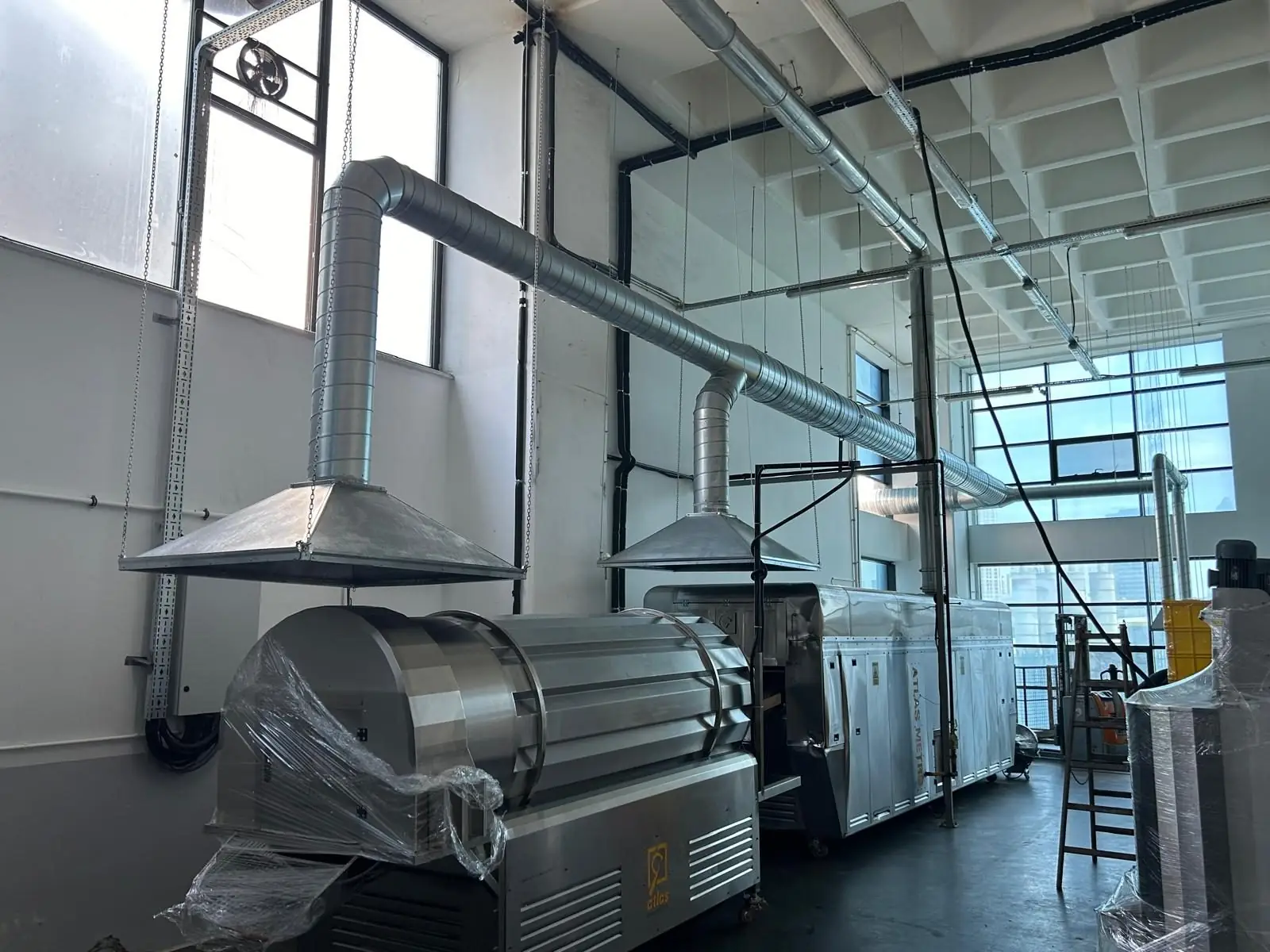
Industrial Oil Mist Filter
An industrial oil mist filter separates airborne oil droplets and oily particles from process air. Unlike dry dust, liquid oil does not form a removable dust cake. Droplets collect on the filter, merge and drain downwards, so the unit needs a drainage route and collection vessel.
Oil mist occurs around CNC machines, lathes, grinding, presses, heat treatment, textile stenters and frying lines. FLTS designs and manufactures units in İkitelli OSB, Istanbul, selecting the filtration stages according to airflow, oil load, droplet size and the liquid used in the process.
- Metal cassette, coalescing, electrostatic or centrifugal stages
- Design for neat oil or water-based emulsions
- Drainage and collection arranged for the application
- Machine-mounted or central extraction layout
What Is an Industrial Oil Mist Filter?
An oil mist filter is a treatment unit that separates oil droplets present in liquid phase in the air from the gas stream. Oil mist is generally in the 1 to 10 micron band, while oil smoke is below one micron. These two fractions cannot be captured by the same stage, so systems are mostly built with more than one stage.
Where it differs from a dust filter is the cleaning method. Shaking with compressed air does not work on liquid oil. The oil accumulates on the element, coalesces and flows to the drain by gravity. Because the term oil separator is used both for grease traps on wastewater lines and for these units on the air side, it is clarified at the quotation stage which one is meant.
Industrial-type oil mist filter systems
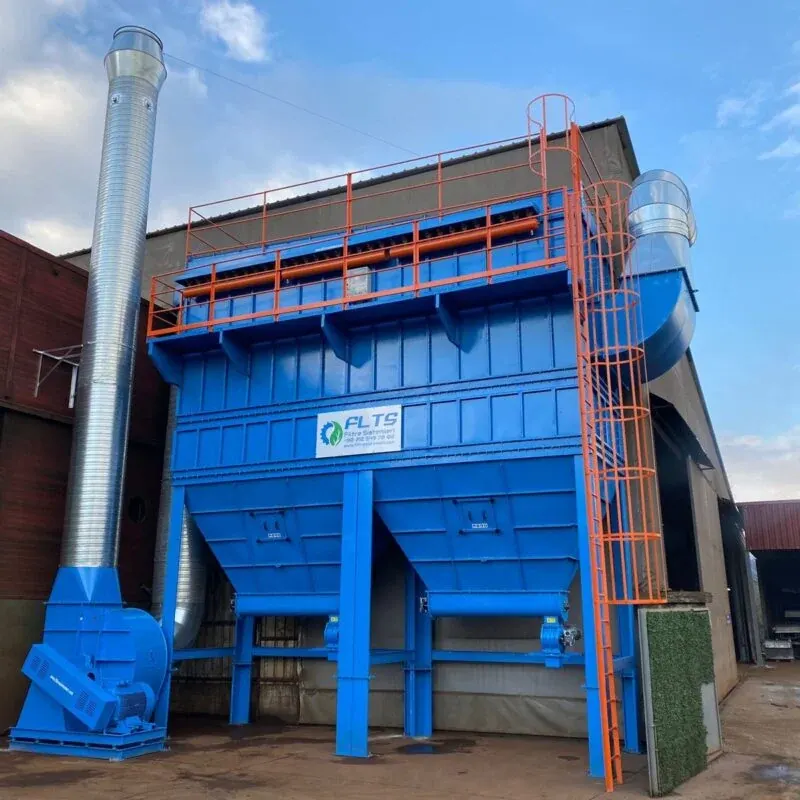
An industrial-type oil mist filter is designed on a different scale from household and kitchen-type products. Flow rates are expressed in thousands of cubic meters per hour, the housing is steel fabrication, and the unit works together with the fan, ducts, drain line and automation.
Industrial oil mist collectors are positioned in two ways. Bench-top types capture the contaminant at the point where it is emitted. Central types collect several machines with a single duct line. In a central setup, because there is a risk of oil build-up inside the duct, the slope and drain points are planned from the start.
How Does an Oil Mist Filter Work?
The working principle is based on four mechanisms:
- Inertia: Coarse droplets are captured by hitting the surface of the labyrinth.
- Interception: Fine droplets are captured by touching the fibers inside the fibrous structure.
- Coalescence: The captured droplets merge and grow larger.
- Drainage: The growing drops flow into the collection container by gravity.
An additional stage is required for the submicron fraction, because a single-stage oil vapor filter does not fully capture this size. In electrostatic units the particles are charged and collected on an oppositely charged plate, while in centrifugal units centrifugal force throws the oil onto the drum wall. If the cleaned air is to be returned to the hall, a high-efficiency final stage is added at the end of the line.
Types of Oil Mist Filters
Stage selection is made according to the oil load, droplet size and the required outlet efficiency. Four types cover most industrial applications. The table below compares these types.
| Stage type | Fraction captured | Maintenance method | Where used |
|---|---|---|---|
| Metal cassette | Coarse droplets | Washed and reused | Pre-stage, high oil load |
| Coalescing element | Fine oil mist | Replaced when saturated | CNC, lathe and grinding lines |
| Electrostatic | Fine mist and oil smoke | Plates are removed and washed | Heat treatment, smoke-heavy lines |
| Centrifugal | Dense oil mist | Self-cleaning | Benches with a high oil load |
Metal cassette oil mist filter
It is a pre-stage type made of aluminum or stainless steel labyrinth blades and captures coarse droplets by inertia. Because it can be washed, its operating cost is low. As its submicron efficiency is limited, it is used not alone but in front of the fine stage.
Coalescing oil mist filter
It consists of glass fiber or synthetic depth media. It captures fine droplets, merges them and lets them flow to the drain, and it is the most common industrial solution for oil mist. It is the standard stage on CNC and grinding lines. When the element is saturated it is not washed but replaced, so the consumables plan is part of the investment decision.
Electrostatic oil vapor filter
It charges the particles under high voltage and holds them on the collection plate. Because the pressure drop is low, energy consumption is advantageous, and the plates can be washed and reused. On the other hand, the investment cost is high, and efficiency drops as the plate gets dirty. In units without a regular washing program, performance falls below expectations in a short time.
Centrifugal oil vapor filter
A drum rotating at high speed separates the oil from the air by throwing it onto the wall with centrifugal force. Because it is self-cleaning, it does not clog and operates continuously under high oil load. Since it does not fully capture the submicron fraction on its own, it is installed together with a fine final stage.
Components of an Oil Mist Filter System
The system does not consist of a single housing but of five main groups working together.
- Suction hood or cabinet connection: Captures the contaminant at the point where it is emitted.
- Staged filter group: Consists of a pre-separator, a coalescing element and, if necessary, a high-efficiency final stage.
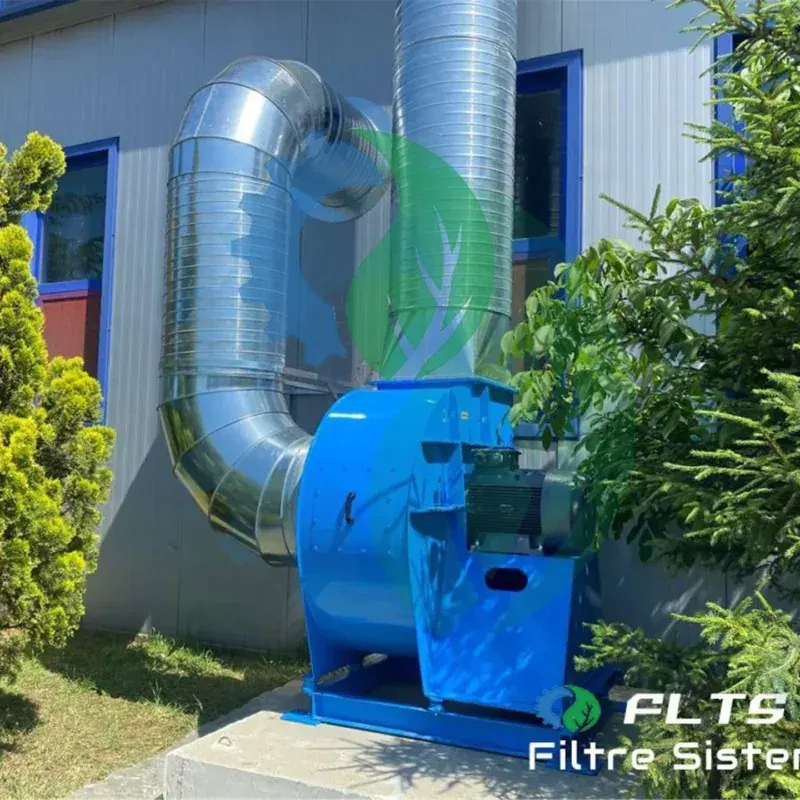
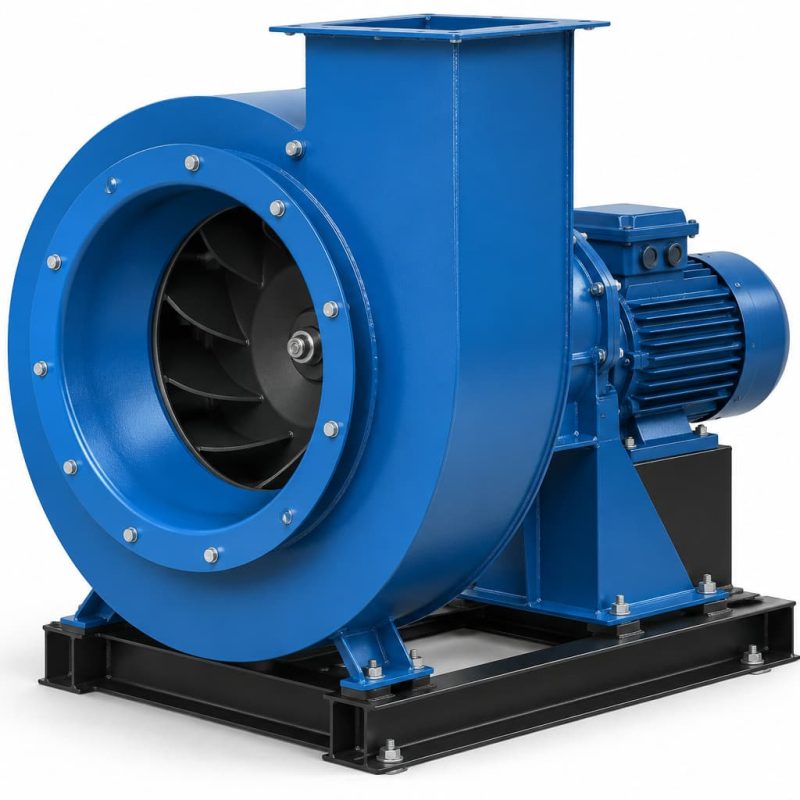
- Fan and suction unit: Selected with enough power to meet the calculated flow rate and pressure drop.
- Oil drain line and collection container: Discharges the collected liquid without interruption and allows recovery.
- Housing and sealed duct line: Manufactured with a slope suited to oil flow.
An incorrectly calculated component affects the entire system. An undersized industrial fan reduces the capture velocity at the hood, while a duct left without a slope causes oil to collect in horizontal runs.
What Should Be Considered When Selecting an Oil Mist Filter?
An incorrectly sized unit can neither clean the ambient air nor avoid permanently raising consumables use. The following items are decisive in selection:
- Air flow rate: The first piece of data that determines the size of the unit.
- Oil load: The amount of oil per unit of air determines the number of stages and element life.
- Droplet size: If a submicron fraction is present, a single stage is not sufficient.
- Fluid type: Lines running on water-based emulsion require an oil and water separation setup.
- Operating temperature: On hot lines a cooling stage is needed before the filter.
- Outlet efficiency: If the cleaned air is to be returned to the hall, a high-efficiency final stage is added.
- Drainage and recovery: The discharge of the captured oil and its return to the process are planned from the start.
- Fire safety: Oil that accumulates in the duct and housing is treated as a combustible material.
These items are interdependent. If odor and gas components are also involved, a water filter or an activated carbon stage is evaluated separately for the line. If dry dust is also present in large quantities in the air along with oil, a separate filter stage is considered for the dust.
Oil Mist Filter Manufacturing and Engineering
Engineering begins with site measurement. The flow rate of each source, the oil load in the air, the droplet size distribution and the temperature are determined, and then the duct route and number of stages are worked out. Whether the machines have closed or open cabinets directly changes the hood design and the required flow rate.
The type of fluid used directly changes the design. On benches running on water-based emulsion, oil and water are carried in the air together, so an oil and water separation setup is required. On lines using straight oil, a single-phase solution is sufficient. In manufacturing, housing and duct joints are made oil-tight, and drain points are placed at the lowest level of the housing.
If the cleaned air is to be returned to the hall, the system is planned together with factory ventilation systems. In this case the outlet efficiency and the air balance of the hall become part of the design.
Oil Mist Filter Installation and Maintenance
During installation, the duct slope is decisive. A slope is given so that the oil flows downward, drains are placed at low points, and a drain valve is placed at the lowest level of the housing. Horizontal runs left without a slope accumulate oil. This build-up both reduces suction efficiency and creates a fire risk.
At commissioning, the capture velocity at the hood opening is measured, it is checked that oil flows freely in the drain line, and the initial pressure difference of each stage is recorded. These values become the reference for later checks to tell when the elements are saturated.
The basis of maintenance is pressure difference monitoring. The checklist consists of the following items:
- Washing the metal cassettes periodically and installing them after they are fully dry
- Removing and cleaning the electrostatic plates
- Replacing the coalescing elements and filter cartridges when they are saturated
- Emptying the oil collection container and keeping the drain line open
- Checking and cleaning oil build-up inside the duct
Oil Mist Filter Prices
A single list figure cannot be given for oil mist filter prices, because each unit is sized according to the plant’s own data. If two plants running at the same flow rate have different oil loads and numbers of stages, their prices also differ.
The items that determine the price are total air flow rate, number of stages, coalescing element surface area, housing material, fan motor power and duct length. When an electrostatic stage is required, the high-voltage unit is added to the investment, and when recovery is planned, the drain line is added. The annual cost of consumable elements is also taken into account in the evaluation.
Industrial Oil Mist Filter by Industry and Fluid Type
In selecting an industrial oil mist filter, the type of fluid used is decisive as well as the machine. Straight cutting oil and water-based emulsion mix into the air differently. The table below summarizes, by industry, the role of the oil mist filter and the point that stands out in selection.
| Industry and fluid type | Role of the filter | Selection point |
|---|---|---|
| Automotive supplier industry, straight cutting oil | Capturing oil mist on CNC and lathe lines | Bench-top or central setup, oil recovery by drainage |
| Metalworking, water-based emulsion | Separating oil and water droplets together | Oil and water capturing setup, clogging in the humid element |
| Heat treatment, quenching oil | Collecting hot oil fume | Cooling stage upstream, fine stage for submicron fume |
| Textile finishing | Capturing oil vapor in the exhaust of the stenter machine | Condensing tarry deposit, washable element |
| Food production | Separating oil vapor on the frying line | Additional stage for odor, cleanable housing |
| Press and forming | Collecting coarse oil droplets | High oil load, slope and drainage points in the duct |
Information to Prepare When Requesting a Quotation for an Oil Mist Filter
The number of stages and the fan flow are determined by the oil load at the site. If the information below is ready, a preliminary design can be made at the first meeting.
- Machine list, types, and the number of machines running at the same time.
- Type of fluid used (straight oil, emulsion, synthetic) and brand information.
- Whether the machines have enclosed booths or are open, and the door dimensions.
- Whether the cleaned air will be returned to the hall or exhausted outside.
- Whether oil fume, oil mist, or both are seen (a photo of the line helps).
- Whether the captured oil will be reused.
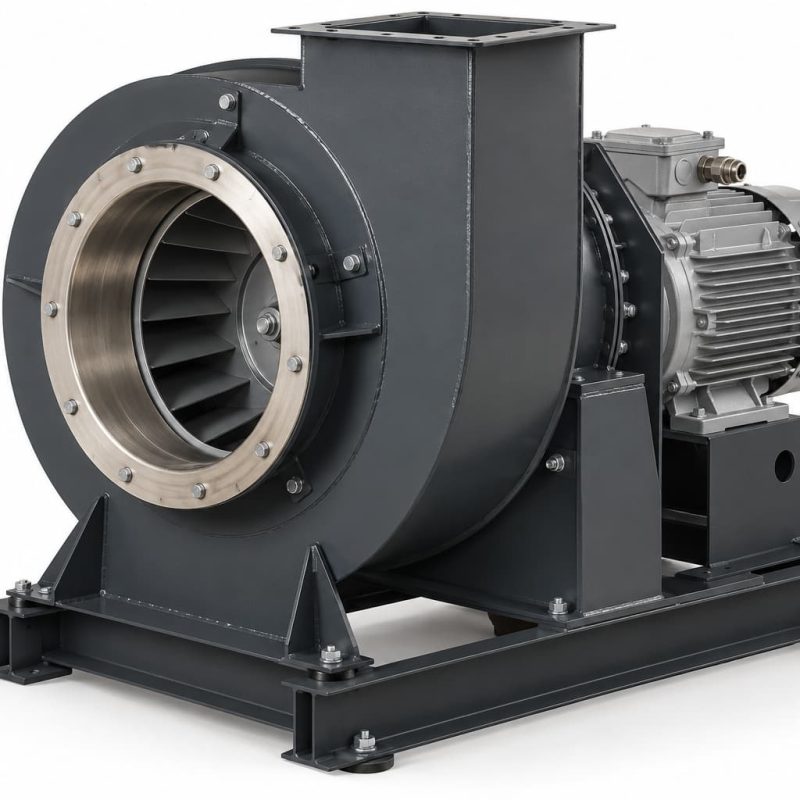
If the cleaned air is returned to the hall, the oil mist filter is planned together with factory ventilation systems. A radial fan is generally used on the extraction side.
Frequently Asked Questions
Does an oil mist filter prevent smoke and odor?
An oil mist filter captures liquid oil droplets and oily smoke in the air, but it does not capture odor components in the gas phase. If odor or solvent vapor is involved, activated carbon or a suitable gas treatment stage is added.
Can an oil mist filter be washed?
Metal cassettes and electrostatic collection plates can be washed and reused. Coalescing and high-efficiency final stage elements are not washed. Washed parts are not reinstalled before they are completely dry, because efficiency drops on a surface that remains damp.
How often should an oil mist filter be cleaned?
The frequency is determined not by the calendar but by the oil load in the air, so the criterion is pressure difference monitoring. On heavily used lines, metal cassettes are cleaned weekly or monthly, and electrostatic plates generally monthly.
Is an oil vapor filter used on CNC machines?
CNC machining centers and lathes are the most common application for oil vapor filters. Coalescing units mounted on the machine capture coolant-related oil mist at its source.
Can the captured oil be reused?
On lines using straight oil, the oil collected through the drain can be returned to the process under suitable conditions. For this, the drain line and collection container are planned at the beginning of the design. On emulsion lines, reuse is evaluated separately according to the nature of the fluid.
What is the difference between an oil mist filter and a chimney filter?
A chimney filter is designed for dry dust and particles and is cleaned with compressed air. An oil mist filter, on the other hand, captures liquid droplets and empties through drainage. A dry dust filter clogs quickly in oily air, so an oil mist stage is used instead of a chimney filter.
- Category
- Dust Collection Systems
- Made in
- İkitelli OSB, Istanbul, Türkiye
- Updated