




Hydraulic Filter
7 October 2026
Industrial Oil Mist Filter
21 October 2026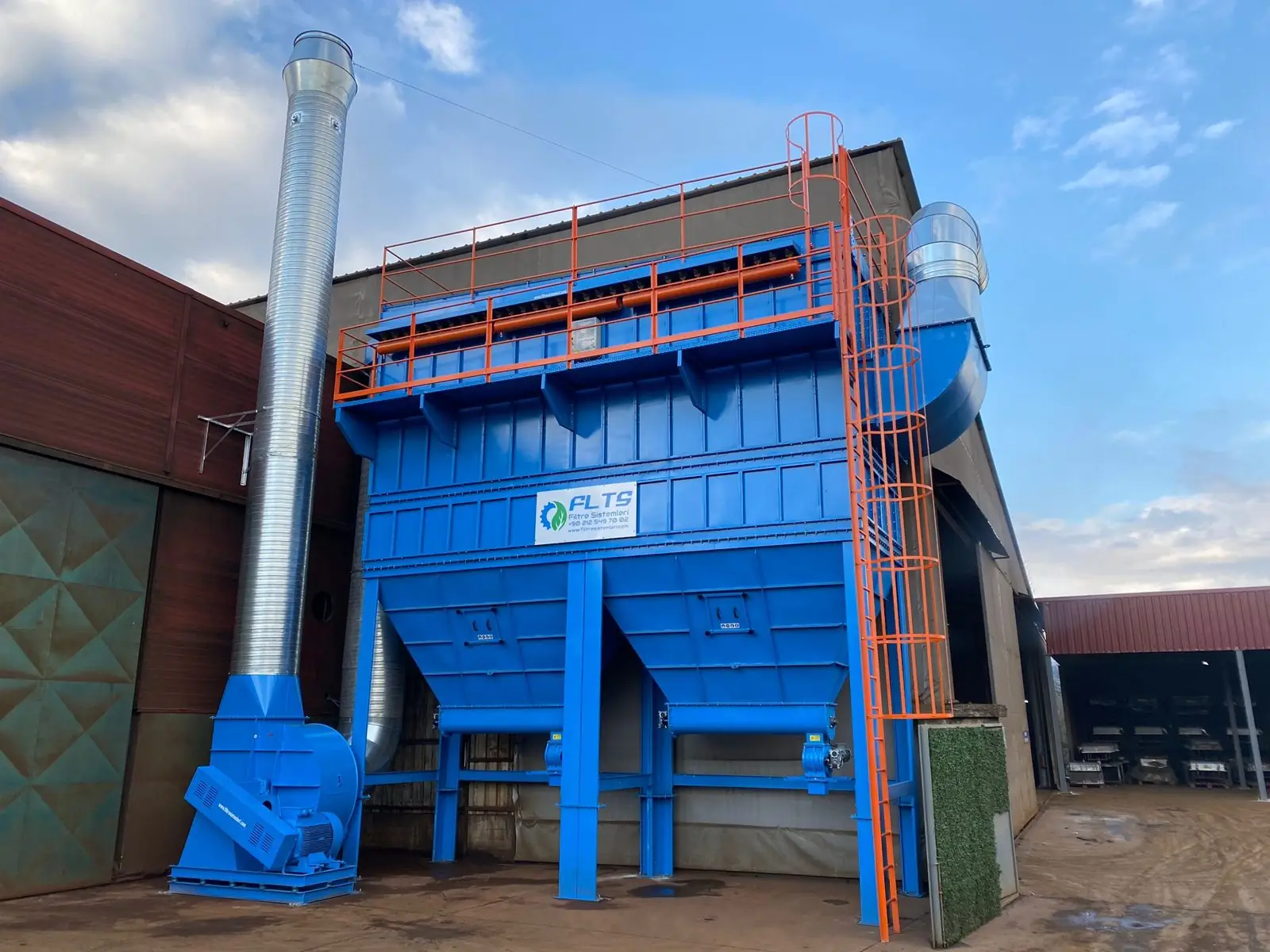
Industrial Chimney Filter
An industrial chimney filter separates dust and solid particles from process exhaust before the air is discharged through the stack. A fan draws contaminated air into the housing, particles are collected and the separated material is removed through the hopper discharge.
The equipment is used in foundries, cement plants, woodworking, food processing, recycling and chemical production. FLTS designs and manufactures filtration systems in İkitelli OSB, Istanbul, selecting the filter type and dimensions according to airflow, gas temperature and dust characteristics.
- Bag, cartridge or wet filtration according to the process
- Filter area sized to airflow and the required outlet conditions
- Fan, ducts and dust discharge designed as one system
- Gas cooling and explosion protection assessed where required
What Is an Industrial Chimney Filter?
A chimney filter, also called a stack dust filter, is a treatment unit that separates solid particles in process air from the gas stream. Its working principle is to pass the dirty air through a filter surface or a washing zone, retain the particles there and direct the clean air to the stack.
The system’s purpose is not only environmental. A chimney filter improves the ambient air inside the plant, prevents valuable product from escaping through the stack and helps meet the limit values in emission measurements.
Industrial-type chimney filter systems
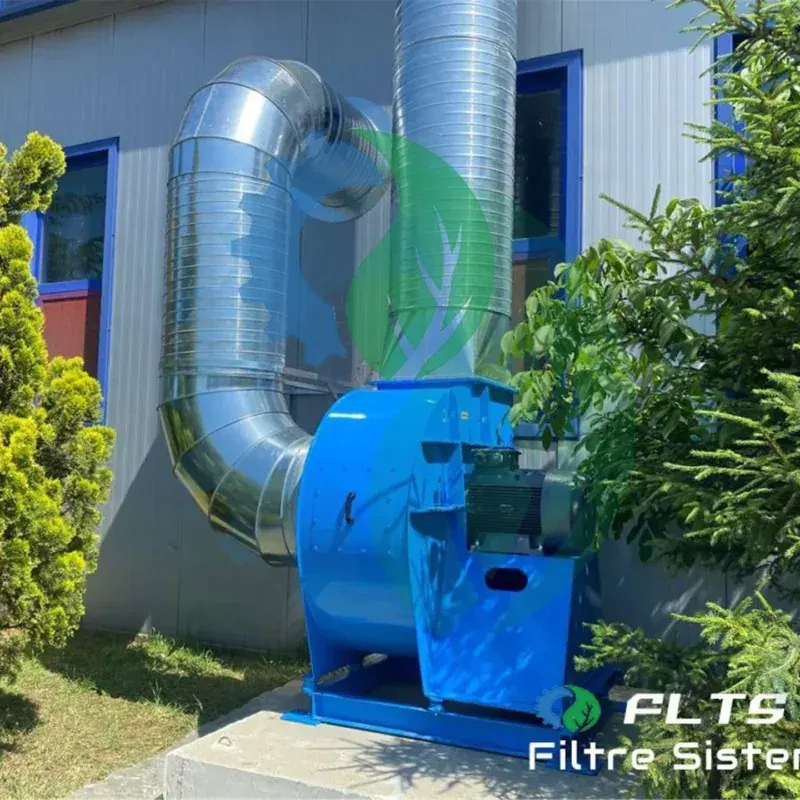
An industrial-type chimney filter is designed on a completely different scale from household or kitchen-type products. Flow rates are expressed in thousands of cubic meters per hour, the housing is steel fabrication, and the system works together with the fan, ducts, discharge group and automation.
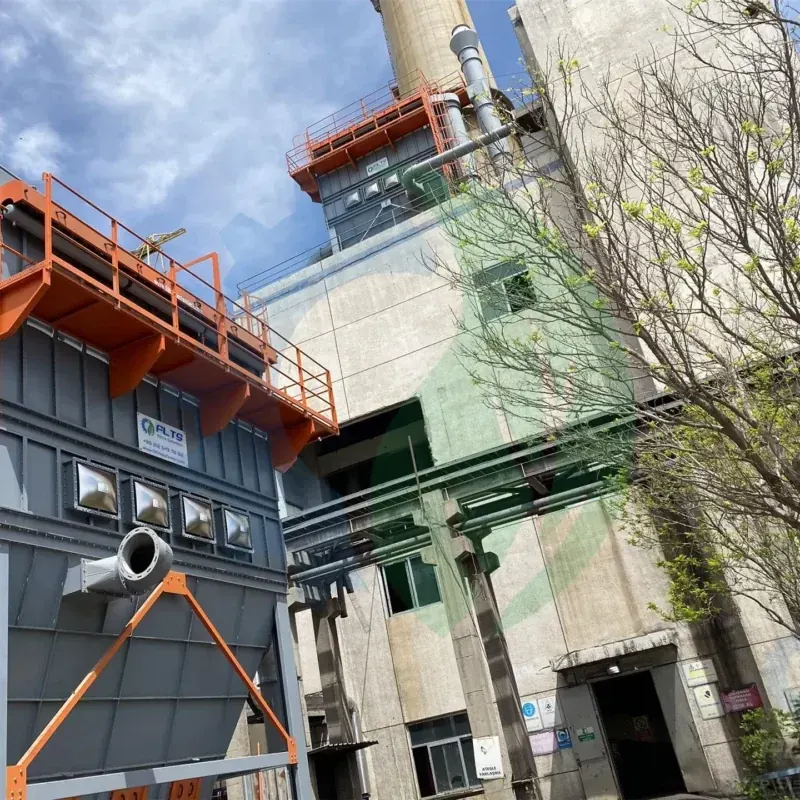
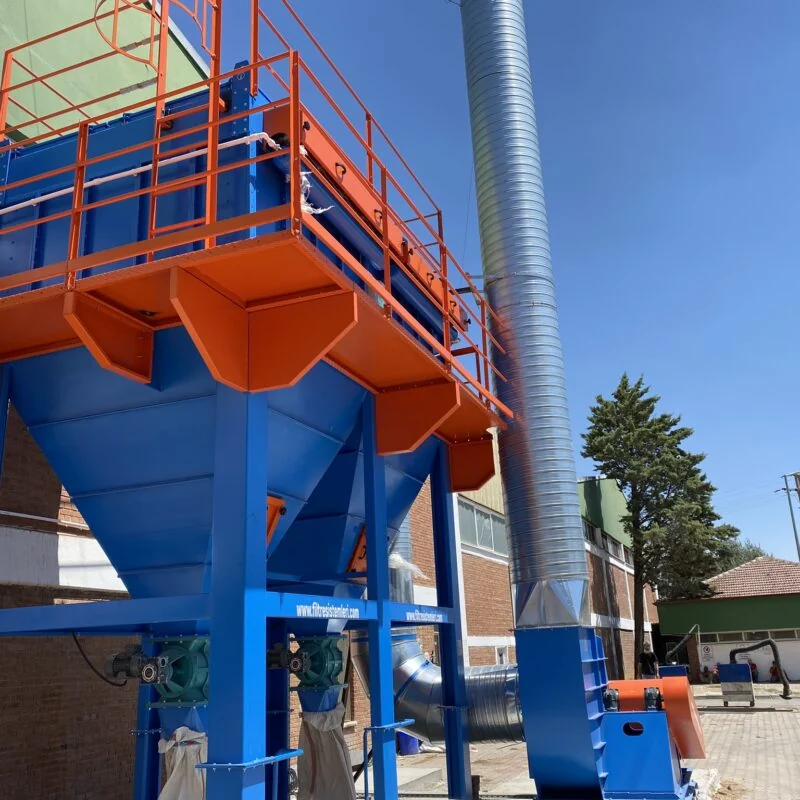
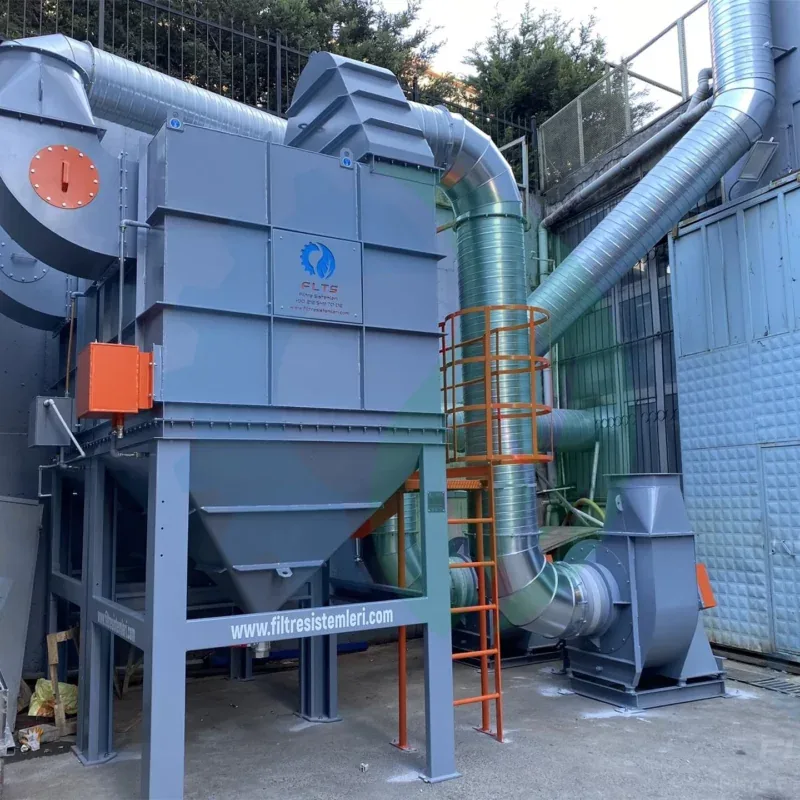
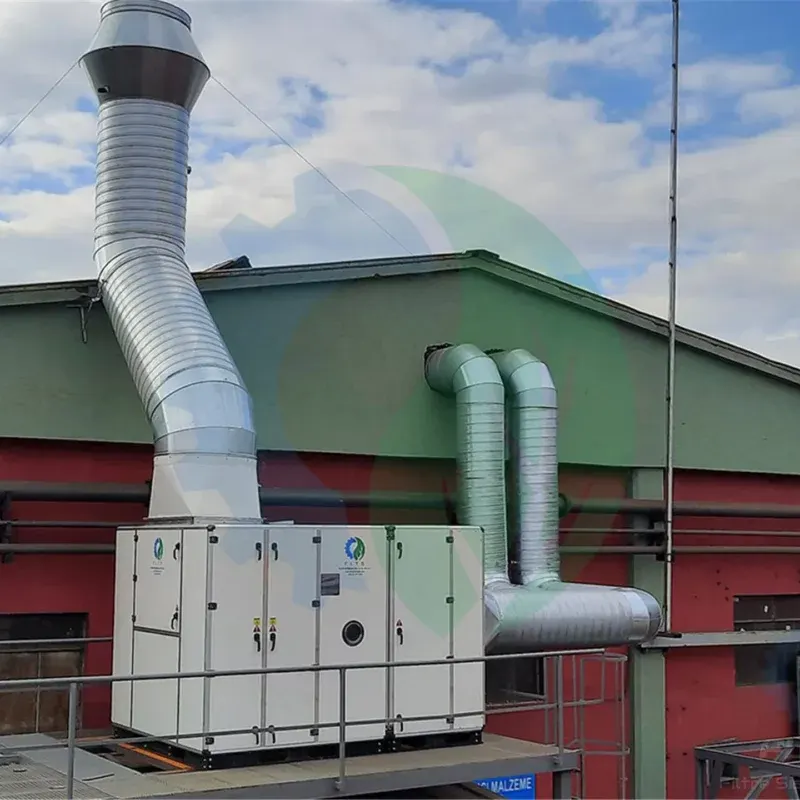
In factory chimney filter applications, the unit is usually placed outside the building on a steel platform. This placement avoids losing space in the production area and allows filter element replacement to be done without entering the production area.
How Does a Chimney Filter Work?
A chimney filter operates in four stages. Dirty air is carried to the housing through ducts by fan suction, the particles are retained on the filter surface, the cleaned air is discharged to the atmosphere through the stack, and the dust that builds up on the surface is shaken off at certain intervals and dropped into the hopper.
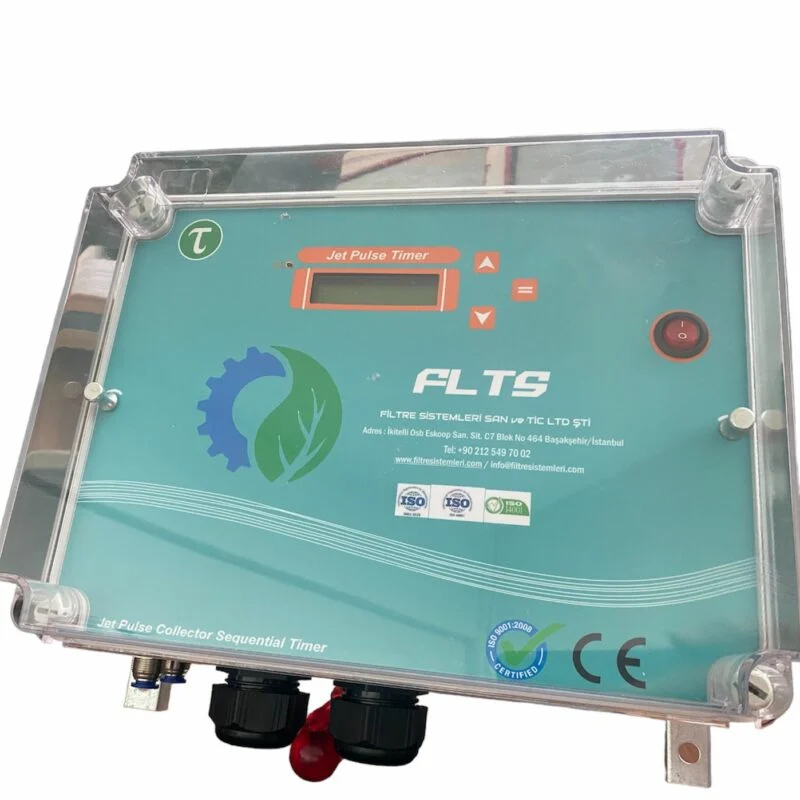
In most systems, shaking is done with compressed air. Pulse valves send short bursts of air to break the dust cake layer, so the filter resistance is kept within a stable range. Because the pulses are given in sequence, suction is not interrupted during cleaning. A continuously rising pressure difference is the first sign of clogging or a cleaning fault.
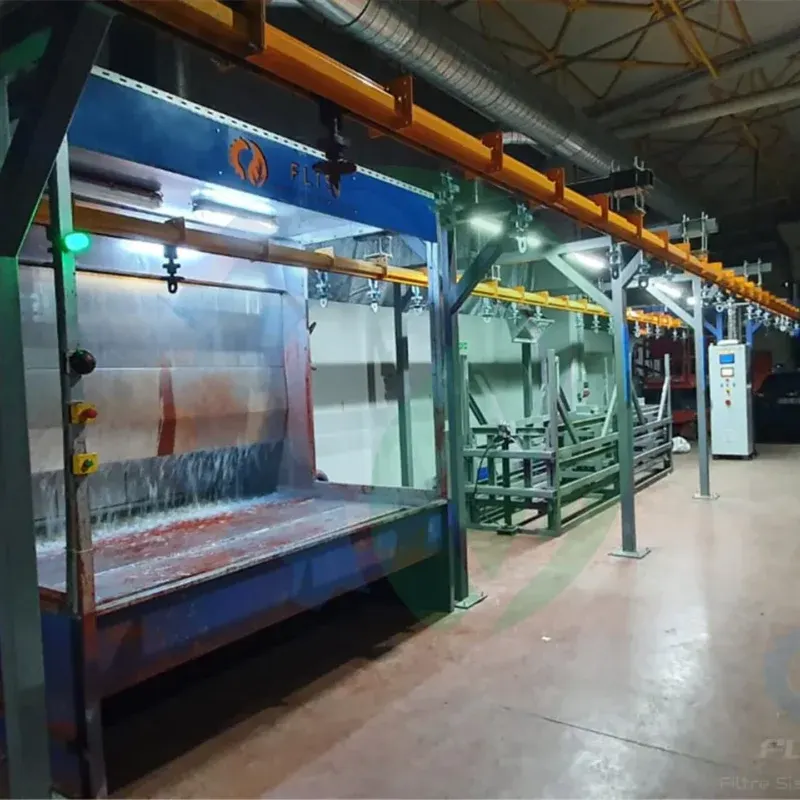
In the wet type, water is used instead of a filter surface. The dirty gas is passed through a water curtain or water turbulence, the particles are wetted and transferred to the water, and they collect as sludge at the bottom of the tank.
Types of Chimney Filters
The filter type is selected according to whether the dust is dry or sticky, the gas temperature and the required efficiency. The table below compares the four main types.
| Filter type | Suitable for | Strength | Limit |
|---|---|---|---|
| Bag | Dry dust, high dust load, hot gas | High efficiency on fine dust, wide choice of fabrics | Bags clog with sticky and oily dust |
| Cartridge | Fine and dry dust, limited space | Large filter surface in a small housing | Not suitable for humid and heavily loaded dust |
| Electrostatic | Large plants with very high flow rates | Low pressure drop | High investment; efficiency drops with sticky dust |
| Wet | Sparking, sticky or combustible particles | Safe capture where a dry filter is risky | Requires wastewater and sludge management |
Bag chimney filter
Needle felt bags are placed vertically inside the housing. Dust is retained on the outer surface of the bag, and clean air exits from the inside. Because the fabric is selected according to temperature, it offers a wide operating range. In metal, cement, wood and recycling lines, the first choice is usually a jet pulse bag filter.
Cartridge chimney filter
Thanks to its pleated filter elements, it offers more filter surface than the bag type in the same housing volume. It is a compact solution for lines where fine and dry dust predominates and space is limited. Jet pulse cartridge filters are common in sandblasting, laser cutting and powder coating lines.
Electrostatic chimney filter
It charges the particles under high voltage and collects them on oppositely charged plates. Mechanical impact is applied to the plates to drop the accumulated dust into the hopper. The low pressure drop provides an energy advantage on high-flow lines. Because the investment cost is high, it is used mostly in large-scale plants such as power plants and cement.
Wet chimney filter
It transfers particles to the liquid phase by passing the dirty gas through a water curtain or washing zone. It provides an advantage with dusts that carry sparks or are sticky or in the combustible class. On the other hand, sludge and wastewater are generated, so water management is included in the project when selecting a water filter.
Components of a Chimney Filter System
A chimney filter does not consist of a single housing but of four main groups that together determine the overall performance.
- Filtration unit: The main section consisting of the steel housing, filter bag or cartridge, cage and pulse valves.
- Fan and suction system: Selected with enough power to meet the calculated flow rate and pressure drop.
- Air ducts and stack connections: Sized at a suitable velocity so that dust does not settle in the duct.
- Dust and waste discharge section: Consists of a conical hopper, air lock and screw conveyor, and discharges the collected dust without interruption.
An incorrectly calculated component affects the entire system. An undersized fan reduces the suction velocity, while an oversized duct causes dust to settle in horizontal runs and eventually clog. On lines carrying hot gas, a gas cooling unit is added in front of the filter, and for combustible dust, explosion safety equipment is added.
Chimney Filter Technical Specifications
The values that define a chimney filter are interdependent and are given together in the quotation. The table below summarizes these values and their determining factors.
| Technical parameter | What it means | Determining factor |
|---|---|---|
| Air flow rate | Gas volume treated per hour | Number of sources and the suction requirement of each source |
| Filter area | Total bag or cartridge surface | Flow rate and selected air-to-cloth ratio |
| Gas temperature | Continuous and maximum temperature of the gas entering the filter | Process, gas cooling requirement and fabric selection |
| Pressure drop | Resistance the filter presents to the flow | Dust cake, cleaning setting and filter area |
| Outlet emission | Dust concentration in the stack | Filter type, fabric and housing tightness |
The air-to-cloth ratio is at the center of the calculation. When the filter area is selected too small for the flow rate, the pressure drop rises, bag life shortens and energy consumption increases permanently.
What Should Be Considered When Selecting a Chimney Filter?
An incorrectly sized system can neither achieve the emission value nor avoid placing a permanent load on the energy bill. The following items are decisive in selection:
- Air flow rate: The first piece of data that determines the size of the system.
- Gas temperature: Determines the resistance limit of the filter fabric and the gas cooling requirement.
- Dust characteristics: Abrasive, sticky or combustible dust requires a different housing and filter solution.
- Moisture content: On lines with condensation risk, the choice of fabric and insulation changes.
- Emission target: The value to be achieved determines the filter efficiency and the number of stages.
- Energy consumption: Pressure drop is directly reflected in fan power and operating cost.
- Maintenance access: A platform is planned from which bag and cartridge replacement can be done safely.
- Regulatory compliance: The need for a chimney filter is evaluated on the emission values under the Regulation on the Control of Industrial Air Pollution.
These items are interdependent. An incomplete calculation on a single item also reduces the performance of the other correctly selected components.
Chimney Filter Manufacturing and Engineering
A chimney filter project begins with site measurement. The flow rate, gas temperature, moisture content and dust load of each source are determined, the duct route is drawn up, and the required filter area is calculated from the total flow rate. If available, the latest emission measurement report becomes an input to the design, as it shows the value to be achieved.
In manufacturing, housing sheet thickness, weld quality and tightness stand out. Leaks left in the housing both reduce suction efficiency and distort emission measurement results. The control panel is prepared to work in synchronization with the line the filter is connected to. The entire scope is clarified item by item at the quotation stage.
Chimney Filter Installation and Maintenance
Installation begins with seating the housing on a suitable foundation or steel platform. Before commissioning, it is checked that the duct connections are sealed, the fan rotates in the correct direction and the pulse valve line is pressurized. The first pressure difference recorded at commissioning becomes the reference for later checks.
The basis of maintenance is pressure difference monitoring. If the difference between inlet and outlet rises above the expected range, the filter is clogged or the cleaning system is not working. Pulse valve diaphragms, the air lock and the screw conveyor are on the periodic inspection list.
Filter element replacement is planned according to measurement, not the calendar. Filter bags are generally replaced every two to four years depending on the plant; with abrasive dust and high temperature this period is shorter.
Chimney Filter Prices and Cost
A single list figure cannot be given for chimney filter prices, because each system is sized according to the plant’s own data. If two factories in the same industry have different flow rates and duct lengths, their prices also differ. In the cost calculation, total air flow rate, calculated filter area and the selected fabric type come first.
Housing sheet thickness, fan motor power, duct length, gas cooling requirement, explosion safety equipment and installation scope are the other items that push the price up. In wet chimney filters, the water circuit and sludge management are also added to the investment. The first task to be completed before the purchase decision is site measurement and flow rate calculation.
Choosing an Industrial Chimney Filter by Fume Source
What the factory fume is determines which chimney filter will be installed. Even within the same industry, fume from a melting furnace and fume from a paint shop call for different solutions. The table below approaches fume filter selection from the source itself.
| Industry / fume source | Role of the filter | Selection point |
|---|---|---|
| Foundry, melting furnace | Capturing hot metal oxide fume | Gas temperature, a gas cooling unit upstream if necessary |
| Boiler and combustion lines | Separating ash and flue dust | Condensation risk in humid and acidic gas, fabric selection |
| Drying ovens | Filtering product dust and hot exhaust | High humidity, dust sticking to the bag |
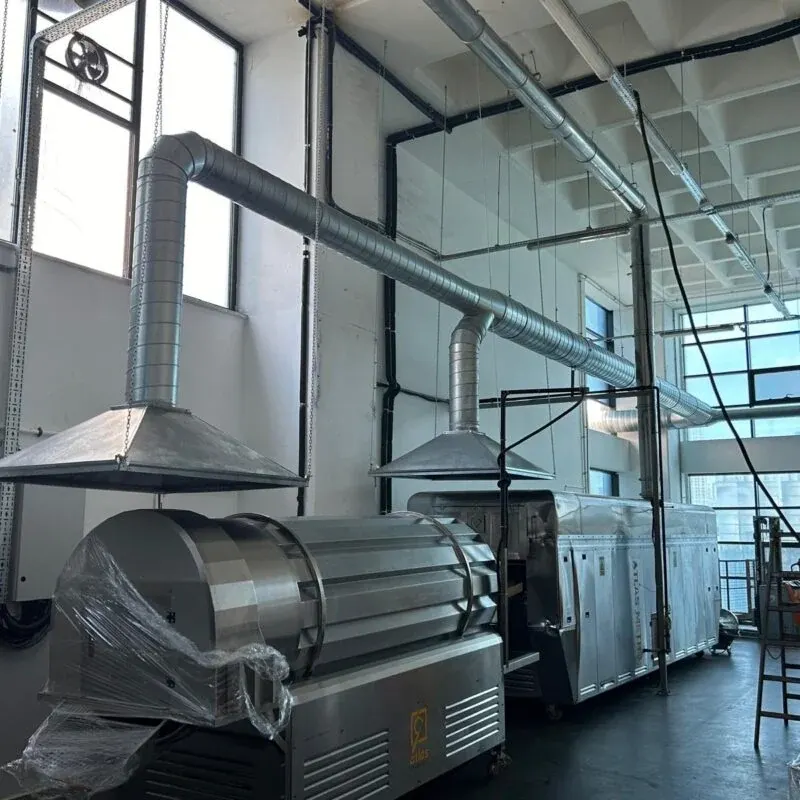
| Welding and cutting workshops | Collecting fine metal fume | Cartridge filter, pre-separation against sparks |
| Paint shops and varnish lines | Capturing sticky paint particles | A dry filter clogs; a water filter is evaluated |
| Metalworking and heat treatment | Separating oily fume and oil vapor | An industrial oil mist filter stage instead of a dust filter |
| Wood and biomass combustion | Capturing ash and soot | Spark carry-over and combustible dust |
What Does White Smoke from a Filtered Chimney Mean?
After a filtered chimney is put into service, a white cloud may continue to come out of the stack. This cloud usually consists not of dust but of water vapor condensing in cold air, and it disappears over a short distance. If the cloud is dark in color, travels far, or dust accumulates in the surroundings, the filter is checked for a leak, a torn bag or a wrongly selected filter type. The definitive assessment is made by emission measurement.
Information to Prepare When Requesting a Quotation for a Chimney Filter
The filter type and area are calculated from site data. If the information below is ready, the scope is settled at the first meeting.
- The process from which the fume or dust originates and the list of machines.
- Gas temperature and moisture content, with the maximum value.
- The color of the fume visible at the stack and at which hours it becomes denser.
- If available, the latest emission measurement report or the limit values under the environmental permit.
- Dimensions of the existing fan, duct and stack, and the area where the filter can be placed.
- Whether odor is also a subject of complaint.
Frequently Asked Questions
Is a chimney filter mandatory?
The requirement depends on the plant’s line of business and emission values. For businesses under an environmental permit, the values leaving the stack must meet the limits of the Regulation on the Control of Industrial Air Pollution. If this limit cannot be met without a filter, installing a system becomes mandatory.
Does a chimney filter prevent smoke and odor?
Bag and cartridge filters capture solid particles; they do not capture gas and odor components. If odor and solvent vapor are involved, a wet scrubber, activated carbon or a suitable gas treatment stage is added.
How often should a chimney filter be cleaned?
In jet pulse systems the filter surface is cleaned automatically with compressed air, so no separate cleaning operation is needed. The hopper, air lock and duct runs are checked and emptied periodically according to the amount of dust that accumulates.
Can a filter be added to an existing stack afterwards?
Yes. In this case the flow rate and pressure of the existing fan are measured and it is checked whether it can meet the additional resistance of the filter. If it cannot, the fan is reselected and the duct route is arranged according to the filter.
What do chimney filter prices depend on?
The main variables are air flow rate, filter area, fabric type, housing material, fan power and duct length. When additional stages such as gas cooling, explosion safety and water management are required, the cost rises accordingly.
- Category
- Dust Collection Systems
- Made in
- İkitelli OSB, Istanbul, Türkiye
- Updated